 Whalesbook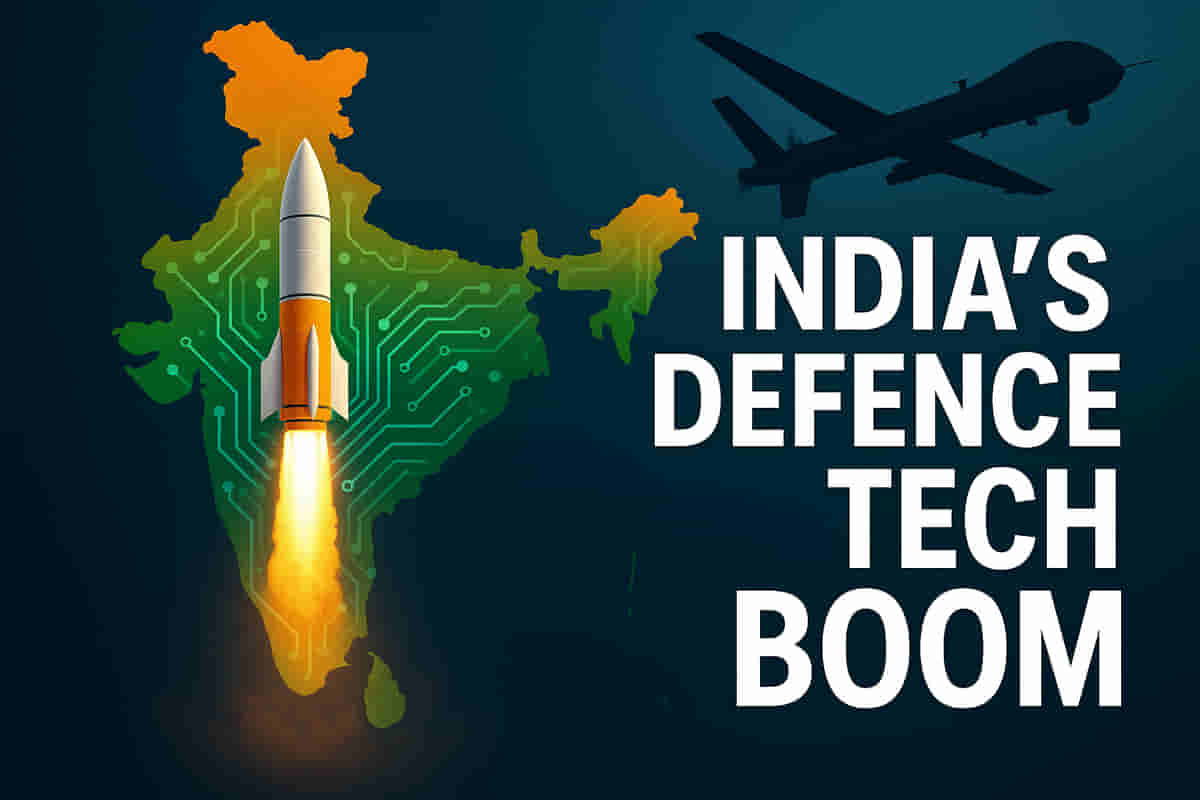
India's defence technology sector is buzzing with activity, transforming from a niche area to a hotbed for innovation and investment. Startups, once focused on consumer applications, are now pivoting towards defence, driven by a confluence of government support, evolving investor interests, and the stark realities of modern warfare.
Defence Tech Ecosystem Takes Flight
- The Indian defence-tech startup scene is experiencing rapid growth, with companies like Digantara, which specializes in satellite movement intelligence, achieving valuations exceeding $65 million.
- This surge is part of a broader evolution in India's startup ecosystem, where venture capital firms are increasingly looking beyond consumer apps for investment opportunities.
- Established players like Tata, Kalyani, and Mahindra are also part of this ecosystem, but startups often bring agility and specialized technological solutions.
Government's Strategic Push
- The Indian government is actively promoting "indigenisation," aiming for greater self-sufficiency in defence manufacturing and procurement.
- Initiatives like "Innovations for Defence Excellence" (IDEX), launched in 2018, channel funds directly to startups to solve specific military problems, often guaranteeing minimum orders for successful prototypes.
- This government support has significantly boosted the sector, with grants growing substantially and attracting hundreds of companies.
- Recent conflicts have also spurred substantial "emergency procurement" worth billions, with a significant portion dedicated to replenishing supplies and a renewed focus on innovation in areas like drones and counter-drone defences.
Lessons from the Front Lines
- Recent conflicts, such as the air-and-missile exchanges involving Pakistan, have highlighted critical needs in India's defence capabilities.
- Experiences like Operation Sindoor exposed vulnerabilities, particularly the strain on air defence systems when facing drone saturation and the challenge of distinguishing real threats from decoys.
- These real-world scenarios provide startups with invaluable feedback, forcing them to refine their features and services to better meet the demands of modern conflict, leading to revenue surges for companies like Digantara.
- Startups are increasingly testing their products in real-world conditions, from the plains to the freezing altitudes of the northern borders, adapting to harsh environments.
Challenges and Future Ambitions
- Despite the growth, defence-tech startups face hurdles. Western companies can be cautious about selling dual-use components, especially for sensitive programmes.
- India's own export control laws also limit market opportunities.
- Access to private capital for scaling up to compete with established firms and enter foreign markets remains a significant challenge.
- While India has many tech unicorns, it is still chasing its first defence-related unicorn, indicating the potential for future growth and valuation jumps.
Impact
- This boom in defence tech is poised to enhance India's national security by fostering indigenous capabilities and reducing reliance on foreign arms imports.
- It creates high-skilled job opportunities and drives technological innovation across multiple scientific and engineering disciplines.
- For investors, it represents a growing sector with strong government backing and potential for significant returns, though it also carries risks associated with defence procurement cycles and geopolitical factors.
- Impact Rating: 8/10
Difficult Terms Explained
- Indigenisation: The process of developing and manufacturing goods or technologies domestically within a country, rather than relying on imports.
- Emergency Procurement: A process by which defence forces can quickly acquire essential equipment or supplies in response to immediate or unforeseen threats or operational needs, often bypassing lengthy standard procurement procedures.
- Dual-use Components: Parts or technologies that can be used for both civilian and military applications.
- Unicorn: A privately held startup company valued at more than $1 billion.
- Operation Sindoor: A hypothetical name for a recent air-and-missile conflict mentioned in the article, used to illustrate the impact on defence needs.