 Whalesbook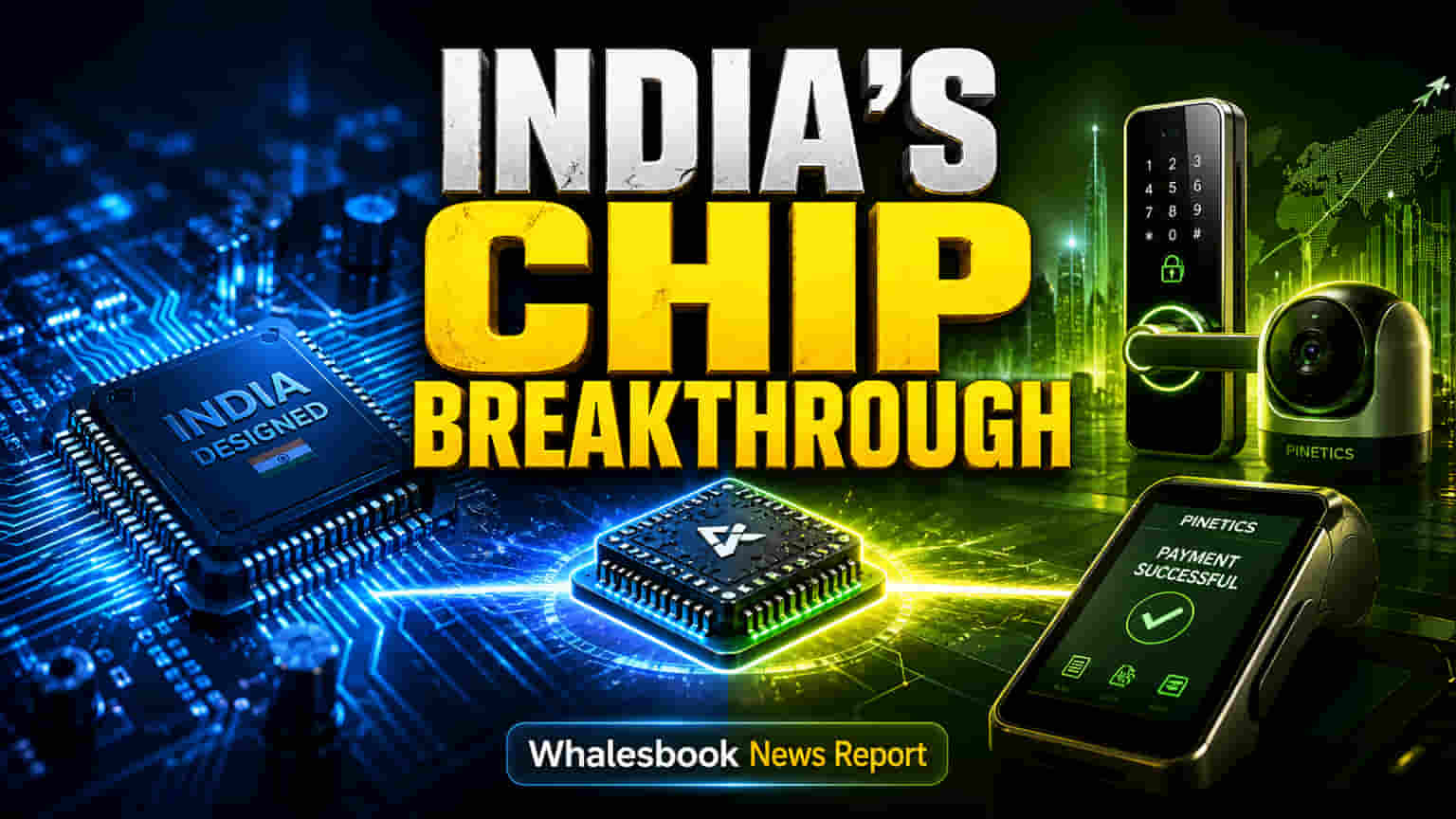


Bridging the Gap: Local Chips in Real Products
This partnership aims to fill a key gap in India's electronics sector. By merging Mindgrove's chip technology with Pinetics' product design skills, the collaboration turns ambitious goals into actual market-ready products. It marks a significant shift as locally designed chips are now being integrated into commercial goods, strengthening India's supply chain and technological independence.
Indian Chips Powering Smart Devices
This partnership is a concrete step to put Indian-designed chips into common consumer products. Mindgrove's Secure IoT SoC, a 28nm chip running at 700 MHz, will be used in biometric systems, smart locks, and point-of-sale machines – areas seeing rapid growth in the smart home and access control markets. The global smart lock market alone could exceed $70 billion by 2035, with the biometric market projected to reach over $150 billion by 2030. Mindgrove's upcoming Vision SoC is designed for edge computing and vision processing in devices like CCTV cameras and driver assistance systems (ADAS), tapping into the growing Camera SoC market, forecast to hit over $3 billion by 2029. By using its RISC-V based Shakti Core, supported by the DLI scheme, Mindgrove aims to compete with major global chipmakers. Pinetics, as an ODM, plays a key role in turning this chip technology into ready-to-sell products for Indian and potentially international customers.
Government Support Fuels India's Chip Growth
This collaboration is a clear result of India's national strategy to become self-reliant in semiconductors. Initiatives like the India Semiconductor Mission (ISM) and the Design Linked Incentive (DLI) scheme are helping the country build its chip design sector. The DLI scheme, which offers financial and infrastructure aid, has supported over 30 companies in areas like AI chips and SoCs. Mindgrove received Rs 15 crore from the DLI scheme for its Vision SoC. Government policies are spurring growth, with India's semiconductor market expected to reach $100 billion by 2030 and $300 billion by 2035. The electronics manufacturing sector's output has grown sixfold in the last decade, reaching $129.9 billion in FY2025, aided by schemes like Production Linked Incentive (PLI). While global giants like Tata Electronics, Micron, and Vedanta-Foxconn invest in manufacturing, the use of Indian chips by domestic firms like Pinetics confirms the strategy to develop the entire value chain. Mindgrove, founded in 2021, has raised $10.3 million, with its latest Series A round in December 2024 showing investor trust in Indian chip design. Pinetics, started in 2020, offers product development services and is currently unfunded.
Challenges Ahead: Competition and Execution Risks
Despite supportive policies, Mindgrove and Pinetics face major challenges. The global semiconductor market is dominated by large companies like Qualcomm, Ambarella, and Nvidia in Camera SoCs, and Allegion and Assa Abloy in smart locks. These established players have huge R&D budgets, vast intellectual property, and strong supply chain ties. Mindgrove, while using RISC-V and backed by the government, operates in a tough market where scaling production and matching international prices are difficult. For Pinetics, relying on an unfunded domestic supplier like Mindgrove could create supply chain risks if Mindgrove encounters production or scaling problems. While the DLI scheme helps with design costs, fabless startups face a tough road to large-scale sales and consistent profits. The risks of fast technological changes and fierce global competition are significant.
Next Steps: Building India's Chip Future
The partnership between Mindgrove and Pinetics is a key sign of India's growing semiconductor sector. With India aiming to meet over 60% of its own chip needs by 2035, these kinds of collaborations are vital. If successful, this venture could encourage more design firms to use Indian chips, speeding up the industry and possibly creating an export market for products with homegrown silicon. Analyst forecasts show strong growth for India's semiconductor market, fueled by AI, automotive, and data center demands. This highlights the long-term opportunities for companies that can master chip design and product integration in this fast-evolving field.