 Whalesbook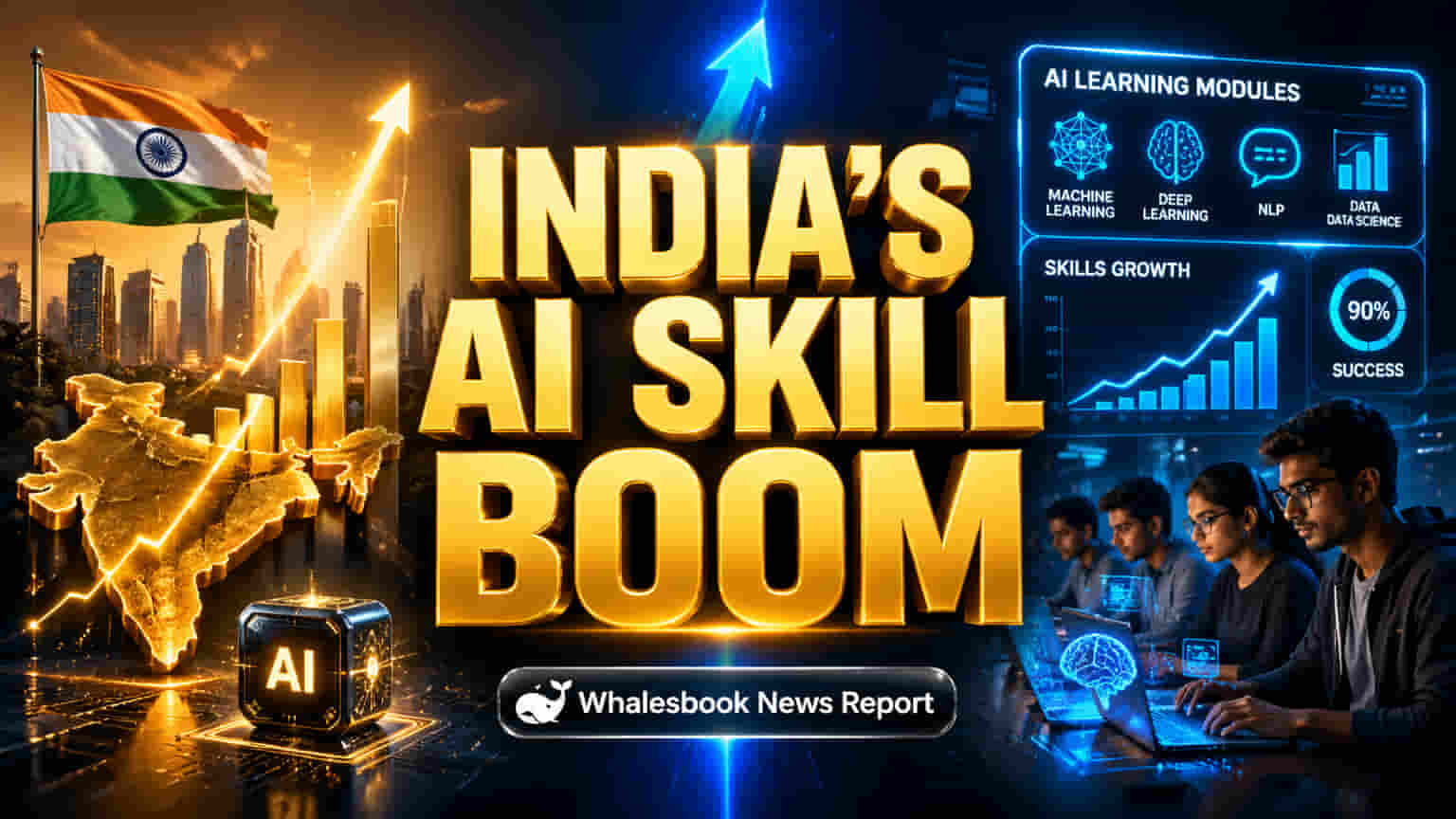


India's AI Skill Revolution Accelerates
The widespread adoption of AI skills is fundamentally changing India's talent pipeline. The focus is shifting from traditional credentials to demonstrable capabilities. As online platforms make learning more accessible, a new group of AI-literate professionals is emerging. This is compelling employers to adjust their recruitment strategies and adopt more adaptive talent acquisition methods. The large number of individuals now possessing AI competencies signals a significant disruption to traditional hiring models and is redefining what it means to be a qualified candidate.
Massive Talent Influx, Employers Rethink Hiring
The rapid spread of AI skills across India, boosted by accessible online education, is creating a large new talent pool. As of April 2026, India's AI hiring leads the globe with 59.5% year-on-year growth. This surge extends beyond major tech hubs, with cities like Hyderabad and Vijayawada also seeing significant growth, pointing to a distributed talent acquisition trend. Employers are increasingly favoring practical, applied AI skills over formal degrees. Companies actively seek candidates with strong problem-solving abilities and clear AI-related skills, often shown through project portfolios rather than solely academic qualifications. This change forces organizations to re-evaluate their hiring criteria to access this growing talent base, moving past traditional gatekeeping.
Addressing the AI Skills Gap
Online learning platforms are vital in tackling India's significant AI skills gap. Demand for AI professionals is projected to exceed 1.25 million by 2027, but the current talent pool falls short, creating a major deficit. Around 79% of employers struggle to fill open positions due to a lack of skilled candidates. Generative AI skills are seeing rapid growth, with demand up nearly 60% year-on-year, driven by companies adopting copilots and chatbots. AI literacy is becoming a universal need, with 72% of Indian professionals seeing AI proficiency as essential for future roles, not just in STEM but also in marketing, HR, finance, and healthcare. Government initiatives like the IndiaAI Mission and various skilling programs aim to support this. However, challenges remain, as workflow adoption lags behind the addition of new skills to professional profiles.
Challenges and Concerns in the AI Talent Pool
Despite widespread AI learning, significant challenges persist. The quality of online AI courses varies greatly, and not all certifications are equally valued by employers, meaning learners must vet them carefully. A key concern is potential skill saturation in certain roles. As AI tools become more common, the market could see too many candidates with basic AI skills, reducing their distinct value. For example, while AI engineering talent in manufacturing has quadrupled, AI skills are still listed among the hardest roles to fill, due to specific shortages rather than general lack of interest. Furthermore, a gap exists where many IT graduates may lack basic programming skills, and only a small portion of engineering graduates are employable in the IT industry. This mismatch between education and market needs, along with an outflow of AI research talent, raises questions about the depth and practical use of acquired skills. This could create a gap between employer expectations and talent readiness. Currently, only 3% of Indian enterprises have enough in-house talent to fully use AI, with 97% citing talent scarcity as a major obstacle.
Looking Ahead: AI as a Foundational Skill
The clear direction is for AI literacy to become a fundamental skill across all professions. Professionals with over 15 years of experience now make up over 40% of AI course enrollments, showing widespread recognition of AI's impact, even on experienced workers. The focus is shifting towards practical application and execution, with rising demand for AI agents and productivity tools. As AI integrates further into core business functions, both technical and non-technical professionals must adapt. This evolving environment suggests continuous learning and flexible skill sets will be key for long-term careers in India's AI-driven economy. Government support, including policies like NEP 2020 and the IndiaAI Mission, reinforces the nation's goal of building an AI-ready workforce.