 Whalesbook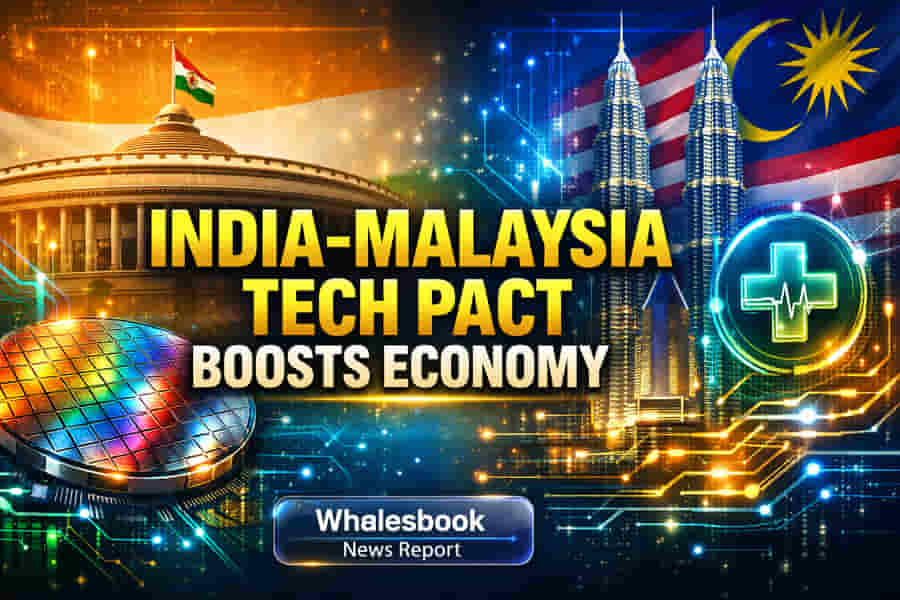
The Strategic Re-Calibration
The recent high-level engagement between India and Malaysia signals a deliberate strategic pivot, prioritizing technology and emerging sectors as the bedrock of future bilateral ties. This partnership is framed around "economic transformation through strategic trust," moving beyond traditional trade to foster deeper integration in areas like artificial intelligence, digital technologies, and the critical semiconductor supply chain. The aim is to imbue the partnership with "unprecedented speed and depth," reflecting a shared ambition to navigate a complex global economic and geopolitical environment. This focus is further amplified by commitments to advance cooperation in health and food security, addressing broader strategic imperatives.
Deep Dive: Semiconductors and Digital Frontiers
India's aspirations to become a global semiconductor hub, bolstered by initiatives like the Production Linked Incentive (PLI) scheme, find a potential strategic partner in Malaysia, already a key player in the global assembly, testing, and packaging segment. This collaboration could create a more integrated value chain, allowing India to focus on design and manufacturing while leveraging Malaysia's established infrastructure for downstream processes. The emphasis on AI and digital technologies aligns with both nations' economic development blueprints. Malaysia is actively pursuing growth in its digital economy, targeting increased contributions to its GDP, while India is enhancing its AI capabilities and adoption rates across various sectors. This synergy could accelerate innovation and create new avenues for trade and investment, as highlighted by the CEO Forum discussions. However, the global semiconductor market faces significant geopolitical shifts and capacity challenges, making the timely execution of such collaborative efforts crucial.
Citizen Facilitation and Enhanced Security Posture
Beyond the high-level economic agenda, the partnership includes concrete measures aimed at improving the lives of citizens and bolstering regional security. The proposed social security agreement seeks to protect Indian workers in Malaysia, a significant demographic given the large Indian diaspora. The introduction of a gratis e-visa regime is expected to boost tourism, while the rollout of India's Unified Payments Interface (UPI) in Malaysia aims to simplify digital transactions, fostering greater economic interaction. On the security front, a stepped-up cooperation in counter-terrorism, intelligence sharing, and maritime security, alongside expanded defense ties, addresses the growing importance of the Indo-Pacific region as a global growth engine. This comprehensive approach underscores the strategic importance of bilateral relations in an era of global instability.
The Bear Case: Execution Hurdles and Competitive Realities
Despite the ambitious scope, significant execution risks shadow this enhanced partnership. The race for technological supremacy, particularly in semiconductors, is intensely competitive, with global powers heavily investing in domestic capabilities. For India's semiconductor ambitions to materialize, overcoming substantial challenges in infrastructure, advanced R&D, and attracting sustained foreign direct investment will be critical. Malaysia, while a crucial part of the current supply chain, faces its own hurdles in moving up the value chain and diversifying beyond assembly and testing. Any review of trade agreements, such as the ASEAN–India Trade in Goods Agreement (ITIGA), must be swift and effective to yield tangible benefits, a process that has historically faced complexities. Furthermore, reliance on external technology providers for advanced components could create long-term dependencies. The success of initiatives like UPI adoption also hinges on robust digital infrastructure and regulatory alignment. The economic outlook for 2026, while generally positive for both nations, is subject to global economic headwinds and domestic policy implementation efficacy.
Future Outlook: A Blended Growth Trajectory
The strategic alignment between India and Malaysia is poised to drive mutual growth, particularly within the digital economy and advanced manufacturing sectors. India's forward-looking budget preparations for 2026, focusing on growth and inflation management, indicate a domestic agenda that could be significantly complemented by such international collaborations. Both nations anticipate that enhanced ties will foster greater trade volumes and investment flows, potentially positioning them as key players in the evolving Indo-Pacific economic architecture. The deepening of cultural and educational ties, including an audio-visual agreement and expanded university exchanges, will further cement this relationship by strengthening people-to-people connections, a vital component for sustained bilateral strength.