 Whalesbook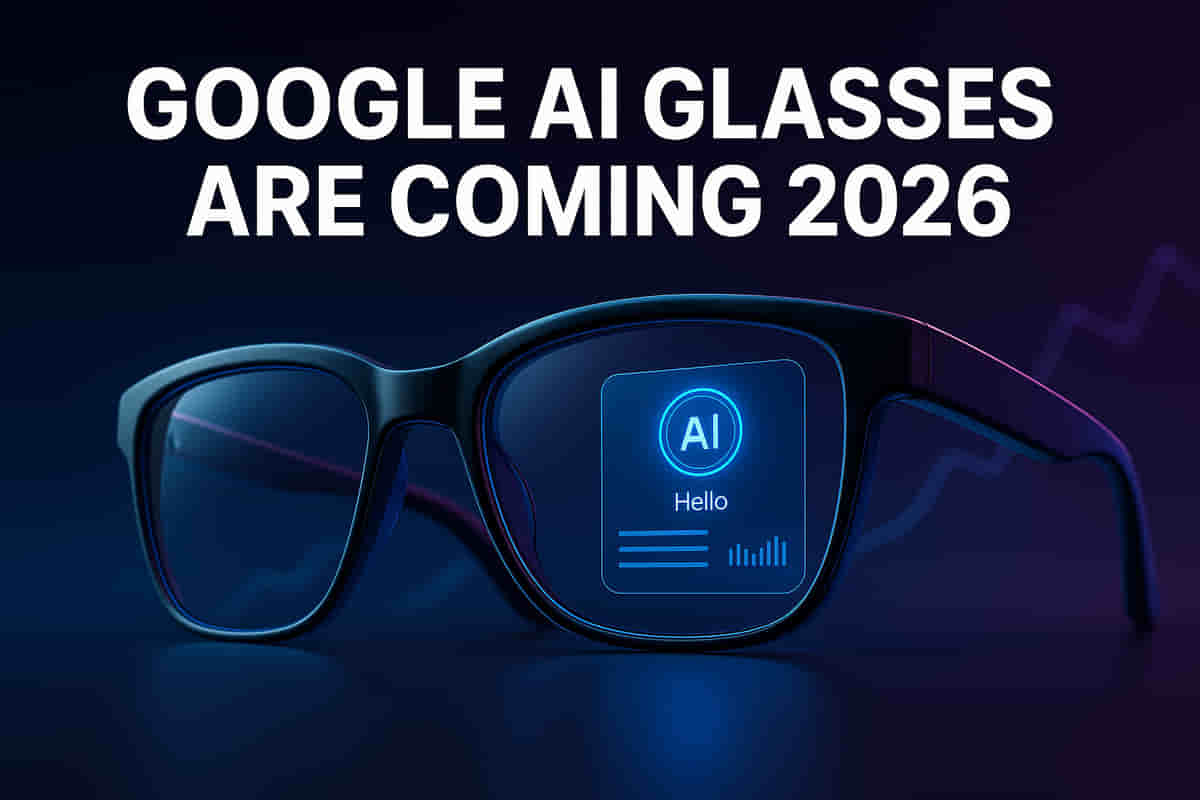


Google has announced its most serious foray into the smart glasses market since the initial Google Glass, revealing plans to launch AI-powered smart glasses in 2026.
A New Era for Wearables
This ambitious project marks a strategic comeback for Google in the wearables space. The company is partnering with prominent names like Samsung, Gentle Monster, and Warby Parker to develop two distinct categories of AI glasses.
- Audio-Only AI Glasses: These lightweight, screen-free glasses are designed for seamless, natural interaction with Google's Gemini AI assistant. Users can expect hands-free help, photo-taking capabilities, and real-time assistance through built-in microphones, speakers, and cameras.
- Display-Enabled AI Glasses: The second category features smart glasses with an integrated in-lens display. This technology will enable users to see private navigation directions, live translation captions, and contextual information directly within their field of vision.
Building on a New Foundation
The new smart glasses will operate on Android XR, Google's dedicated operating system for augmented reality (AR) and virtual reality (VR) devices, powering both headsets and glasses. This represents a significant evolution from the company's earlier efforts.
Co-founder Sergey Brin had previously acknowledged that early Google Glass iterations were hampered by limited AI capabilities and supply chain issues. "Now, in the AI world, the things these glasses can do to help you out without constantly distracting you — that capability is much higher," Brin stated in May, highlighting the advancements in artificial intelligence.
Rising Competition in the AI Wearables Race
Google's move comes as the competition in AI and AR wearables intensifies globally. Meta is already a significant player with its Ray-Ban Meta smart glasses. Other tech giants, including Snap, Alibaba, and Apple, are also reportedly developing their own AR wearables, signaling a significant shift towards integrating AI into personal hardware.
Bloomberg's early testing of Google's prototypes revealed glasses with monocular or binocular displays capable of AR overlays for applications like Google Maps and Google Meet. Most prototypes connect wirelessly to smartphones for processing, keeping the glasses slim and lightweight.
Project Aura: A Glimpse into Extended Reality
Google also provided a preview of Project Aura, a set of wired XR glasses developed in collaboration with XREAL. These glasses boast a 70-degree field of view and optical see-through AR overlays, aimed at productivity and daily tasks like guided cooking or appliance repairs. However, unlike the main AI glasses line, Project Aura requires a tether to an external battery pack.
Impact
- This launch could redefine personal computing and interaction with AI, moving beyond smartphones.
- It intensifies the competition in the burgeoning wearables and AR/VR market.
- It may drive innovation in component manufacturing for micro-displays, sensors, and AI chips.
- Impact Rating: 7/10
Difficult Terms Explained
- AI (Artificial Intelligence): The development of computer systems able to perform tasks that normally require human intelligence, such as visual perception, speech recognition, decision-making, and translation between languages.
- Wearables: Electronic devices that can be worn on the body, often with sensors that collect data. Examples include smartwatches, fitness trackers, and smart glasses.
- Gemini AI: Google's most capable and general AI model, designed to understand and operate across various formats like text, code, audio, image, and video.
- Android XR: Google's operating system platform designed for Extended Reality (XR) devices, encompassing Virtual Reality (VR), Augmented Reality (AR), and Mixed Reality (MR).
- AR (Augmented Reality): A technology that superimposes computer-generated images, sounds, or other data onto a user's view of the real world, enhancing it.
- Monocular Display: A display system that provides visual information to only one eye.
- Binocular Display: A display system that provides visual information to both eyes simultaneously.