 Whalesbook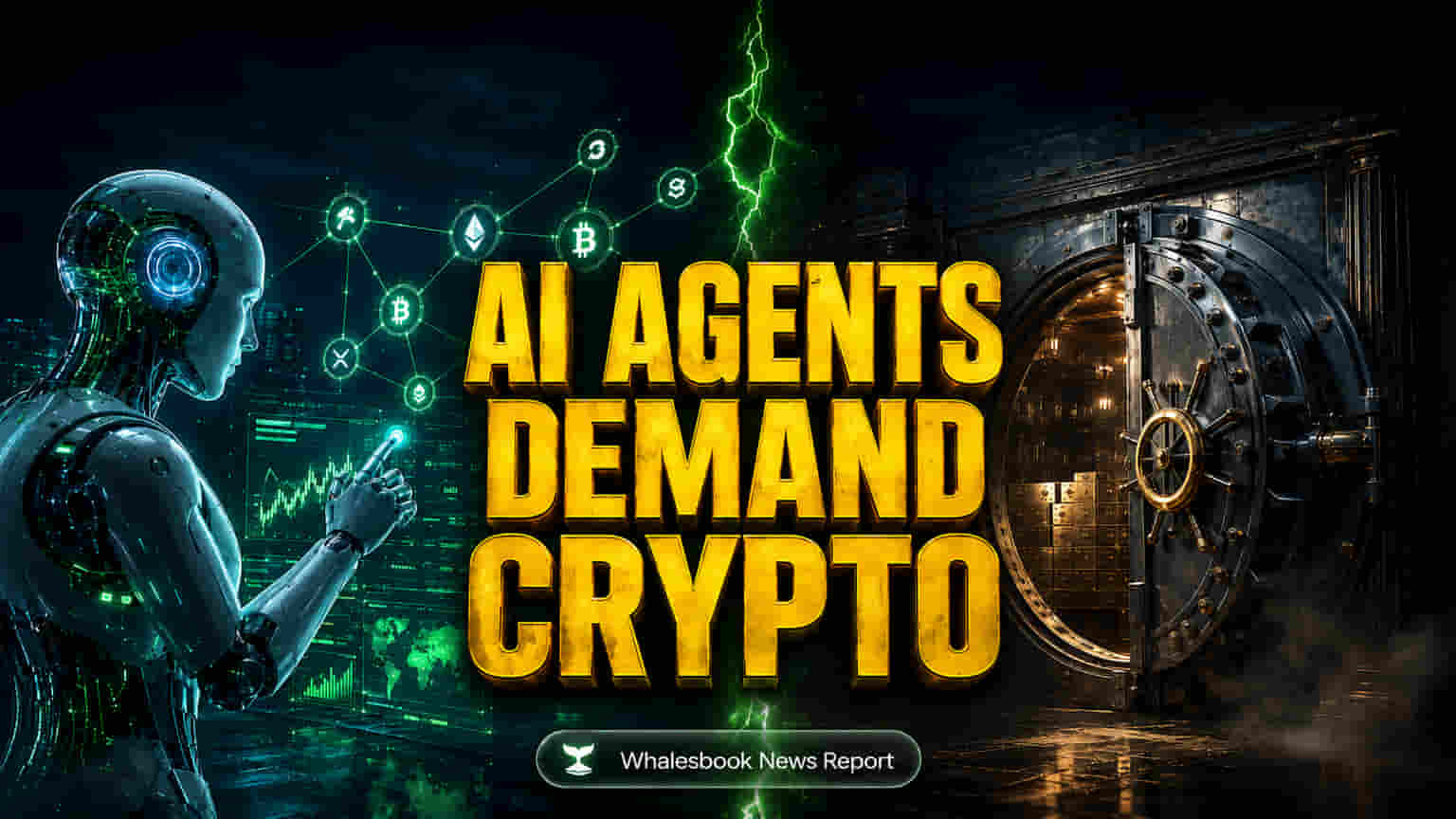


The Seamless Link
Google Cloud and PayPal's recent statements suggest a potential reshaping of the financial infrastructure for the next era of commerce. They argue that AI agents cannot use traditional banking systems due to technical and regulatory issues, positioning cryptocurrency as key for autonomous digital transactions. This isn't just theory; Google's Agentic Payments Protocol (AP2) and PayPal's PYUSD stablecoin are concrete steps to bridge the gap between AI capabilities and financial execution.
The Core Catalyst: Bridging the Agent-Finance Divide
The current financial system, built for humans, has major barriers for autonomous AI agents. Richard Widmann of Google Cloud explained that AI agents can't get bank accounts, an obstacle crypto's machine-readable interfaces can bypass. Google has contributed its AP2 protocol to the FIDO Foundation, creating an open standard with over 120 partners, including PayPal. May Zabaneh from PayPal sees AI agents as the next step in commerce, with PYUSD acting as a programmable payment layer for a globalized, tokenized digital economy. A PayPal survey highlights the need: 95% of merchants see AI agent traffic, but only 20% have machine-readable catalogs, showing a major disconnect. The development of agentic payment solutions is projected to fuel a market that analysts estimate could reach $3 trillion to $5 trillion globally by 2030.
Rivals Race for Agentic Commerce Infrastructure
Google Cloud and PayPal are not alone in seeing the potential of agentic commerce. Amazon Web Services (AWS) has launched Amazon Bedrock AgentCore Payments, partnering with Coinbase and Stripe to enable AI agents to transact using stablecoins like USDC, supporting protocols such as x402 and the Machine Payments Protocol. Stripe is also actively facilitating crypto payments and fiat-to-crypto onramps, aiming to simplify digital asset transactions for businesses. Block, Inc., through its Square platform, is aggressively integrating Bitcoin payments, making it a default option for millions of U.S. merchants, further normalizing cryptocurrency as a payment rail. The wider economic picture supports this shift; global AI spending is forecast to exceed $2.02 trillion by 2026, and the crypto market expects major growth, with stablecoin market cap potentially reaching $1.2 trillion by 2028. The fintech industry also expects a surge in IPOs and M&A, fueled by AI and tokenization innovations, indicating a strong investment outlook for digital asset infrastructure.
Key Challenges and Risks Ahead
Despite this ambitious vision, significant challenges lie ahead. The 80% gap between merchants experiencing AI agent traffic and those with machine-readable catalogs represents a major bottleneck. This lack of merchant readiness could slow the adoption of agent-led commerce. The regulatory landscape for stablecoins and digital assets is also dynamic, potentially hindering widespread adoption, particularly regarding consumer protection and anti-money laundering rules. While Google and Mastercard's FIDO Alliance contributions aim to set trusted standards for AI agent authentication and payments, the complexity of AI authority delegation and accountability introduces new risks for fraud and dispute resolution. PayPal's PYUSD stablecoin faces the same competitive pressures and regulatory scrutiny as other digital currencies. The scale of AI infrastructure build-out, estimated at nearly $3 trillion by 2028, also carries supply chain and energy risks that could affect the broader tech ecosystem supporting agentic commerce. Additionally, while companies like Block are making Bitcoin more accessible, its inherent volatility remains a factor for merchants to consider, even when converted to fiat post-transaction.
The Future Outlook
The trend points to a future where AI agents are integral to commerce. Analysts generally expect continued growth in AI and digital assets, with projections for significant market expansion in agentic commerce. Google's parent company, Alphabet, has a market capitalization of about $4.84 trillion and a P/E ratio of 30.57, showing strong investor confidence in its AI leadership. PayPal, with a $40.02 billion market cap and a P/E of 8.51, is positioned as a key player in these new payment flows, despite facing intense competition. The success of AP2 and PYUSD will depend on their ability to scale quickly, encourage broad industry collaboration via groups like the FIDO Alliance, and effectively address trust and liability concerns crucial for building an autonomous commerce ecosystem.