 Whalesbook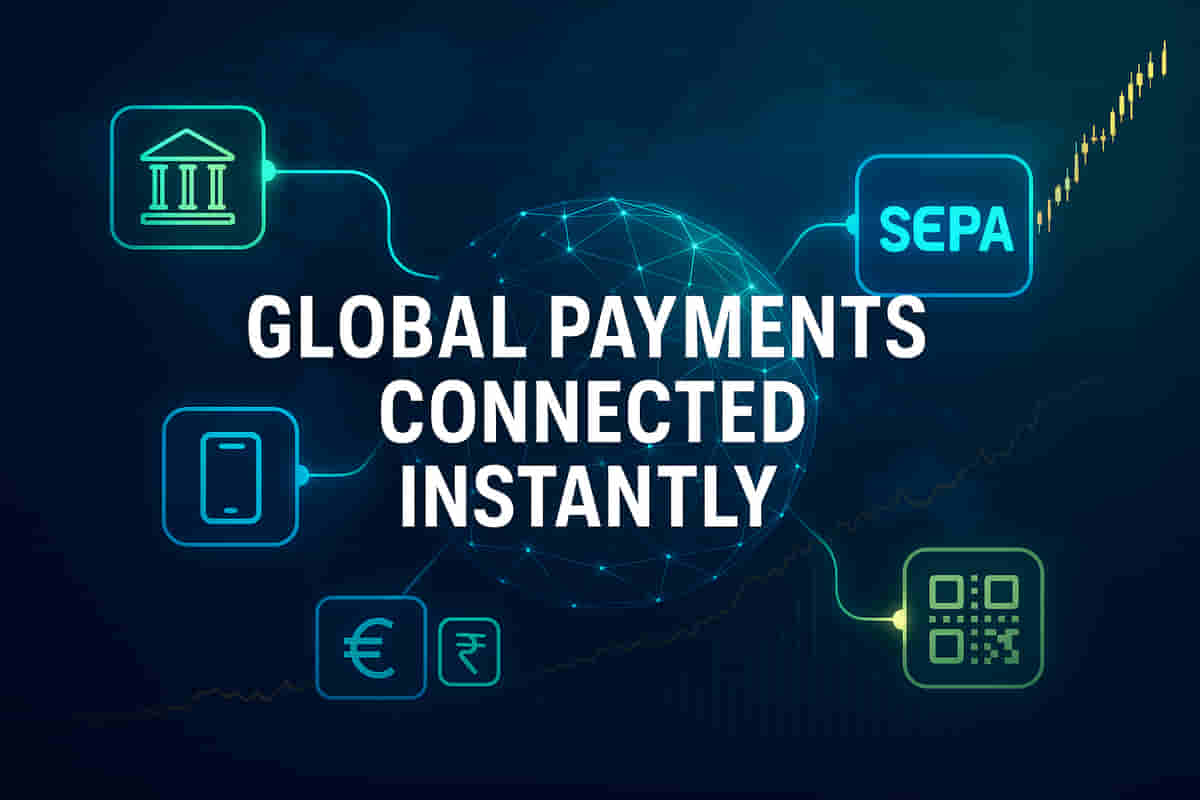
The article contrasts the lightning-fast, low-cost domestic payment experiences in countries like India (via UPI), Europe (SEPA Instant), Brazil (Pix), and the US (RTP, FedNow) with the sluggish and expensive nature of cross-border transactions.
Currently, international money transfers rely on outdated infrastructure like SWIFT, involving correspondent banks, time zone delays, and business hour cut-offs. This results in high fees (averaging 6.5% for $200 transfers, far above the UN's 3% target) and slow settlement times of 2-5 business days. For India, this friction means billions in remittances and export payments are unnecessarily lost or delayed.
The proposed solution is interoperability, which means making different payment systems work together rather than creating entirely new ones. India's UPI already links with Singapore's PayNow and has expanded to several other countries. Projects like BIS-led Project Nexus aim to connect Asian systems for sub-minute clearing.
Interoperability promises significant benefits: remittances reach families faster and cheaper, freelancers and exporters can collect payments more easily, and domestic innovations gain global reach, improving cash flow and reducing settlement risk.
However, several challenges remain:
- Data Standardization: Ensuring all systems use formats like ISO 20022 end-to-end for smooth processing.
- Real-time Compliance: Adapting Anti-Money Laundering (AML), Know Your Customer (KYC), and sanctions checks for instant transfers.
- Foreign Exchange (FX) Risk: Introducing safer settlement mechanisms for more currency pairs, possibly using tokenised deposits or stablecoins.
- Access and Rules: Establishing clear rules for regulated non-bank participation and predictable user experiences.
The future of payments lies in connecting all existing rails – UPI, SEPA Instant, FedNow, Pix, cards, and stablecoins – to enable clean, instant, and fair-cost transfers across borders. This requires alignment, shared data, and shared rules among regulators, banks, and builders. The reward will be a vastly simpler everyday money experience.
Impact
This news has a significant potential impact on the Indian stock market and Indian businesses, particularly in the fintech, IT services, and remittance sectors. Improved cross-border payment efficiency can boost trade volumes, increase digital payment adoption, and create new opportunities for Indian companies operating in the global financial technology space. It also directly benefits individuals receiving or sending remittances.
Impact Rating: 8/10
Difficult Terms Explained
- UPI (Unified Payments Interface): India's instant real-time payment system, developed by the National Payments Corporation of India (NPCI), allowing users to transfer money between bank accounts using a mobile app.
- SEPA Instant: The Single Euro Payments Area Instant Credit Transfer scheme, enabling euro payments to be sent and received across participating European countries in seconds.
- Pix: Brazil's instant payment system, developed by the Central Bank of Brazil, allowing immediate money transfers and payments 24/7.
- RTP: Real-Time Payments, a US-based payment rail that enables instant fund transfers between financial institutions.
- FedNow: A real-time payment service developed by the Federal Reserve, enabling instant credit and debit transfers between participating financial institutions.
- SWIFT: Society for Worldwide Interbank Financial Telecommunication, a global network used by financial institutions to send and receive information, such as money transfer instructions, securely and reliably. It is not a direct transfer system but a messaging network.
- Correspondent Banks: Banks that provide services on behalf of a bank in another country, typically for facilitating international transactions.
- FX Mark-ups: The extra charge added to the exchange rate when converting one currency to another, often a source of hidden fees.
- Interoperability: The ability of different computer systems or software applications to exchange and use information.
- PayNow: Singapore's instant funds transfer service, enabling customers of participating banks and NSOs to send and receive funds from one bank account to another in Singapore.
- ISO 20022: A global standard for financial messaging that provides a common framework for businesses and financial institutions to communicate and exchange payment data.
- Straight-through Processing (STP): The ability to process a financial transaction from initiation to settlement without manual intervention.
- AML (Anti-Money Laundering): A set of laws, regulations, and procedures intended to prevent criminals from disguising illegally obtained funds as legitimate income.
- KYC (Know Your Customer): The process of a business verifying the identity of its clients, often to prevent illegal activity.
- Tokenised Deposits: A digital representation of a fiat currency deposit held by a regulated financial institution, which can be used for digital transactions.
- Stablecoins: A type of cryptocurrency designed to minimize price volatility, often pegged to a fiat currency like the US dollar.
- PvP (Payment versus Payment): A settlement mechanism where the final transfer of one currency takes place if and only if the final transfer of the other currency also takes place.
- Atomic Settlement: A transaction settlement where all parts of the transaction are completed or none are. It ensures that the exchange happens simultaneously, eliminating settlement risk.