 Whalesbook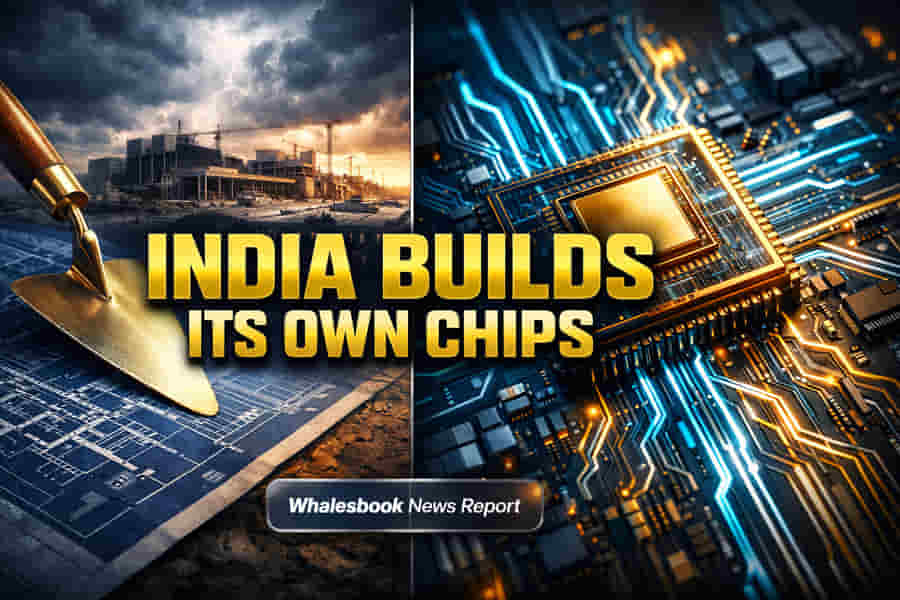
The Hardware Pivot: India's Semiconductor Offensive
The foundation stone ceremony for the Foxconn and HCL Technologies semiconductor manufacturing plant in Jewar, Uttar Pradesh, marks a critical juncture for India's industrial ambitions. This joint venture is not merely an expansion of manufacturing capacity; it represents a strategic intent to establish a robust domestic presence in the highly complex and capital-intensive semiconductor fabrication sector. Prime Minister Narendra Modi highlighted this as a significant step towards a developed and self-reliant India, underscoring the nation's dual focus on both software and hardware innovation. The initiative aligns with the 'Make in India' vision, aiming to integrate India more deeply into global technology value chains beyond its established software prowess. This move is particularly notable given that neither Foxconn nor HCL historically possesses deep experience in semiconductor fabrication itself, indicating a significant learning curve and reliance on technology partners for know-how.
Strategic Foundations and Global Context
The establishment of this fab occurs against a backdrop of global supply chain realignments, driven by geopolitical tensions and the escalating demand for advanced semiconductors fueled by Artificial Intelligence (AI). India's semiconductor market is projected to reach $108 billion by 2030, with a significant portion driven by domestic localization efforts. The Indian government's supportive policies, including the Production Linked Incentive (PLI) scheme and the India Semiconductor Mission (ISM) offering up to 50% fiscal support on project costs, provide a crucial financial cushion for such capital-intensive ventures. Foxconn, a major global contract manufacturer, has been steadily increasing its footprint in India, focusing on electronics assembly for major brands like Apple, with significant investments in states like Tamil Nadu and Karnataka. HCL Technologies, primarily an IT services firm, is venturing into hardware manufacturing, a move that could diversify its revenue streams and leverage its project management expertise. The current market capitalization of HCL Technologies stands at approximately ₹3.90 trillion, with a P/E ratio around 23.68, while Hon Hai Precision Industry (Foxconn) has a market cap of roughly $100.38 billion, and its P/E ratio is around 16.77.
Rare Earths and Supply Chain Resilience
A critical component of the semiconductor ecosystem is the reliable sourcing of raw materials, particularly rare earth minerals. Prime Minister Modi's emphasis on this aspect highlights India's strategic approach to securing its supply chain. India has recently formalized partnerships, such as the framework pact with Brazil on critical minerals and joined the US-led Pax Silica initiative, specifically to secure rare earth supplies and reduce dependence on China. These moves aim to build resilient supply chains for semiconductors, AI, and critical minerals, crucial for national security and economic independence. The planned 'Rare Earth Corridor' across several Indian states further underscores this commitment to domestic sourcing and processing capabilities. This focus on rare earths is timely, as global demand for these minerals is surging for high-tech applications, and China currently dominates global processing.
The Forensic Bear Case: Hurdles to Fabrication
Despite the optimistic outlook, establishing a semiconductor fabrication plant in India is fraught with challenges. The previous Vedanta-Foxconn joint venture faced significant hurdles, ultimately stalling due to a lack of a fab-manufacturing partner and technological expertise, highlighting the difficulty of navigating the complex semiconductor ecosystem. India faces intense competition from established players in East Asia, which possess deeply integrated supply chains and decades of experience. Key risks include:
- Technological Capability and Know-how: Neither Foxconn nor HCL has prior direct experience in wafer fabrication. Acquiring and mastering advanced fabrication technologies, particularly for leading-edge nodes, is a formidable task.
- Infrastructure Deficiencies: Semiconductor fabs require a continuous, stable, and clean power supply, vast amounts of ultra-pure water, and specialized waste management systems. Ensuring these foundational elements consistently is a major undertaking.
- Skilled Workforce Shortage: While India possesses a large talent pool in chip design, there is a critical deficit in experienced professionals for chip manufacturing and process engineering.
- Cost Competitiveness: The astronomical capital expenditure required for fabs, coupled with potentially higher operational costs in India compared to established hubs, poses a significant challenge to achieving global price competitiveness.
- Geopolitical Risks: Reliance on international partners for technology transfer and equipment could expose the venture to geopolitical tensions and export controls.
Future Outlook: A Long Road to Self-Sufficiency
The Foxconn-HCL venture represents a significant step, but the journey to establishing a fully integrated and competitive semiconductor manufacturing ecosystem in India will be long and demanding. Success hinges on effective technology transfer, robust government support, intensive workforce development, and overcoming inherent infrastructure and cost challenges. The growing domestic demand for electronics and the government's strategic push provide a conducive environment, but execution will be paramount. Analyst reports project India's semiconductor market to grow substantially, with some forecasting $100 billion to $175 billion by 2030, indicating substantial opportunity if these hurdles can be surmounted.