 Whalesbook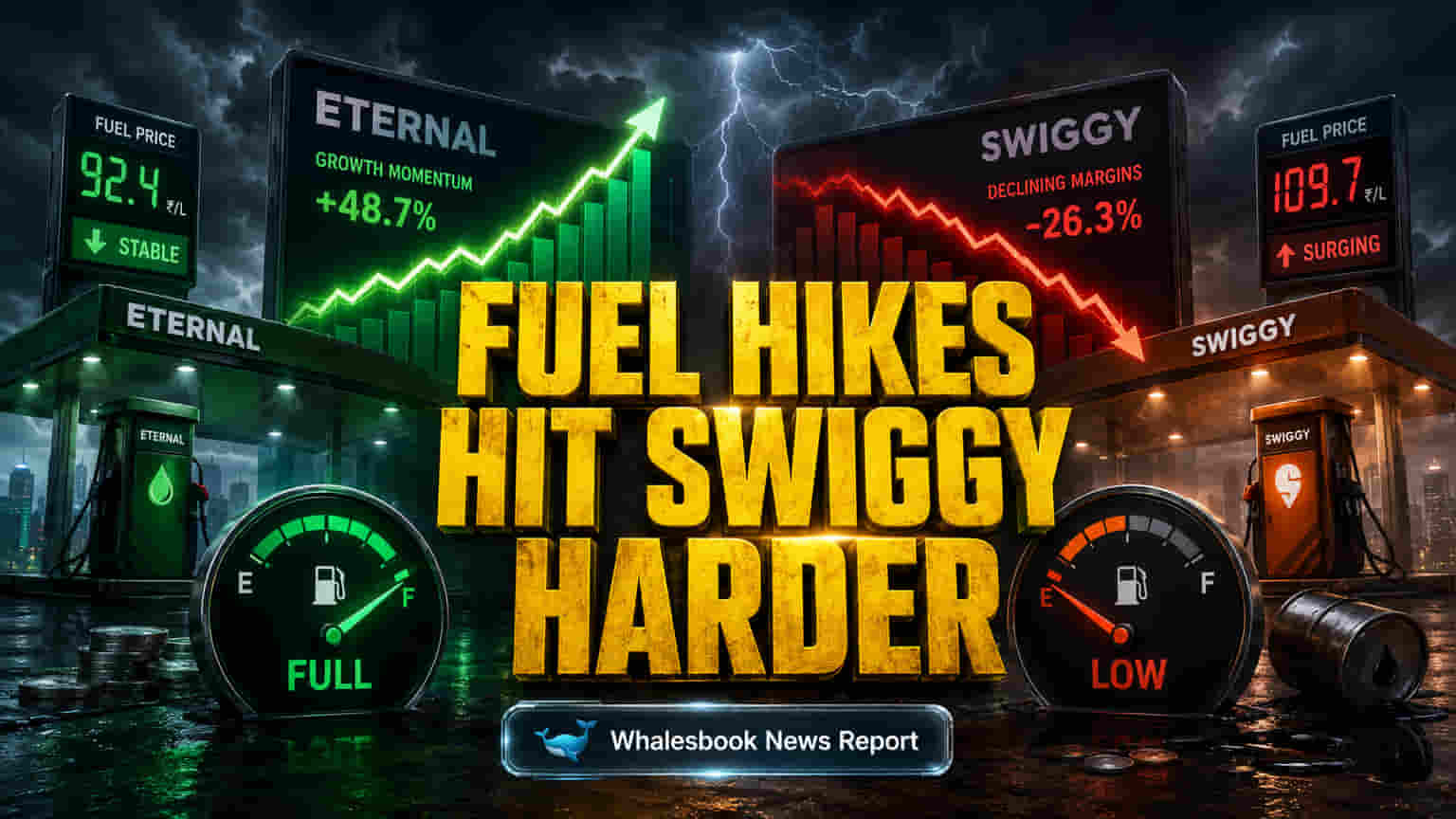


Eternal's Edge in Fuel Price Hikes
Elara Capital analysts believe Eternal is better positioned than rival Swiggy to absorb rising fuel costs. The brokerage reaffirmed 'Buy' ratings on both companies, setting target prices at ₹400 for Eternal and ₹360 for Swiggy. Eternal's more premium customer base is less sensitive to price increases, allowing it to pass on higher expenses through platform fees, delivery charges, and handling fees across its food delivery and quick commerce services.
Scale and Ad Revenue Boost Eternal's Resilience
Eternal's larger operational scale and stronger advertising revenue stream provide an additional margin cushion compared to Swiggy. Analysts noted Swiggy could face a greater impact from lower profitability margins in its quick commerce operations and a more price-sensitive customer base. While both platforms can pass on costs, Eternal's ability to absorb and recover fuel-driven inflation is seen as stronger.
Fuel Costs Impacting Delivery Economics
A recent ₹4 per litre fuel price increase represents roughly a 4% rise in petrol and diesel costs, amid geopolitical tensions and elevated crude oil prices. For fiscal year 2027 estimates (FY27E), Eternal is projected to handle about 2.7 billion orders, and Swiggy around 1.4 billion. Elara noted that while fuel cost hikes can affect delivery partner yields and payouts, the direct impact appears manageable against overall EBITDA if the burden is shared among customers, platforms, and delivery partners.
Per-Order Fuel Cost Impact Calculated
Analysts estimate average delivery costs at ₹35-50 per order for quick commerce and ₹55-60 for food delivery. Blended average delivery costs are ₹45 for Eternal and ₹55 for Swiggy per order. With fuel at 20% of delivery costs, the implied fuel cost is ₹9-10 per order. A 4% fuel price hike suggests a negative impact of ₹0.44 per order. If fuel prices climb by ₹10 per litre in the next 3-6 months, the blended per-order impact could reach ₹1-1.2. This increase is expected to be shared via customer charges, platform absorption, and adjusted delivery partner pay.
Beyond Direct Costs: Broader Risks Emerge
In a ₹10 per litre fuel increase scenario, the gross EBITDA impact, adjusted for EV/cycle penetration, is estimated higher in quick commerce (30-40%) than food delivery (around 20%). Elara assumes a fuel-linked impact on 70% of total orders. Thus, in a high fuel price scenario, net EBITDA impact could range from ₹100-200 crore. This might lead to a 4-5% FY27E adjusted EBITDA downgrade for Eternal and a 10-12% downgrade for Swiggy. Swiggy faces a higher impact due to its lower profitability cushion and its ongoing work toward contribution break-even in quick commerce.
A more significant risk, however, stems from sustained fuel inflation's second-order impact on overall consumption and ecosystem spending. Higher fuel prices could reduce discretionary spending, affecting order frequency for food delivery and impulse buys in quick commerce. Smaller restaurants and regional chains might face input cost pressures, impacting their expansion and ad budgets on aggregator platforms. Direct-to-Consumer (D2C) brands could also see reduced marketing expenditures on quick commerce platforms due to increased logistics, packaging, and input costs. While direct fuel cost increases appear manageable, the broader consumption and ad-revenue implications are key risks to watch.