 Whalesbook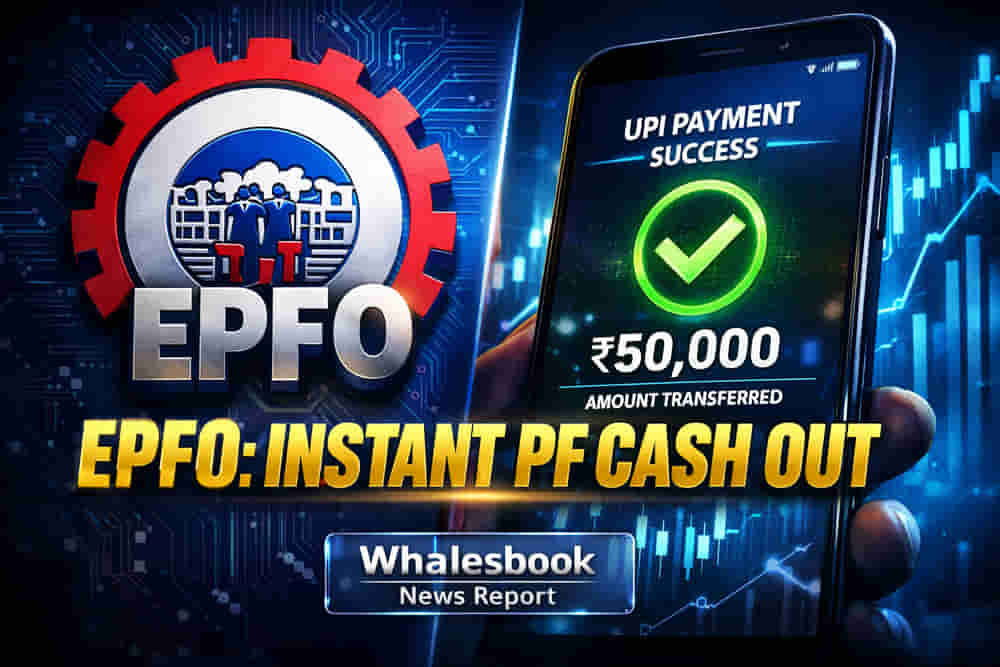
THE SEAMLESS LINK
This modernization effort is designed to fundamentally alter how members interact with their retirement savings, moving towards real-time, user-friendly financial management.
Member Empowerment Through Digital Access
Public interest in EPFO 3.0 has surged, driven by the promise of unprecedented accessibility to provident fund money. The core catalyst for this heightened attention is the proposed shift towards a system offering services akin to commercial banks. This includes facilitating faster claim settlements and enabling instant withdrawals, features that directly address long-standing member pain points. The vision of "bank-like access" for PF funds, previously articulated by Union Labour and Employment Minister Mansukh Mandaviya, continues to fuel public inquiry and anticipation. Such advancements are expected to benefit over eight crore active EPFO members, with long-term implications for more than thirty crore individuals across India.
Technological Overhaul and AI Integration
EPFO 3.0 represents a substantial technological leap, moving beyond incremental updates to a complete reset of its digital backbone. The platform is being built on a hybrid architecture, integrating a core banking solution with cloud-native, API-first, microservices-based modules for robust account management, ERP, and compliance functions. Artificial intelligence is central to this upgrade, with AI-powered language tools set to enhance service delivery through multilingual support and chatbots, particularly aiding users less familiar with digital processes. This comprehensive transformation aims to streamline operations, improve transparency, and expedite grievance redressal.
The initiative draws parallels with India's broader push for digital infrastructure development, aiming for efficiency and accessibility across government services. Historically, EPFO has evolved from a manual system (EPFO 1.0) through digitisation (EPFO 2.0) with features like online claim filing and Aadhaar integration. EPFO 3.0 marks a significant advancement, focusing on automation and near real-time processing, moving away from previous limitations that often resulted in claim processing delays.
Enhanced Withdrawal Mechanisms and Member Services
A key feature driving public interest is the planned integration of UPI for EPF withdrawals. This functionality, expected to be rolled out by April 2026, will allow members to transfer permitted portions of their PF balance directly to their bank accounts via the BHIM app or other UPI platforms. While a portion of funds will remain allocated for interest accrual, this significantly expedites access to savings during emergencies. The platform also proposes ATM-style access to funds, further reducing dependency on lengthy claim procedures.
Withdrawal norms have also been liberalized. The system now standardizes the minimum service period for partial withdrawals to 12 months and streamlines categories from thirteen down to three: essential needs, housing, and special circumstances. This simplifies procedures and expands withdrawal frequency for education and marriage. Moreover, EPFO 3.0 aims to introduce auto-claim settlement, improve grievance redressal, and simplify death claim settlements for nominees.
Strategic Implementation and Future Trajectory
To realize this ambitious vision, EPFO has shortlisted major IT firms, including Tata Consultancy Services (TCS), Infosys, and Wipro, for the implementation and maintenance of the EPFO 3.0 platform. The project is being rolled out in phases, with the UPI-linked withdrawal service anticipated by April 2026. This upgrade is strategically aligned with upcoming labor reforms, potentially expanding EPFO's reach to unorganized sector workers on a larger scale. As noted by Prime Minister’s Economic Advisory Council member Sanjeev Sanyal, this represents a significant effort to streamline EPFO operations. The transformation is positioned to redefine retirement savings management in India, ushering in an era of greater transparency, efficiency, and member convenience.