 Whalesbook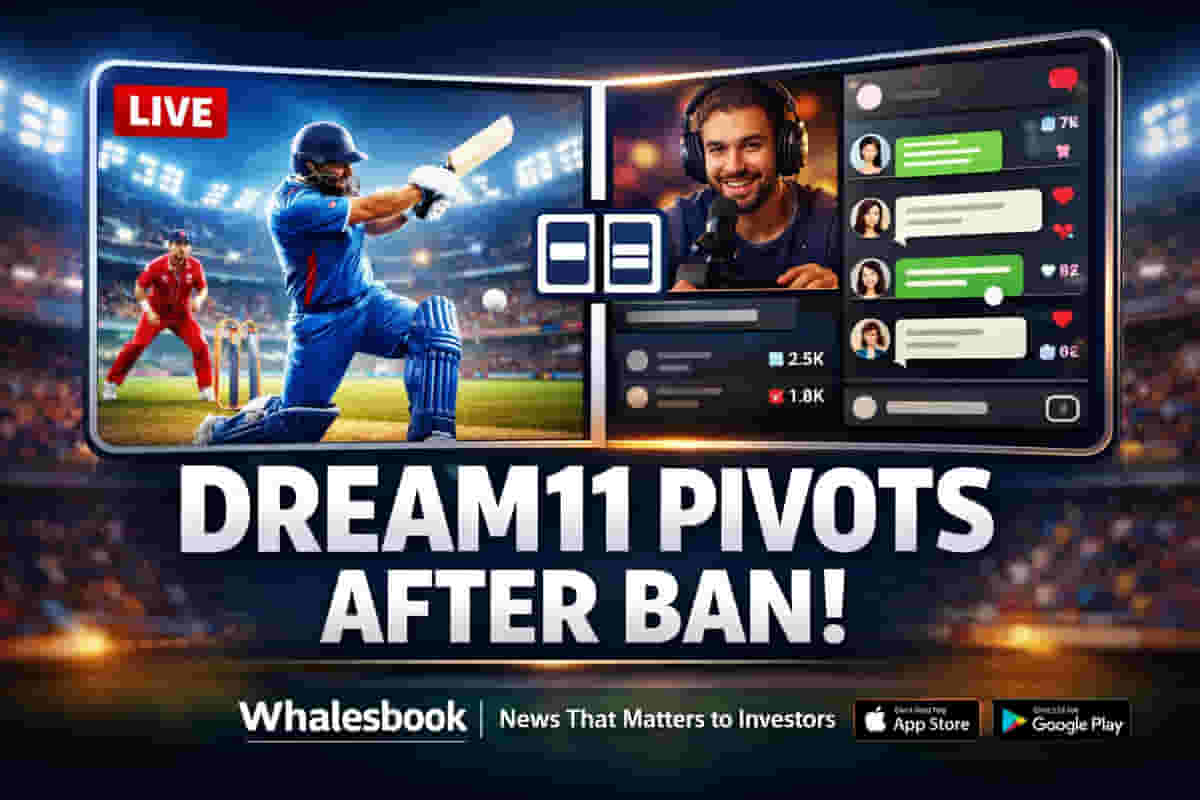


Dream11 Pivots to Second-Screen Entertainment Amidst Gaming Ban
India's Dream11, a leading fantasy sports platform, is making a significant pivot to become a second-screen sports entertainment product. This transformation is a direct result of India's ban on real money online gaming, effective October 1, 2025, which deeply impacted its core business. The company is now integrating creator-led watchalongs and real-time fan interactions to enhance viewership and engagement alongside live broadcasts. This strategic move follows a challenging year marked by regulatory pressure, prior diversification efforts that fell short, and necessary cost recalibrations.
The Core Issue
The government's ban on real money online gaming in October 2025 created an existential challenge for Dream11. The company's revenue was heavily concentrated on fantasy cricket, exposing it to considerable regulatory and tax risks. This dependency became critical as Goods and Services Tax (GST) scrutiny intensified, leading to substantial financial demands against its parent entity, Dream Sports.
Financial Implications
Dream Sports reportedly faces Goods and Services Tax (GST) demands exceeding ₹28,000 Cr. These claims relate to previous financial years, including a strong FY23 where net profit rose 32% YoY to ₹188 Cr and operating revenue surged 66% to ₹6,385 Cr. A $50 Mn investment in cricket platform Cricbuzz also proved disappointing, with insiders questioning its strategic value.
Responding to the Ban
Rather than challenging the ruling, Dream11 chose compliance and rapid internal repositioning. The real money gaming vertical was shut down, prioritizing cost discipline and preserving cash runway. This pragmatic approach contrasted with competitors who pursued legal avenues, allowing Dream11 to focus on adapting its business model efficiently without widespread layoffs.
Strategic Reset and Diversification
Even before the ban, diversification efforts were underway to reduce dependency on fantasy cricket. Initiatives included launching casual games via Dream Play and the CRIQ app for advanced stats. However, Dream Play's monetization collapsed post-ban and was later pivoted to an AI analytics platform for Padel. Relocating the company's domicile back to India also helped mitigate some financial burdens.
FanCode's Rising Importance
With real-money gaming restricted, Dream Sports' streaming arm, FanCode, has become a central strategic pillar, expected to carry significant revenue and growth expectations. FanCode is enhancing operational efficiency through AI, focusing on regional language commentary, and has ceased low-margin ventures like FanCode Shop. International expansion into markets like Bangladesh and Sri Lanka is planned.
The Reinvention of Dream11
The Dream11 app has been fundamentally reimagined as a second-screen sports entertainment hub, inspired by platforms like Twitch. The platform now offers creator-hosted live watch parties, real-time fan interaction tools, and free-to-play fantasy games, aiming to capture audience attention during live sports broadcasts.
Challenges Ahead
This pivot faces significant hurdles. It relies on viewers splitting attention between live broadcasts and creator streams, a behavior often observed post-match. Dream11 enters a competitive space dominated by Twitch and YouTube, requiring substantial effort for creator acquisition. Monetizing through microtransactions for live sports interactions remains untested at scale in India, hinging on the validation of Gen Z engagement behaviors.
Future Outlook
Dream11 is leveraging its large user base of over 250 million and has indicated a runway of two to three years for model refinement. Upcoming major sporting events, including IPL 2026 and the Men's T20 World Cup co-hosted by India, present significant opportunities for Dream11 to capitalize on fan interest and drive growth for its transformed business.
Impact
The strategic pivot could reshape India's digital sports engagement landscape, creating new monetization and viewership paradigms. For investors, it showcases resilience in a dynamic regulatory environment and may influence strategies for other tech companies facing similar challenges.
Impact Rating: 8/10
Difficult Terms Explained
- Second-screen: Using a secondary device, like a smartphone or tablet, to access content or interact with a program while watching television or another primary screen.
- Real money online gaming: Online games where players wager money, and the outcome is based on skill or chance, with the potential to win or lose real money.
- GST: Goods and Services Tax, a broad indirect tax on the supply of goods and services in India.
- Redomiciled: Moved the legal domicile or headquarters of a company from one jurisdiction to another.
- Runway: The amount of time a company can continue operating with its current cash reserves before needing additional funding.
- Microtransactions: Small in-app purchases for virtual goods or features within a digital product.
- Creator-led ecosystems: Platforms where content creators are central, driving engagement and often monetizing through direct fan interaction and support.
- Padel: A racket sport that is a mix between tennis and squash.