 Whalesbook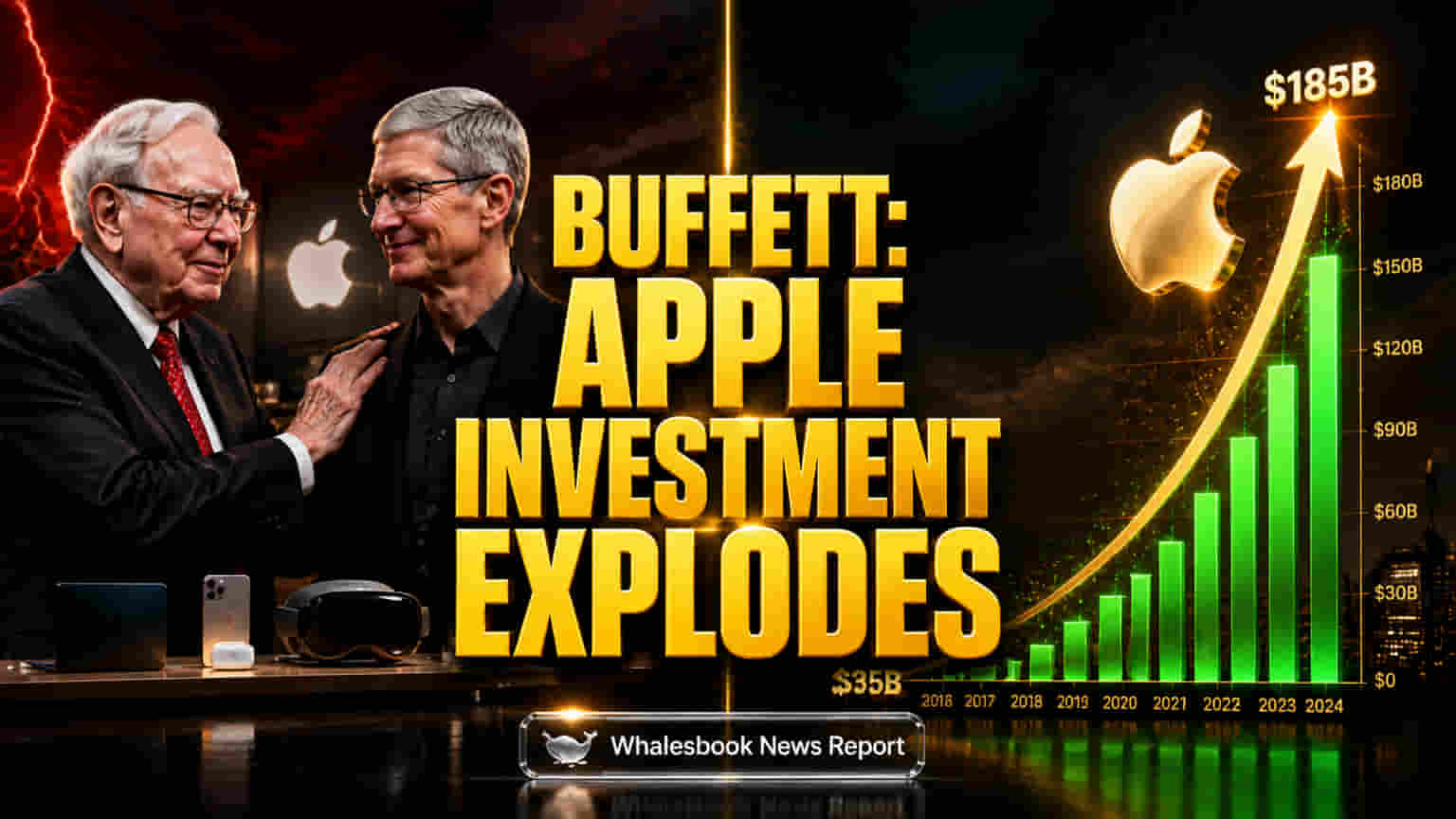


Berkshire's Record Cash Amid Leadership Shift
Berkshire Hathaway reported a robust 18% rise in first-quarter operating earnings, reaching $11.35 billion, marking the first earnings release under new CEO Greg Abel. This performance coincided with the conglomerate's cash and Treasury bill reserves swelling to a record $397.38 billion, signaling continued difficulty in finding acquisition targets that meet value-oriented standards. Abel, who officially assumed the CEO role from Warren Buffett at the start of 2026, has signaled continuity, reassuring investors that the company's strategic direction remains intact. Buffett himself expressed unwavering confidence in Abel's leadership, rating his performance as "100 points" and stating he was performing "better than I did". Berkshire's equity portfolio, however, shows a concentrated bet on a few key companies, with its top five holdings, including Apple, American Express, Bank of America, Coca-Cola, and Chevron, comprising 61% of its equity portfolio as of March 31, 2026. While the company resumed share repurchases in March 2026 after a hiatus, its net stock disposals in Q1 2026 amounted to $8 billion, underscoring a cautious deployment of capital.
Apple's Tech Colossus Faces CEO Succession
The Berkshire Hathaway annual meeting also served as a platform for Buffett to celebrate one of his most successful investments: Apple. He highlighted that Berkshire's initial $35 billion investment in Apple, made between 2016 and 2018, has grown to $185 billion on a pre-tax basis, a testament to Tim Cook's tenure as CEO. Cook, who is set to step down as CEO on September 1, 2026, will transition to Executive Chairman. During his nearly 15-year leadership, Apple's market valuation expanded from approximately $350 billion to over $4 trillion, a growth trajectory that delivered exceptional returns for shareholders. Taking the helm will be John Ternus, currently Senior Vice President of Hardware Engineering. Ternus, a long-time Apple insider who joined in 2001, brings a deep understanding of the company's product development cycle, having overseen hardware engineering for key product lines like the iPhone, iPad, and AirPods. Cook praised Ternus as having "the mind of an engineer, the soul of an innovator," suggesting a continuation of Apple's product-led strategy. The news of the leadership change caused a slight dip in Apple's shares, a common reaction to significant executive transitions, though the overall sentiment remains positive.
The Analytical Deep Dive: Valuation and Strategy
Apple currently trades at a Price-to-Earnings (P/E) ratio of approximately 33.8x as of early May 2026. This valuation is above its 10-year median of 26.29 and higher than the broader tech industry average of 23.69x. Analysts generally maintain a bullish outlook, with a consensus rating of "Buy" and a median price target suggesting an average upside of around 8%. Ternus's hardware engineering background is expected to ensure continuity in Apple's product innovation, though he faces the challenge of navigating the competitive AI landscape and maintaining growth momentum. For Berkshire Hathaway, the P/E ratio stands at a more modest 15.24 as of May 1, 2026. Analysts provide a "Moderate Buy" consensus for BRK.B, with average price targets indicating an upside of approximately 7-12%. However, Berkshire's stock has underperformed the broader market, declining around 6% year-to-date in 2026. The significant concentration in its top equity holdings, particularly Apple, presents both opportunity and risk, a dynamic Abel will need to manage as he evolves Berkshire's investment strategy beyond Buffett's direct oversight.
The Forensic Bear Case: Concentration and Transition Risks
Despite the praise and positive outlook, several risk factors warrant consideration. For Apple, the transition to John Ternus introduces an element of uncertainty, as he steps out from a hardware-focused role into the broader CEO responsibilities. While his hardware expertise is seen as a strength, navigating the intensely competitive AI race and managing global supply chains and geopolitical relationships, particularly with figures like former President Trump, will be critical. Furthermore, rising memory and storage costs driven by AI workloads could pressure margins in the coming quarters. For Berkshire Hathaway, the high concentration of its equity portfolio in Apple (around 29% of its total equity portfolio as of February 2026, valued at ~$62 billion) poses a significant risk. Any substantial downturn in Apple's stock could disproportionately impact Berkshire's overall performance. Moreover, the shift to Abel as CEO, while seen as a smooth succession, is still in its early stages. Investors remain watchful for any missteps in capital allocation or strategic misjudgments as Abel adapts to leading the vast conglomerate, particularly given Berkshire's recent stock underperformance compared to the broader market.
The Future Outlook
Analysts generally project moderate upside for both Apple and Berkshire Hathaway. Apple's median price target suggests an 8% increase, supported by a "Strong Buy" consensus. For Berkshire Hathaway, analysts anticipate a roughly 7-12% increase in its stock price, with a "Moderate Buy" consensus. The success of Apple's AI strategy and its ability to maintain product innovation under Ternus will be key drivers for its stock. For Berkshire, Abel's capital allocation decisions, his approach to finding new investments, and his management of the concentrated tech holdings will shape future returns. The conglomerate's substantial cash reserves provide flexibility but also raise questions about deployment strategy in potentially overvalued markets.