 Whalesbook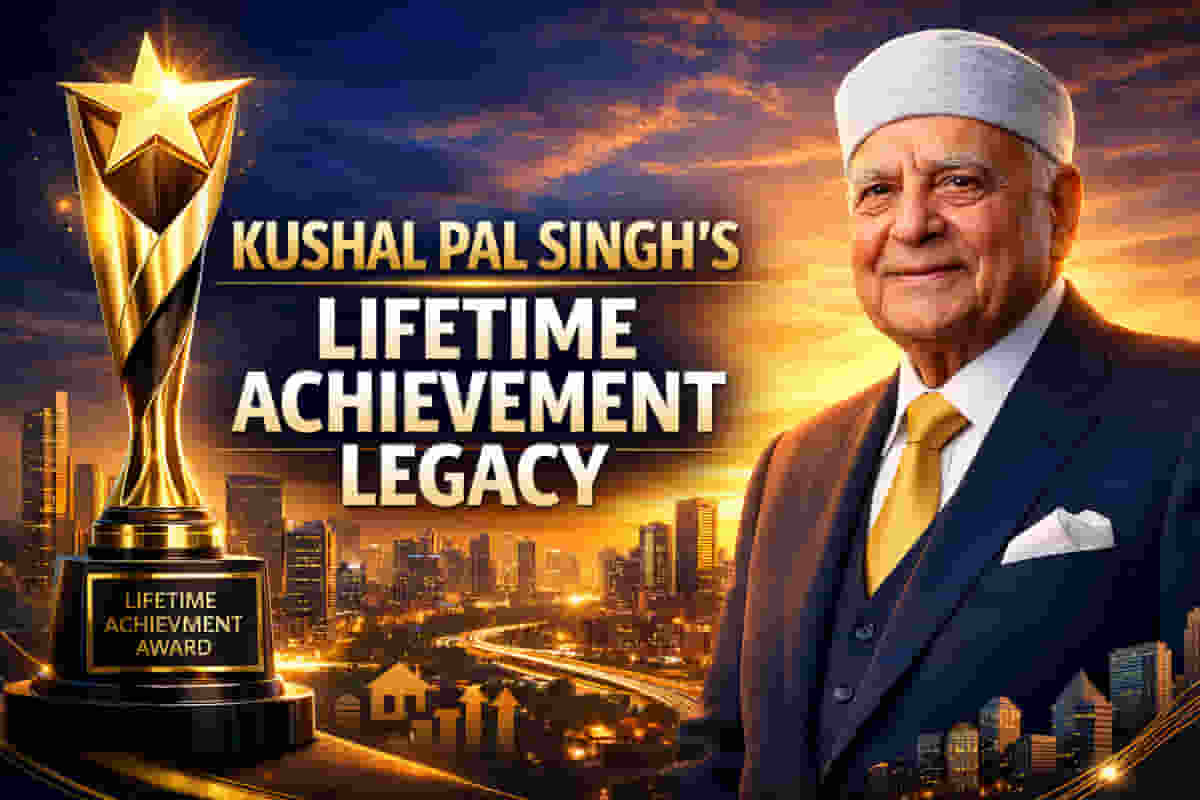
A Lifetime of Building
Kushal Pal Singh, the revered chairman emeritus of DLF, has been honored with the prestigious Lifetime Achievement Award. This accolade celebrates a career that extended far beyond constructing buildings, fundamentally reshaping Gurugram and symbolizing India's corporate ascent.
Singh, 96, jointly received the award with Dr. Cyrus Poonawalla. The jury recognized Singh's remarkable journey in unlocking India's vast real estate potential, a testament to his vision and perseverance.
The Genesis of Gurugram
The award specifically highlighted Singh's pivotal role in the transformation of Gurugram. What was once scrubland on Delhi's outskirts was envisioned and developed into a modern metropolis, a gleaming symbol of India's growing economic power.
- Singh personally led the acquisition of over 3,500 acres in Gurugram, negotiating with more than 300 farmers.
- His efforts involved sustained advocacy with policymakers and building trust with landowners, paving the way for private enterprise in urban development.
DLF's Growth Under Singh
Under Kushal Pal Singh's leadership, DLF evolved from a modest Delhi-based developer into India's undisputed largest real estate company. His strategic acumen was crucial in navigating challenges and achieving significant scale.
- DLF's market capitalization stood at an impressive nearly ₹1.73 lakh crore as of December 15.
- Singh stepped down as chairman in June 2020, leaving a legacy that far surpasses financial statements.
Overcoming Adversity
Singh's entrepreneurial path was not without its significant hurdles. The original DLF business, founded in 1946 by his father-in-law Chaudhary Raghvendra Singh, faced collapse after private urban development was prohibited post-1958.
- Facing outdated laws, a lack of institutional finance, and fragmented landholdings, creating integrated townships seemed an insurmountable task.
- At one point, selling the company was a serious consideration.
Visionary Development
Instead of succumbing to challenges, Singh found opportunity in adversity. He began acquiring land parcels in Gurugram in the late 1970s, laying the groundwork for what would become DLF City.
- Farmers were offered cash and equity, alongside commitments for schools, hospitals, and roads, which were subsequently delivered.
- DLF City emerged as one of India's first privately planned, funded, and governed townships, featuring wide roads, underground utilities, and extensive green belts.
Financial Prudence and Diversification
Singh steered DLF through periods of diversification and consolidation. His strategic use of asset sales was instrumental in managing and reducing significant debt.
- Debt levels once exceeded ₹22,000 crore.
- The rental arm, DLF Cyber City Developers, played a key role in restoring financial strength.
Impact
- This award reinforces the significance of the real estate sector in India's economic growth narrative.
- It highlights the potential for visionary leadership to drive large-scale urban development and economic prosperity.
- Investor confidence in established real estate players like DLF may see a positive sentiment boost.
- Impact Rating: 7/10
Difficult Terms Explained
- Chairman Emeritus: A former chairman who retains a title and often an advisory role, but without day-to-day operational duties.
- Market Capitalisation: The total market value of a company's outstanding shares, calculated by multiplying the current share price by the total number of shares.
- Urbanisation: The process by which populations shift from rural to urban areas, leading to the growth of cities and towns.
- Institutional Finance: Funding provided by financial institutions like banks, mutual funds, or pension funds, often for large-scale projects.
- Townships: Large, self-contained residential communities that include housing, commercial spaces, and amenities like schools and hospitals.
- Equity: Ownership interest in a company, represented by shares of stock. In this context, it also refers to land ownership or partnership stakes.
- Advocacy: Public support for or recommendation of a particular cause or policy.