 Whalesbook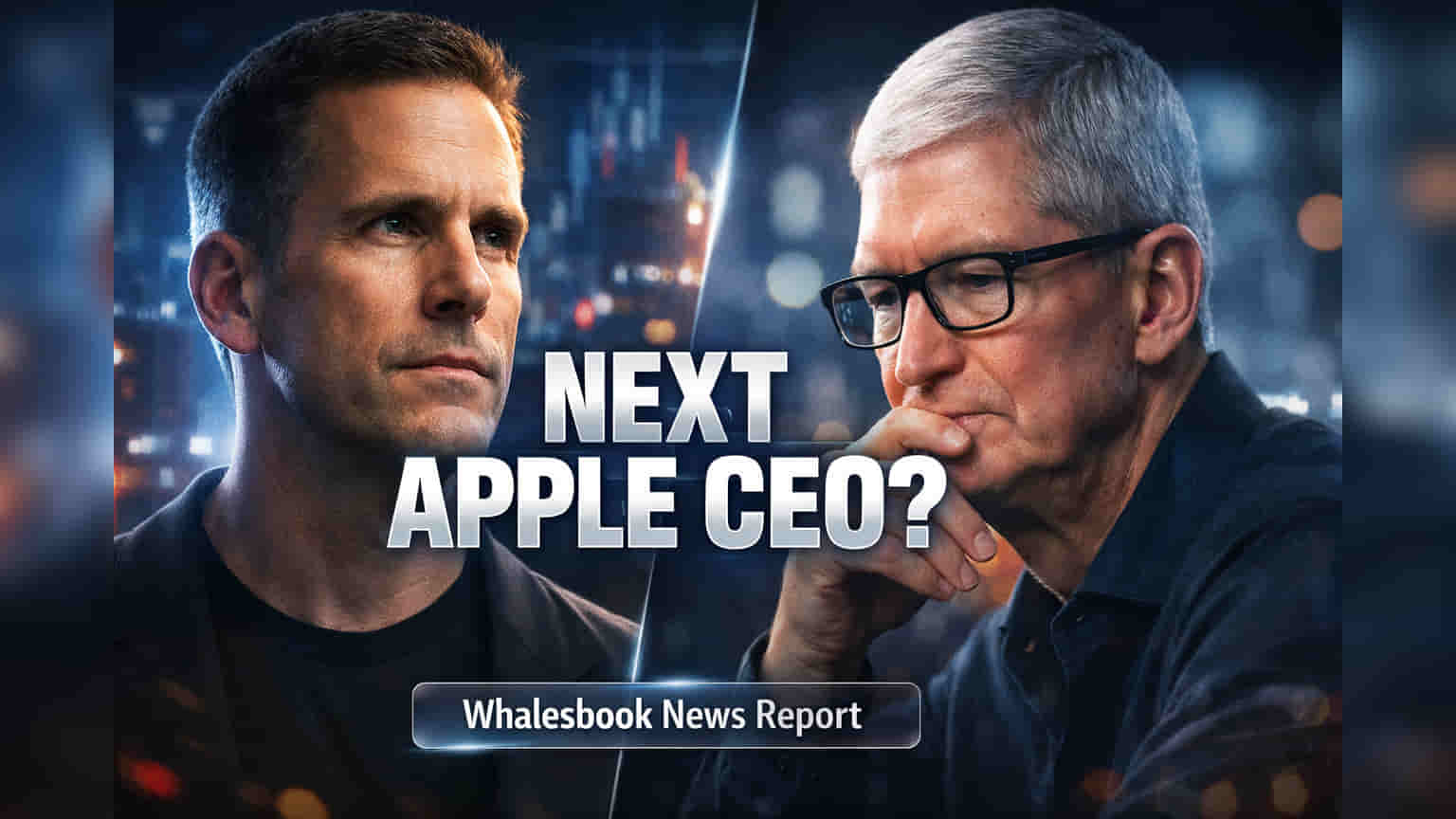


Leadership Succession
Talk about Apple's future leadership is focusing on John Ternus, senior vice president of hardware engineering. His growing role and public presentations position him as a likely internal candidate to eventually succeed CEO Tim Cook. Cook has publicly stated he has no immediate retirement plans and is committed to the company after more than two decades. However, this succession comes amid fiercer competition and rapid tech changes, especially in artificial intelligence.
Executive Tenure and Stability
John Ternus has steadily increased his influence since taking over hardware engineering in 2021, overseeing core products that generate about 80% of Apple's revenue. His prominent role in recent product launches signals increased trust from leadership. Meanwhile, Tim Cook, who has guided Apple's market capitalization from $377 billion to over $3.7 trillion since becoming CEO in 2011, has reiterated his commitment, which quashes speculation of an imminent departure. Recent executive departures, including its AI chief and legal officer, have added unease about leadership stability. The stock traded around $247.99 on March 20, 2026, with its market cap above $3.7 trillion. The company's trailing P/E ratio was near 31.4x.
The AI Investment Gap
While Ternus offers a steady, technically sound approach to refining Apple's established hardware, a key strategic question remains: his ability to guide the company through the AI revolution. Apple's AI strategy, focused on on-device processing and user privacy, contrasts with the cloud-centric, large-scale AI infrastructure development by rivals like Microsoft and Google. This difference is clear in spending. Apple allocated about $12.72 billion for AI in fiscal year 2025, a fraction of the nearly $400 billion collectively spent by Amazon, Alphabet, and Microsoft on AI infrastructure. Analysts worry Apple is falling behind in generative AI, with some calling its progress a "disaster" and noting a two-year lag. Despite this, Apple uses its vast device ecosystem to generate nearly $1 billion in App Store fees from AI apps in 2025, a unique revenue stream separate from its own AI innovation. This strategy, while profitable, questions its ability to lead in new AI-driven product categories for future growth, especially as competitors like Microsoft and Nvidia show strength.
Innovation Concerns and Criticisms
John Ternus, despite internal praise for his stability, has not shown a track record in launching entirely new product categories or shifting market paradigms, unlike past visionary Apple leaders. His focus has been optimizing existing products, which could be a weakness if Apple fails to innovate beyond current cycles. Furthermore, Apple's reliance on Google's Gemini for some AI features creates a key reliance on a direct competitor. Critics argue this move undermines Apple's AI strategy and raises concerns about tech independence. The stock, commanding a premium valuation with a P/E ratio of about 31.4x, has also seen insider selling, with executives including CEO Tim Cook divesting shares recently. This activity, along with the significant AI spending disparity, suggests Apple might face talent and innovation gaps that Ternus will find challenging to fill, especially with market sentiment in the tech sector volatile due to economic and geopolitical factors. Apple's annual filing (10-K) notes broad risks, including economic conditions and competition, that could affect future results.
Future Outlook
Despite these challenges, analysts generally remain positive, with a consensus "Moderate Buy" rating and a price target suggesting over 20% potential upside. Apple's historical performance and strong ecosystem loyalty provide a solid foundation. However, its future trajectory depends on its ability to leverage hardware strength and its privacy-focused approach into a leading AI position, a field where competitors are investing heavily. Tim Cook's successor, whether Ternus or another internal figure, will face a test not of hardware improvements, but of Apple's ability to make visionary leaps in artificial intelligence.