 Whalesbook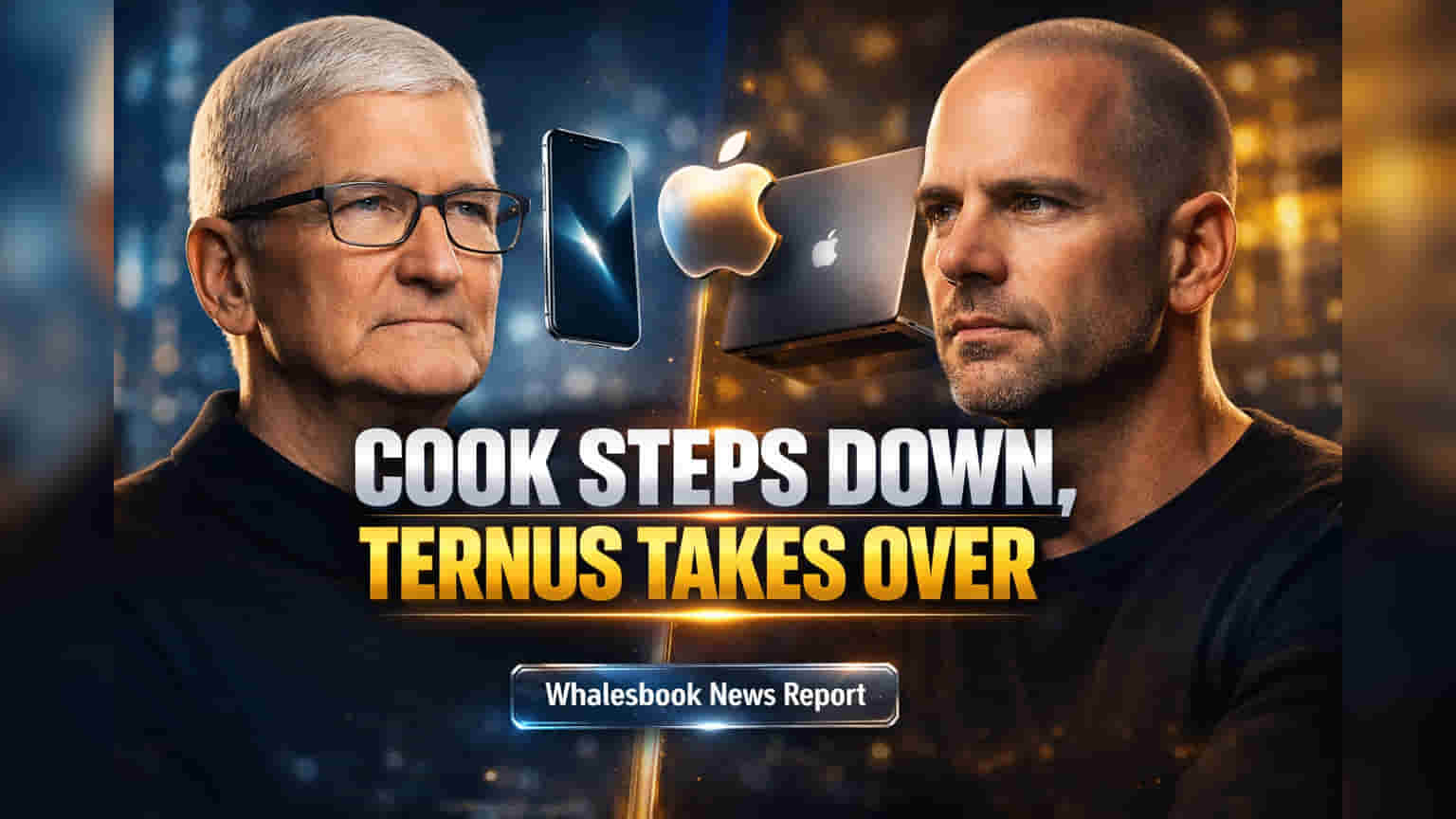


Leadership Change Details
Apple is entering a new phase as Tim Cook steps down as CEO, handing leadership to hardware chief John Ternus. This transition occurs as the tech industry, especially in AI, evolves rapidly, creating immediate challenges for Apple's future direction and market position.
Market's Initial Stock Reaction
Apple's (AAPL) stock dipped about 1% in after-hours trading on April 20, 2026, closing near $270.81 following the CEO announcement. This initial reaction suggests investors are weighing the impact of a hardware leader taking charge in a software-driven AI era. The transition was planned, but the dip shows market caution. Analysts generally expect Apple's product plans to continue, with some predicting a $350 stock price by late 2026 if execution remains strong.
Ternus's Hardware Expertise Meets AI Challenges
John Ternus brings 25 years of Apple experience, most recently as SVP of Hardware Engineering, where he oversaw innovations in iPhone, Mac, iPad, and AirPods, and led the shift to Apple Silicon. This hardware focus differs from rivals like Microsoft and Alphabet, known for software and ecosystems. Apple, valued at $4.01 trillion with a P/E of 34.19, trades higher than Microsoft (P/E 26.34) and Alphabet (P/E 31.61). Samsung's P/E has varied between 28.1x and 39.5x. The global AI market is expected to top $2.02 trillion in 2026, attracting heavy investment in infrastructure by companies like Microsoft and Google. Despite Apple's hardware-software integration strength, its AI capabilities, especially Siri, are seen as lagging. Ternus must now focus on deepening AI across Apple's products and finding new ways for users to interact with AI, as analysts suggest. The company's ongoing work in materials, repairability, and sustainability may continue. However, major AI investment is concentrated with companies like Nvidia and Microsoft, creating a tough competitive landscape.
Investor Concerns and Potential Risks
Under Tim Cook, Apple grew from $350 billion to over $4 trillion. However, the shift to John Ternus brings risks. The main worry is if a hardware-focused leader can successfully lead in the complex, software-heavy AI field, where Alphabet and Microsoft already have strong ecosystems and AI models. Apple's AI work, especially Siri, has faced criticism for delays and integration problems, putting pressure on Ternus to achieve major AI advances. Additionally, $24.2 million in insider selling over three months might suggest executives are cautious about future performance. While Apple has a strong GF Score™ of 98, indicating long-term promise, its high P/E of 34.19 combined with insider selling calls for investor caution. Future hardware bets, like foldables or AR, could be risky without strong, competitive AI integration.
Looking Ahead: Apple's AI Future
John Ternus takes over at a key moment, with investors watching Apple's AI strategy and its ability to grow beyond the iPhone. Analysts expect continued focus on innovation and ecosystem strength, using Ternus's hardware skills to potentially create new AI product categories. Apple's upcoming earnings and product reveals, like at WWDC, will signal Ternus's priorities and how Apple plans to compete in AI. Tim Cook will remain Executive Chairman to advise on strategy, but Ternus will manage day-to-day operations. His success in advancing AI while upholding Apple's hardware reputation will be vital for the company's future value.