 Whalesbook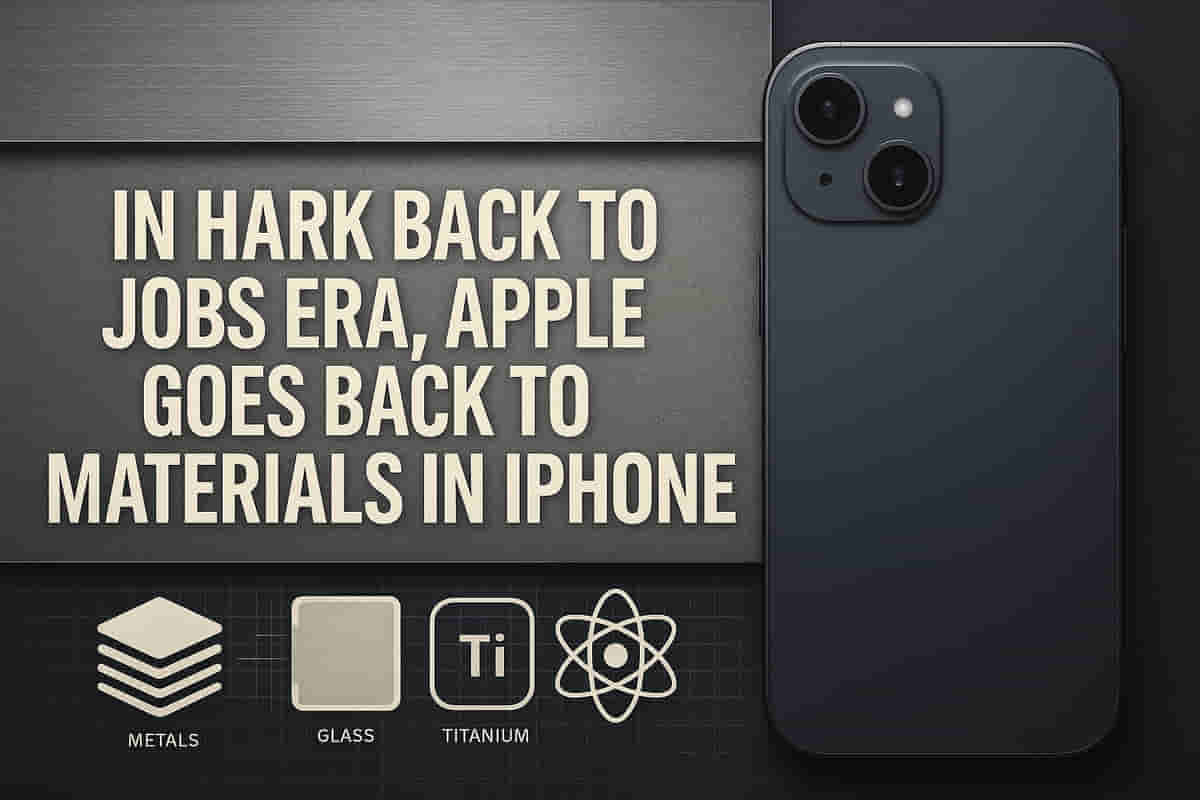


Apple Inc. has ramped up its global Research and Development (R&D) spending, dedicating more resources to engineering proprietary materials crucial for the design and customer experience of its flagship iPhone. Richard Dinh, vice-president and head of iPhone design, revealed in an exclusive interview that this focus on material innovation takes precedence over supply chain cost reduction.
The company is developing custom materials and leveraging its extensive material library to enable specific iPhone designs and enhance user experience. For instance, the aluminium used in the latest iPhones is combined with manufacturing techniques like forging for a unibody design to improve performance.
Apple's R&D spending rose by over 10% year-on-year to $34.6 billion, accounting for more than 8% of its total revenue, which itself grew by 6.4%. This increased R&D investment is vital given that iPhone sales contribute approximately half of Apple's annual revenue.
Innovations include a custom-designed vapour chamber made from 100% recycled components for better heat management, enabling advanced AI applications and on-device large language model processing. A new silicon oxynitrite ceramic coating on the Ceramic Shield glass offers three times greater scratch resistance, achieved by bonding at an atomic level.
Apple is also doubling down on repairability, designing iPhones for easier servicing and longer lifecycles. This includes using static-charged adhesive for battery removal and designing internal thermal architectures that can be accessed with screws. Material choices, such as proprietary titanium 3D printing, are aimed at improving durability and manufacturing optimization.
India remains a critical hub for Apple's operations, with the company aiming for its seventh consecutive year of double-digit sales growth in the country, projecting 15 million iPhones to be sold in India this year. Apple is also expanding its retail and manufacturing presence in India, with partners being asked to ramp up capacities to supply markets like the US.
Sustainability is also a key focus, with Apple aiming to increase recycled materials in its products and working with global manufacturing partners to transition to renewable energy in factories.
Impact
This news is highly impactful for investors tracking Apple and the technology sector. The focus on proprietary materials and enhanced customer experience suggests Apple is reinforcing its premium market position and potentially creating new competitive advantages through unique technological implementations. The increased R&D spend, especially when outpacing revenue growth, signals a commitment to future innovation and product differentiation, which can drive long-term growth and shareholder value. The emphasis on sustainability and manufacturing in India also points to evolving supply chain strategies that could impact geopolitical trade dynamics and manufacturing economics. Rating: 9/10.
Difficult Terms:
- Proprietary materials: Materials that are exclusively owned or developed by a company and are not available for others to use without permission.
- Unibody design: A design where the main body of a device is made from a single piece of material, often leading to increased strength and a seamless look.
- Forging: A manufacturing process where metal is shaped by being hammered or pressed, often resulting in strong and durable components.
- Vapour chamber: A passive cooling component used in electronic devices to dissipate heat efficiently by transferring thermal energy through phase change of a working fluid.
- Artificial Intelligence (AI): The simulation of human intelligence processes by computer systems, including learning, problem-solving, and decision-making.
- Large Language Models (LLMs): A type of AI model trained on vast amounts of text data to understand, generate, and process human language.
- Silicon oxynitrite ceramic coating: A specific type of ceramic material applied as a protective layer, known for its hardness and resistance to scratches.
- Ceramic Shield glass: A durable glass front cover developed by Apple for its iPhones, incorporating ceramic crystals for enhanced strength.
- Static-charged adhesive: An adhesive that uses electrostatic charge to hold components, making them easier to remove without damage during repairs.
- Titanium 3D printing: A manufacturing technique that uses titanium material layer by layer to create complex 3D objects, often for high-strength applications.