 Whalesbook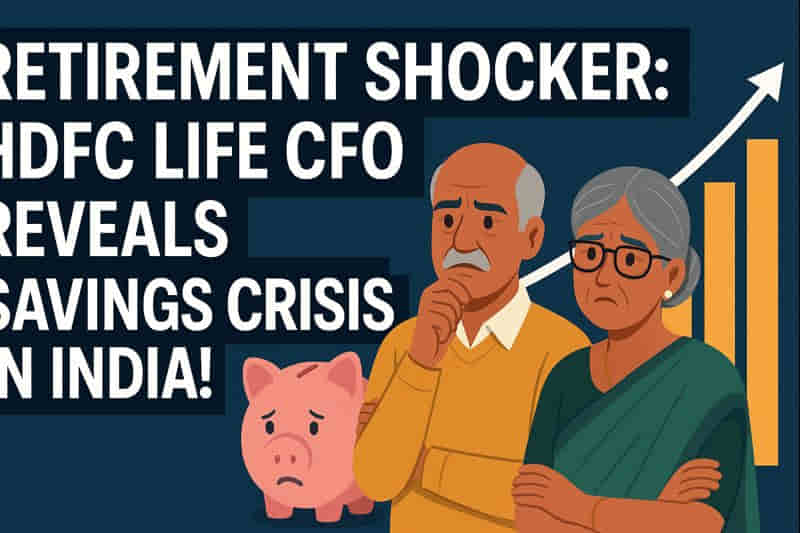
The Lede
India's demographic shifts are fundamentally reshaping retirement planning, according to Niraj Shah, Executive Director and Chief Financial Officer at HDFC Life. With life expectancy climbing and traditional family support systems evolving, individuals face increasing pressure to ensure financial self-reliance in their post-work years. Shah emphasizes a growing disparity between what people expect to need in retirement and their current savings efforts.
The Core Issue
Life expectancy in India has seen a substantial increase, rising to approximately 71 years from around 62 years at the turn of the millennium. This extended lifespan means individuals must plan for a longer period of income generation after retirement. Concurrently, the traditional joint family structure, which often provided a safety net, is weakening, making personal financial independence in old age more critical than ever.
Financial Implications
Surveys indicate a widening retirement savings gap, highlighting a disconnect between individuals' awareness of their future financial needs and their actual saving habits. This situation drives a demand for financial products that can provide steady, predictable income, offer robust protection against unexpected health expenses, and prevent the depletion of savings before life ends.
Official Statements and Responses
Niraj Shah explained that insurance-based retirement products are specifically designed to mitigate several post-retirement risks. These include the risk of living longer than expected (longevity risk), uncertainty in income streams, premature death, and the burden of health issues (morbidity). Such plans aim to deliver sustained income, ensure financial continuity for surviving spouses, and facilitate the creation of financial legacies for beneficiaries.
Expert Analysis
Shah advises individuals to carefully consider their personal circumstances when comparing insurance retirement plans with other savings options. Key factors include earning capacity, risk tolerance, and how financial needs may change over time. Predictable income, adequate protection coverage, and access to emergency funds are paramount during retirement. Insurance retirement plans span a range of risk profiles, from conservative guaranteed plans offering stable income to market-linked options for those with a higher risk appetite seeking potentially greater returns.
Taxation Benefits
Retirement planning products in India also offer significant tax incentives. Withdrawals from pension plans at maturity can be exempt from tax under Section 10(10A)(iii) of the Income-tax Act, 1961. Furthermore, the National Pension System (NPS) provides additional deductions, including up to ₹50,000 under Section 80CCD(1B) and employer contributions under Section 80CCD(2), which are available over and above the Section 80C limit.
Flexibility and Liquidity
Insurance retirement plans generally offer structured options for accessing funds. Policyholders may be able to take loans against traditional pension policies or make partial withdrawals under specific conditions like critical illness or disability. Some annuity products also provide the flexibility to increase contributions over time, allowing individuals to adapt their savings strategy.
Common Pitfalls to Avoid
Shah cautioned against common mistakes, such as underestimating retirement needs by over-relying on gratuity, provident fund, or employer benefits without accounting for inflation and rising healthcare costs. Delaying the start of retirement planning and failing to diversify investments according to risk appetite are other frequent errors that can lead to insufficient retirement funds.
Future Outlook
Regular reviews of retirement plans are crucial. Shah stressed the importance of adjusting contributions and coverage as life goals, expenses, and personal circumstances evolve. Periodic reassessment helps ensure that retirement plans remain adequately funded and aligned with long-term financial security needs, preventing both underfunding and over-insuring.
Impact
This news has a significant impact on the financial planning industry and individual investor behavior in India. It underscores the growing need for specialized retirement solutions and could drive innovation and product development within the insurance sector. For individuals, it serves as a critical reminder to proactively address their retirement savings.
Impact Rating: 7/10
Difficult Terms Explained
- Longevity Risk: The risk of outliving one's savings due to an unexpectedly long lifespan.
- Morbidity: The condition of suffering from a disease or illness. In insurance, it relates to the risk of health issues affecting individuals.
- Corpus: The total amount of money or capital accumulated for a specific purpose, like retirement.
- Annuity: A financial product that pays out a fixed stream of payments, typically to someone who has retired.
- Gratuity: A sum of money paid to an employee by an employer on leaving the service, as a recognition of long service.
- Provident Fund: A retirement savings scheme where employees and employers contribute a part of the salary, which accrues interest and is paid out upon retirement.