 Whalesbook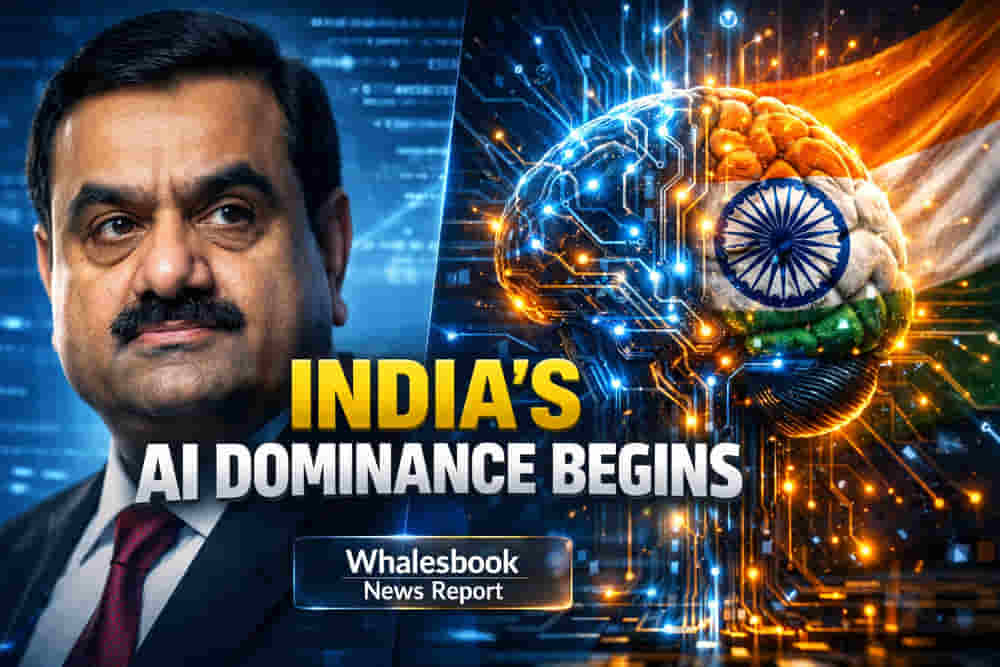
AI Centre Inauguration Marks India's Technological Leap
Industrialist Gautam Adani has officially inaugurated a new Artificial Intelligence Centre in Baramati, Maharashtra, heralding it as a pivotal moment for India's technological ambitions. Speaking at the event, Adani described the facility as a powerful 'symbol of a transformation' that signifies a major stride forward for the nation's growing prowess in cutting-edge technology.
Visionary Leadership and National Development
During his address, Adani paid tribute to veteran leader Sharad Pawar, acknowledging his decades-long influence on Baramati's development and India's agricultural sector. Adani shared his personal connection with Pawar, referring to him as a mentor who shaped national agricultural policies, underscoring the importance of pragmatic leadership beyond mere rhetoric.
AI as the Fourth Foundation
Adani positioned the inauguration within a broader narrative of India's technological evolution. He drew parallels between the rise of Artificial Intelligence and previous industrial revolutions, asserting that technological advancements historically create more employment opportunities rather than diminishing them. He highlighted how digital payment platforms like Paytm and PhonePe have already revolutionized local commerce, turning small shops into financial hubs. Adani stated that AI is poised to become the next foundational technology, predicting significant benefits for farmers who will transition from mere cultivators to autonomous, technology-enabled enterprises.
The Imperative of Technological Sovereignty
Adani stressed the urgency for India, which he referred to as 'Bharat,' to achieve technological sovereignty. He cautioned that a lack of indigenous AI development could lead to dependence, with India's market potentially being exploited by foreign entities for data training. "The AI future is not something that will automatically arrive in Bharat," he stated, emphasizing the proactive role required to secure India's AI landscape.
Energy, Data, and National Power
Highlighting the infrastructural backbone required for AI, Adani pointed to the symbiotic relationship between data centres and energy. He noted that the Adani Group is rapidly expanding its data centre platform, supported by its position as the country's largest solar manufacturing entity. This integrated strategy, he explained, positions the group to power the nation's digital future.
Adani framed the global race for AI dominance as a contest for national power and freedom. He concluded by stating that mastery over AI in the coming years will be the ultimate source of strength and autonomy for any nation.
Impact
This development signifies a crucial step in India's quest to become a global AI powerhouse. It highlights the strategic importance of domestic AI development, data infrastructure, and renewable energy to national security and economic growth. The initiative could spur further investment in India's tech sector, create specialized jobs, and enhance the country's competitive edge on the global stage. A potential impact rating of 8 out of 10 is assigned due to the strategic importance of AI and the Adani Group's significant role in infrastructure development.
Difficult Terms Explained
- Artificial Intelligence (AI): Technology that enables computers and machines to simulate human intelligence and problem-solving capabilities.
- Technological Sovereignty: A nation's ability to control its own technological destiny, including development, deployment, and data governance, free from external influence or dependence.
- Data Centre: A facility that centralizes an organization's IT operations and equipment, including servers, storage systems, and networking hardware, used to store and manage vast amounts of data.
- Industrial Revolutions: Major periods of technological advancement that fundamentally transformed economies and societies, such as the steam engine (first), electricity (second), and digital technology (third).
- Digital Platforms: Online services or systems that facilitate interactions and transactions, such as e-commerce sites, social media, and digital payment applications.