 Whalesbook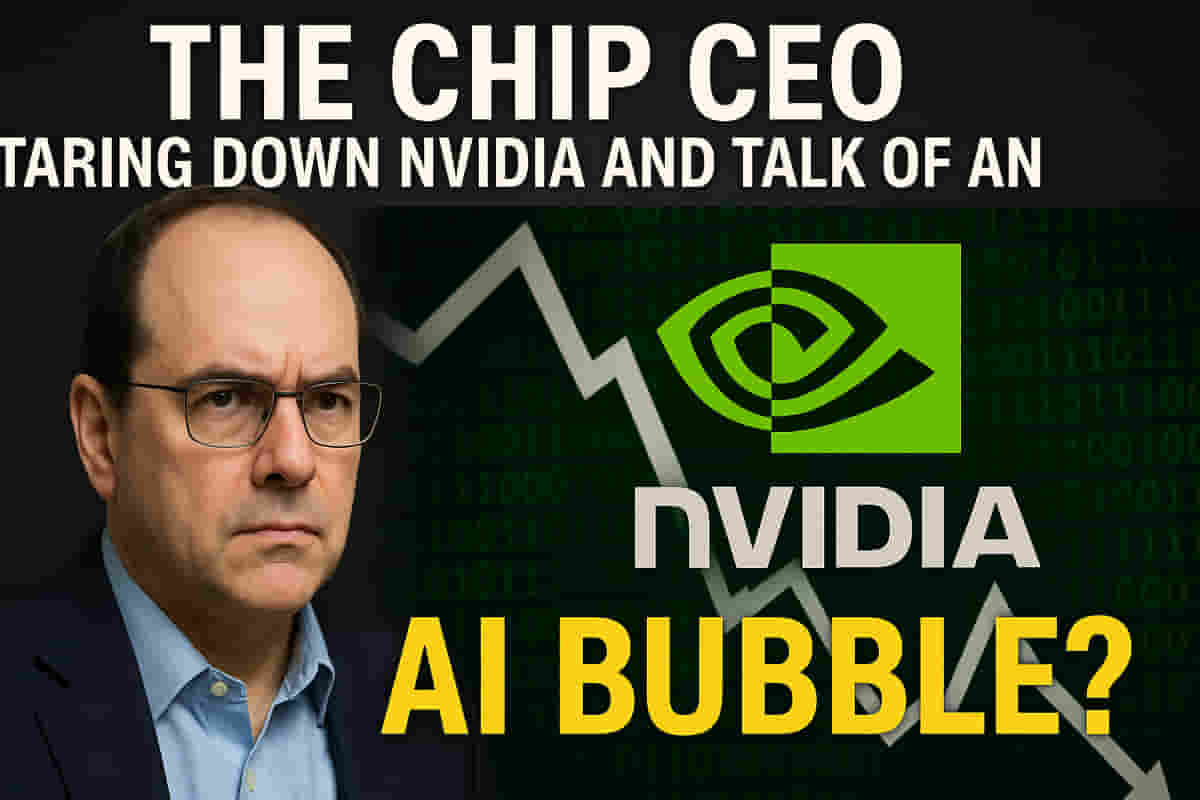


Lisa Su, the CEO of Advanced Micro Devices (AMD), announced a strategic shift in late 2022 to place artificial intelligence (AI) at the core of the company's product line, viewing it as a "once-in-a-lifetime opportunity." This bold move has led to AMD nearly quadrupling its market value, surging from $90 billion to over $335 billion, establishing itself as a key designer of powerful AI chips.
AMD is positioning itself as a strong competitor, aiming to break Nvidia's near-monopoly in the AI chip market. Su, with a Ph.D. in electrical engineering and a history of outcompeting Intel, is now challenging Nvidia, the dominant player in AI data center chips. AMD's MI450 chip is set to compete directly with Nvidia's offerings.
Significant deals have bolstered AMD's strategy. The company announced agreements with Oracle and OpenAI, with both set to purchase tens of thousands of AMD's upcoming MI450 AI chips. The OpenAI deal is particularly important, described by Su as "turbocharging our road map" and a strong endorsement for the MI450 chip slated for launch next year. AMD is also collaborating with Cisco Systems and a Saudi Arabian AI venture to build large data centers.
Impact: This news has a significant impact on the global semiconductor industry and the broader technology sector. By challenging Nvidia's dominance, AMD's success could lead to more competitive pricing, increased innovation, and greater choice for AI developers. This diversification is crucial as the demand for AI computing power is projected to reach $1 trillion annually by 2030. The increased competition is beneficial for end-users and the overall growth of the AI ecosystem. The AI chip market is a critical component of global technological advancement.
Rating: 8/10
Difficult Terms:
- Artificial Intelligence (AI): Technology that enables computers to perform tasks that typically require human intelligence, such as learning, problem-solving, and decision-making.
- Chip Designer: A company that designs the integrated circuits (chips) used in electronic devices, but may not necessarily manufacture them (e.g., AMD, Nvidia).
- Market Value: The total worth of a company's outstanding shares, calculated by multiplying the current share price by the number of shares.
- AI Race: The intense competition among technology companies to develop and deploy advanced artificial intelligence technologies and the hardware that powers them.
- CPU (Central Processing Unit): The primary component of a computer that performs most of the processing; the "brain" of the computer.
- Data Centers: Large facilities that house computer systems and associated components, such as telecommunications and storage systems, used for processing and managing vast amounts of data.
- Precision Electronics: Electronic components manufactured with extremely high accuracy and tolerance.
- Road Map: A plan that outlines the development and release schedule for a company's products or technologies.
- Marquee Deals: Significant and highly publicized business agreements.
- Insatiable Demand: A level of demand that is so high it cannot be satisfied.
- AI Bubble: A speculative market condition where the valuation of AI-related companies or technologies becomes excessively high, potentially leading to a sharp decline or crash.
- Circular Funding Arrangements: Financial strategies where a company's investment in another entity may lead to that entity investing back into the first company, creating complex financial ties.
- Warrants: Financial instruments that give the holder the right, but not the obligation, to buy or sell a stock at a specific price before its expiration date.
- Inferencing: In AI, the process of using a trained model to make predictions or generate outputs based on new data.
- Transistors: Tiny semiconductor devices that act as switches or amplifiers in electronic circuits, forming the building blocks of modern chips.
- Lobbying: The act of attempting to influence decisions made by officials in a government, most often legislators or members of regulatory agencies.