 Whalesbook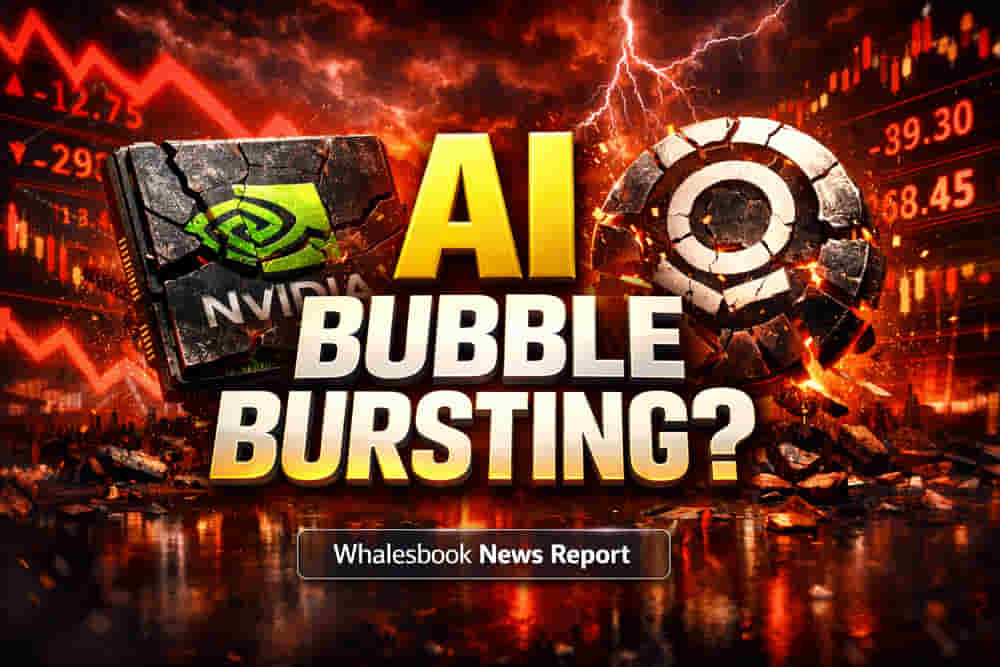
The AI Bubble Fear
The stock market's rally this year has been significantly propelled by the surge in artificial intelligence companies. Among the leaders, Nvidia and Palantir Technologies have seen extraordinary growth, capturing investor attention worldwide. However, a prominent voice from the past is now casting doubt on this rapid ascent.
Michael Burry, the hedge fund manager famously depicted in "The Big Short" for his correct prediction of the 2008 housing market collapse, believes this AI-driven market boom is unsustainable. He has emerged from a period of relative quiet to declare that a bubble is forming, one that he expects will eventually pop.
Michael Burry's Bold Thesis
Burry's core argument is that the market's enthusiasm for AI has detached from economic reality. He likens the current situation to the dot-com bubble of the late 1990s, which saw a massive inflation of tech stock prices followed by a dramatic crash. He suggests that the rapid investment and speculation surrounding AI companies are creating similar unsustainable valuations.
This isn't a critique of AI technology itself, but rather of how the market is valuing companies associated with it. Burry feels that the rapid investments, often between AI companies themselves, and the practical constraints of scaling infrastructure like data centers, are being overlooked in the rush to invest.
The Specific Bets
To capitalize on his thesis, Michael Burry has reportedly taken significant short positions against Nvidia Corporation and Palantir Technologies Inc. These bets are structured using put options, which are financial instruments that allow the holder to sell a stock at a predetermined price by a certain expiration date.
While the exact scale of his positions is not fully disclosed, reports suggest he has invested approximately $10 million in these put options. If Nvidia and Palantir stocks experience a substantial decline, these bets could potentially yield over $1 billion. Specifically, his bet on Palantir pays off if its shares drop to $50 from around $200, and for Nvidia, a fall to $110 from near $190 by 2027.
Market and Expert Reactions
The market's immediate reaction to Burry's pronouncements has been mixed, with Nvidia and Palantir shares experiencing volatility but not a dramatic collapse since his bet was revealed. Palantir CEO Alex Karp publicly dismissed Burry's analysis, calling him "bats\u2014crazy." Nvidia has also issued statements defending the integrity and transparency of its financial reporting.
Experts like Michael Green, chief strategist at Simplify Asset Management, point out Burry's history of being early with his market predictions. While his insights have often proven correct in the long run, the timing has sometimes been off, leading to periods where his positions were temporarily wrong. This raises the question of how quickly Burry's current bearish outlook might materialize.
Historical Parallels and Burry's Persona
Burry's career is marked by bold, contrarian bets against prevailing market trends. His successful shorting of the housing market during the subprime mortgage crisis, documented in "The Big Short," cemented his reputation. He operates with a unique persona, embracing the title "Cassandra Unchained" on X (formerly Twitter), alluding to the mythological figure whose grim prophecies were ignored.
His journey from a neurologist to a celebrated hedge fund manager, coupled with personal anecdotes about his left eye loss and autism diagnosis, adds to his compelling public image. He recently closed his hedge fund to launch a newsletter, "Cassandra Unchained," which quickly gained a large following, indicating a strong appetite for his investment insights, even when they challenge popular sentiment.
Impact
This news is significant as it pits one of Wall Street's most famous contrarian investors against the current market darlings of the AI sector. It injects a note of caution into a market that has been largely driven by optimism surrounding AI advancements.
For investors, Burry's bets highlight potential risks associated with highly valued growth stocks, especially in the AI space. While his predictions are not guarantees, they can prompt a re-evaluation of valuations and business fundamentals. A sustained downturn in these major AI companies could trigger broader market corrections and affect investor confidence globally.
Impact rating: 7/10
Difficult Terms Explained
- Bubble: A market phenomenon where asset prices rise rapidly and unsustainably, far exceeding their intrinsic or fundamental value, often fueled by speculation, before eventually collapsing.
- Hedge Fund: An alternative investment fund that pools capital from accredited investors and institutions, employing various strategies to generate returns, often involving complex financial instruments and leverage.
- Put Options: A type of financial derivative contract that gives the buyer the right, but not the obligation, to sell a specific asset (like a stock) at a predetermined price within a specified period. If the asset's price falls below the strike price, the option holder profits.
- Dot-com bubble: Refers to the speculative bubble and subsequent crash of internet-related companies' stock valuations in the late 1990s and early 2000s.
- Passive Investing: An investment strategy that aims to replicate the performance of a market index, such as the S&P 500, by buying and holding a diversified portfolio of securities, as opposed to actively trading or stock-picking.
- Data Centers: Facilities that house computing infrastructure, including servers, storage systems, and networking equipment, essential for running digital services and managing large amounts of data.
- Artificial Intelligence (AI): The simulation of human intelligence processes by machines, especially computer systems, enabling them to learn, problem-solve, and make decisions.