 Whalesbook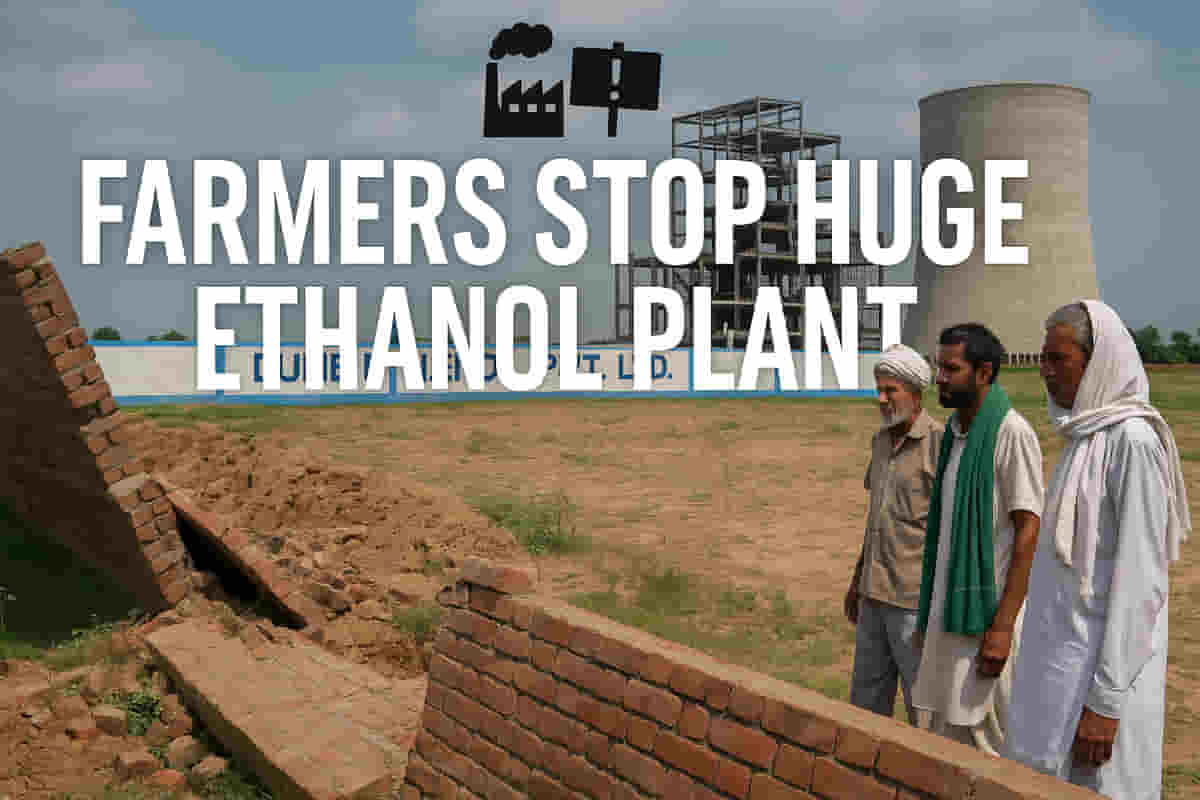
Massive Ethanol Plant Project Halted Amidst Violent Farmer Protests in Rajasthan
Dune Ethanol Pvt Ltd's ambitious Rs 450 crore ethanol manufacturing facility in Rathikheda village, Hanumangarh district, Rajasthan, has been ordered to cease all operations. The decision, made by local police and administrative officials on the evening of December 12, 2025, comes in the wake of escalating tensions and violent clashes between protesting farmers and authorities.
Farmer's Grievances Spark Unrest
Local farmers have been voicing strong opposition to the proposed grain-based ethanol plant since August 12, 2024. Their core apprehension centres on the potential environmental devastation the factory could unleash. Farmers argue that the daily generation of millions of litres of chemically contaminated wastewater from ethanol production, intended for underground disposal, will severely pollute groundwater reserves. This contamination, they fear, will lead to the inevitable destruction of agriculture, upon which the region's economy heavily depends.
Concerns extend to air quality as well. The agricultural community is worried about the ash generated from the factory's power plants, smoke emanating from its chimneys, and the pervasive stench of chemicals, posing grave threats to human health, livestock, and wildlife. Activists like Ravindra Ranwa of the Factory Hatao Kshetra Bachao Sangharsh Samiti emphasize that over a year of peaceful protest has been ignored, making the recent violent reaction an 'inevitable' outcome.
Company's Reassurance and Economic Claims
Dune Ethanol Pvt Ltd has presented a strong case for its project, highlighting its commitment to environmental safeguards and economic contributions. The company purchased approximately 45 acres of land for a plant with a capacity of 1,320 kilo litres per day (KLD) for ethanol production and a 24.5 MW power plant, representing a significant Rs 450 crore investment. Company representatives recently briefed the district administration, detailing the plant's advanced pollution control systems.
These include two 120 TPH boilers and five 70-metre-high field electrostatic precipitators (ESPs) designed to prevent atmospheric pollution from chimney exhaust. Dune Ethanol claims the factory will operate on a zero liquid discharge (ZLD) model, ensuring every drop of water is reused and no contaminated water is released into the ground. The company also stated that ash from fuel burning will be collected in silos and used by local brick kilns, with MoUs planned for this purpose. Furthermore, the plant requires substantial raw materials like rice, maize, and straw, promising fair prices for local farmers and generating significant annual procurement worth ₹2,100 crore for grains and at least ₹10 crore monthly for straw.
Escalation Leads to Halt
The situation rapidly deteriorated on December 10, 2025. Following a Maha Panchayat attended by thousands of farmers from dozens of villages, protestors, accompanied by tractors, marched towards the factory site. Their actions led to the collapse of the boundary wall surrounding the construction area. Despite the police deploying tear gas, batons, and plastic bullets, the overwhelming crowd forced officers to retreat. The clashes resulted in the vandalism and burning of sixteen vehicles, with dozens of farmers and police personnel sustaining injuries.
The administration had previously attempted to disperse protesting farmers on November 19, arresting a dozen individuals, after which the company commenced construction of the boundary wall. This action galvanized farmers into intensified campaigning and the organization of the Maha Panchayat.
Political Intervention Highlights Concerns
Members of Parliament have also drawn attention to the controversy. Kuldeep Indora, the Member of Parliament from Sri Ganganagar, recently addressed the Lok Sabha, questioning governmental and administrative functioning and highlighting the long-standing, ignored concerns of Rathikheda villagers. He detailed the project's potential technical and environmental risks, emphasizing the Tibbi region's reliance on groundwater-based agriculture and the devastating impact significant water extraction and pollution could have.
Nagaur MP Hanuman Beniwal echoed these sentiments, alleging that the Rajasthan government is prioritizing industrialists over local people's apprehensions and attempting to brand the project as 'environment-friendly' under pressure.
Impact Assessment
The immediate impact is the halt of a significant industrial project and sustained community unrest. For investors, this incident underscores the critical need for thorough environmental impact assessments and robust community engagement to mitigate risks associated with large-scale industrial development in rural India. It may lead to increased scrutiny and potential delays for similar projects across the country. While not directly impacting major stock indices, it highlights sector-specific risks in agro-processing and manufacturing.
Impact Rating: 6/10
Difficult Terms Explained
- Maha Panchayat: A large village council or assembly, often convened to discuss important community matters.
- Tubewell-based agriculture: Farming practices that rely on water drawn from underground wells, typically powered by electric or diesel pumps.
- Zero liquid discharge (ZLD): An advanced wastewater treatment and management strategy that aims to recycle and reuse all wastewater generated, ensuring no liquid waste is discharged into the environment.
- Kilo litres per day (KLD): A unit used to measure the volume of liquid processed or produced daily, commonly applied to water or industrial output.
- MW (Megawatt): A unit of electrical power, equivalent to one million watts. It measures the capacity of power generation plants.
- TPH (Tons Per Hour): A measure of the rate at which a substance or material is processed or produced, expressed in tons per hour.
- Field Electrostatic Precipitators (ESPs): Industrial pollution control devices that use static electricity to remove particulate matter from exhaust gases in chimneys, preventing air pollution.
- Memorandums of Understanding (MoUs): Formal written agreements between two or more parties outlining their common intentions and commitments.