 Whalesbook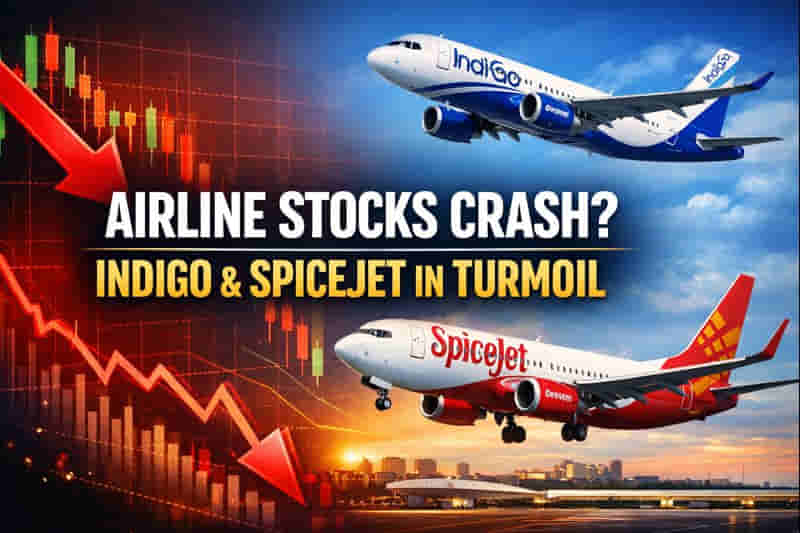
IndiGo Crisis Sparks Airline Stock Volatility
Indian airline stocks are navigating a period of significant instability. The sector has been shaken by operational disruptions at market leader IndiGo, which led to mass flight cancellations and considerable chaos. This turbulence has sent its stock into a tailspin, while competitor SpiceJet has seen its shares react to strategic fleet expansion announcements. Analysts are cautioning investors about continued volatility, suggesting that stock-specific performance will be the norm in the coming weeks.
The Core Issue at IndiGo
The recent widespread chaos and mass cancellations at IndiGo were primarily driven by a sharp shortage of flight crew, particularly pilots. This situation arose after the introduction of revised Flight Duty Time Limitation (FDTL) norms. These new regulations mandate increased rest hours and more humane crew rosters, which IndiGo has struggled to integrate into its operational network. The airline has been working to realign its operations to comply with these stricter guidelines.
Financial Implications and Market Movements
IndiGo's shares experienced a significant downturn, falling over 21 percent from the beginning of December to a low of ₹4,645 on December 11. Although the stock has since regained over 7 percent and closed marginally higher at ₹4,979.85 on December 17, extending gains for a fifth session, it remains below its pre-crisis levels. In contrast, SpiceJet shares saw a surge during IndiGo's crisis period. The company's announcement of fresh fleet capacity expansion fueled investor optimism, with its stock jumping up to 19 percent in just four days before moderating. However, SpiceJet's shares also ended the December 17 session down over 1 percent at ₹30.53, falling for a sixth consecutive day.
SpiceJet's Fleet Expansion Strategy
SpiceJet detailed its plans for operational fleet enhancement, aiming to double its capacity by the year's end. The airline has been working to bring grounded Boeing aircraft back into service, with plans to induct up to eight such planes by April 2026. Two aircraft have already rejoined the fleet, with two more expected by December 2025 and the remaining four by early summer 2026. SpiceJet announced on December 9 the induction of two Boeing 737 aircraft, which it stated would bolster its operational capability and capacity. The airline also plans to introduce up to 100 extra daily flights for the winter schedule.
Expert Analysis and Future Outlook
Siddharth Maurya, Founder & Managing Director at Vibhavangal Anukulakara, predicts continued instability for airline shares. He notes that IndiGo, despite its market leadership, faces operational and regulatory challenges that could impact earnings and cause underperformance due to capacity or cost influences. For SpiceJet, while short-term gains from market share expansion are possible, its long-term trajectory hinges on its financial health. Maurya concluded that the sector mood would likely not improve broadly, with stock-specific performance being the key driver.
Shravan Shetty, Managing Director at Primus Partners, views the current disruptions as a temporary blip for airline earnings during peak travel season, maintaining that the long-term growth story for the sector is intact. He also highlighted a need for increased competition beyond current players to foster better service standards.
Technical Viewpoints
Drumil Vithlani, Technical Research Analyst at Bonanza, offers a cautious technical outlook. For IndiGo, he notes a short-term bearish to neutral structure following a breakdown from a key support zone. The stock is attempting a mild pullback but remains below crucial moving averages, indicating downside pressure. A reclaim of the ₹5,150–5,200 level is necessary to alleviate selling pressure. For SpiceJet, the trend remains weak and corrective, trading within a downward-sloping channel. While a technical bounce towards ₹33–34 is possible if support at ₹30–31 holds, the overall bias is cautious until higher levels are regained.
Impact
This news directly impacts investors in the Indian aviation sector, affecting share prices of InterGlobe Aviation (IndiGo) and SpiceJet. The operational issues at IndiGo could lead to temporary disruptions for travelers and potentially affect pricing. While the long-term outlook for Indian air travel remains positive, these near-term challenges create uncertainty for stakeholders. The sector's performance is closely watched as an indicator of economic activity.
Impact rating: 7/10
Difficult Terms Explained
Flight Duty Time Limitation (FDTL) refers to regulations that govern the maximum number of hours pilots can fly and the minimum rest periods they must have. Exponential Moving Averages (EMAs) are a type of technical indicator used in financial analysis to track price trends, giving more weight to recent data. Relative Strength Index (RSI) is a momentum oscillator used in technical analysis to measure the speed and change of price movements, indicating whether a stock is overbought or oversold.