 Whalesbook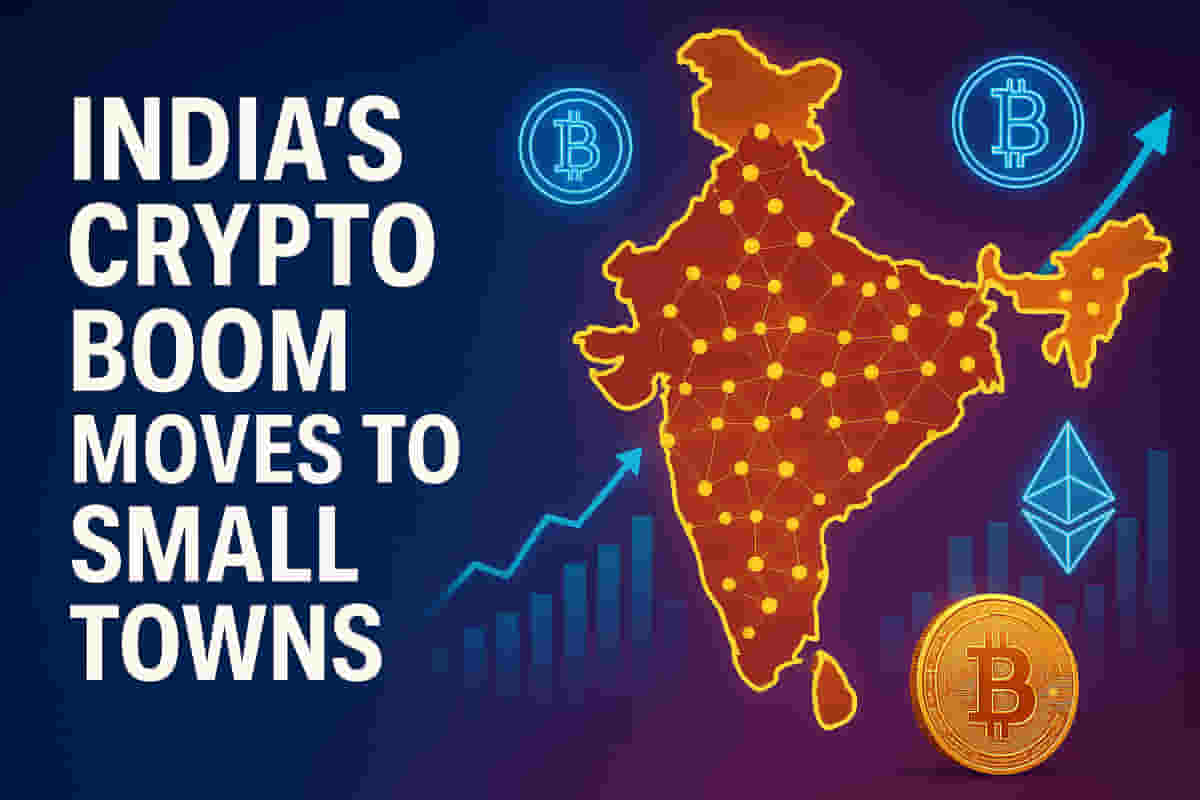
The Shifting Investment Landscape
A groundbreaking report by CoinSwitch, titled "India’s Crypto Portfolio: How India Invests 2025," released on December 15, highlights a dramatic transformation in the country's cryptocurrency investment landscape. Uttar Pradesh has emerged as the leading state for crypto investments, contributing 13.0% of the total on the CoinSwitch platform. This surge signifies a profound geographical shift, moving investment activity away from traditional metropolitan hubs towards smaller cities and towns across India.
The findings, based on data from over 2.5 crore users, reveal that states like Maharashtra (12.1%) and Karnataka (7.9%) have been surpassed by Uttar Pradesh. This trend underscores the growing financial participation from regional India, redefining where and how digital assets are being acquired. The data strongly suggests a sustained movement of investment capital and interest towards non-metro regions.
The report points to a significant decentralization of crypto investment activity. Tier 2 cities now constitute 32.2% of CoinSwitch’s user base, while Tier 3 and Tier 4 cities collectively account for 43.4%. This means that more than 75% of the platform's crypto engagement originates from outside India's major metropolitan centers. This broadens the base of digital asset adoption significantly.
Uttar Pradesh and Maharashtra are noted as leading states in "buy-the-dip" strategies, indicating active participation even during market corrections. This suggests a more engaged and perhaps sophisticated investor base emerging from these regions.
Asset Preferences Evolve
In terms of asset allocation, Bitcoin has once again become the most-invested cryptocurrency. It now holds an 8.1% allocation, regaining its top position from cryptocurrencies like Dogecoin. This resurgence is attributed to renewed institutional interest and favorable macroeconomic conditions influencing the global crypto market.
Ripple (XRP) has also experienced a notable increase in trading activity compared to the previous year. This enhanced engagement places XRP among the platform's most actively traded digital assets, reflecting evolving investor strategies and diversification efforts.
Investor Demographics
The Indian crypto investor base remains predominantly youthful. Users aged 26–35 years contributed the largest share of total investments, making up 45% of the market, a slight increase from 42% in the prior year. The younger demographic, aged 18–25 years, accounted for 25.3% of investments, showing a small decrease in their relative contribution.
Participation from older age cohorts, generally considered more risk-averse, remained relatively stable. This indicates that while the youth drive much of the market's growth, older investors are also maintaining their presence in the digital asset space.
Gender Participation Insights
Across India, women represent approximately 12% of cryptocurrency users, highlighting a persistent gender gap in this sector. However, the state of Andhra Pradesh presents a striking exception. In Andhra Pradesh, women accounted for 59% of the state's crypto investors, significantly outnumbering male participants by 18%.
This anomaly in Andhra Pradesh suggests that regional cultural or socio-economic factors can play a crucial role in driving gender participation in digital finance. It offers a unique case study for increasing female involvement in the broader fintech and crypto space.
State-Specific Risk Appetites
Different states exhibit varying levels of risk tolerance. Karnataka leads in the allocation to blue-chip assets, suggesting a preference for more established and stable cryptocurrencies. Andhra Pradesh shows a stronger inclination towards large-cap cryptocurrencies, indicating a balance between risk and potential reward.
Conversely, Bihar demonstrates a relatively higher exposure to mid- and small-cap assets. This points towards a more risk-forward approach adopted by investors in Bihar, seeking higher returns from smaller, potentially more volatile assets.
Expert Analysis
Ashish Singhal, Co-founder of CoinSwitch, commented on the report's findings. He stated that the data indicates a maturing market where investors are increasingly making conviction-led decisions. Singhal emphasized the broadening of participation beyond just the major metropolitan centers, signaling a more inclusive and widespread adoption of digital assets in India.
Impact
This news indicates a significant trend of financial inclusion and digital asset adoption in India's non-metro regions. It suggests a maturing market that is becoming more accessible and diversified geographically. The shift could influence broader economic development, financial literacy, and the growth of digital infrastructure in smaller towns. It also highlights the evolving nature of investment preferences and risk appetites across different demographics and regions within India.
Impact Rating: 7/10
Difficult Terms Explained
Cryptocurrency: A digital or virtual currency secured by cryptography, making it nearly impossible to counterfeit or double-spend.
Bitcoin: The first and most well-known cryptocurrency, operating on a decentralized blockchain technology.
Dogecoin: A popular cryptocurrency originally created as a joke, but which gained significant traction and value.
Ripple (XRP): A digital payment protocol and cryptocurrency designed for fast, low-cost international money transfers.
Tier 2 Cities: Medium-sized cities, typically with a population between 100,000 and 1 million, that are developing economically.
Tier 3 and Tier 4 Cities: Smaller cities and towns with populations below 100,000, often considered rural or semi-urban.
Blue-chip Assets: Investments in large, reputable, and financially sound companies with a long history of stable earnings. In crypto, this refers to top-tier, established cryptocurrencies.
Large-cap Cryptocurrencies: Cryptocurrencies of companies with the largest market capitalization, generally considered more stable.
Mid-cap Assets: Investments in companies with medium-sized market capitalization, offering a balance between growth potential and risk.
Small-cap Assets: Investments in companies with small market capitalization, often higher growth potential but also higher risk.
Buy-the-dip: An investment strategy where investors purchase assets when their price has fallen, anticipating a subsequent rise.