

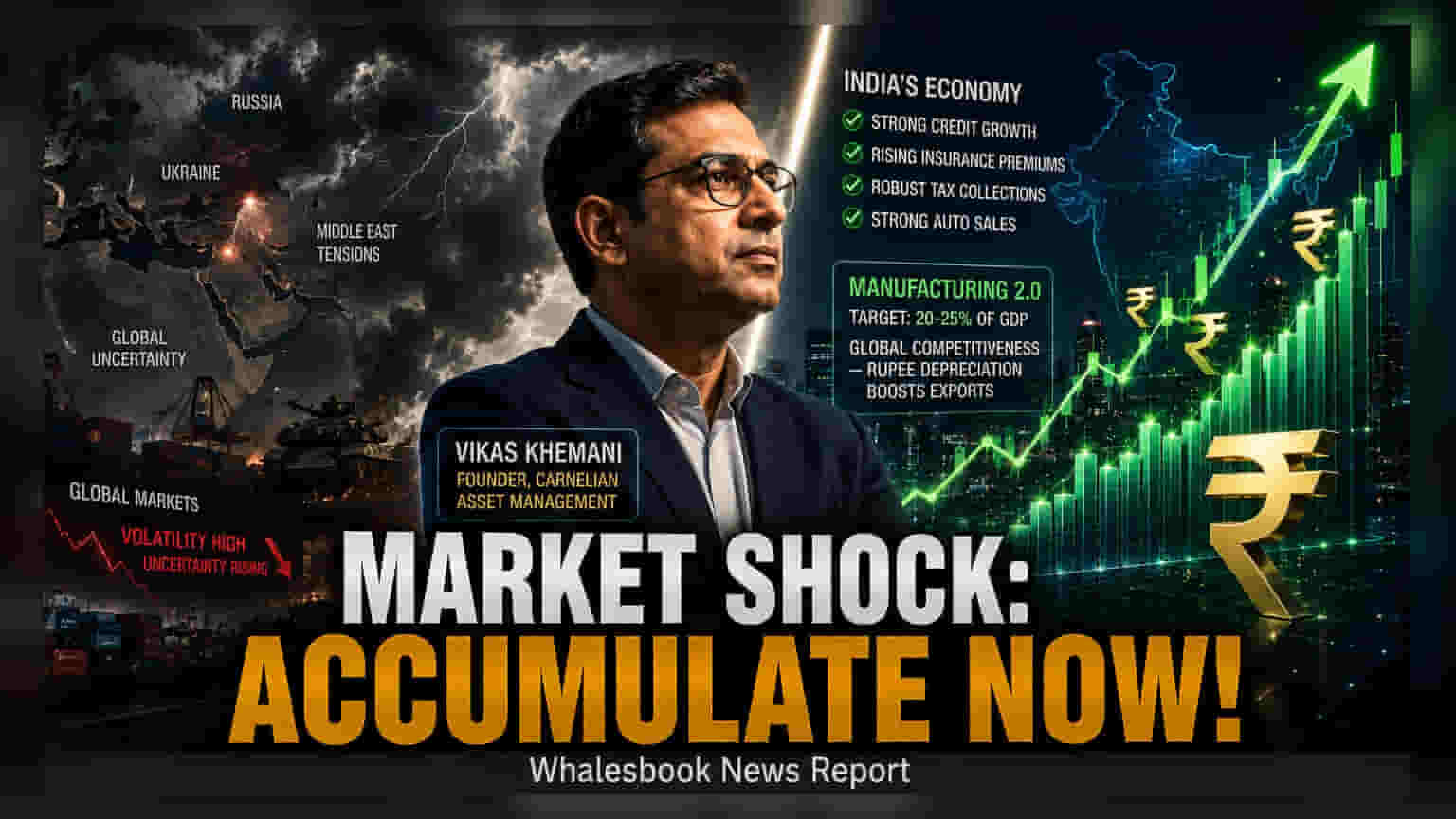
Vikas Khemani, founder of Carnelian Capital, suggests current market valuations and strong microeconomic indicators present an opportunity for long-term investors to accumulate quality stocks. He highlights India’s manufacturing sector as a key structural growth engine, even as geopolitical uncertainties remain a risk to short-term stability.
Vikas Khemani, the founder of Carnelian Asset Management, has pointed to a divergence between the global macroeconomic environment and the domestic microeconomic reality in India. While global uncertainty remains, Khemani believes the resilience of the Indian economy provides a compelling case for investors to view the current market correction as an accumulation opportunity. He notes that while some market volatility may continue, the next 12 to 18 months could prove rewarding for those focusing on strong fundamental growth.
Khemani draws parallels between the current market environment and 2022, a year when geopolitical tensions and supply chain disruptions initially spooked investors before a subsequent market recovery. He observes that recent quarterly corporate earnings have remained robust, defying negative expectations. Indicators such as strong credit growth, rising insurance premiums, consistent tax collections, and healthy auto sales suggest that the underlying economic activity in India remains buoyant, despite broader global concerns.
Central to his outlook is the concept of "Manufacturing 2.0." Khemani believes that India is undergoing a structural shift, with the goal of increasing the manufacturing sector's contribution to the national GDP from roughly 15-16% to 20-25% over the next decade. He argues that new trade agreements and the recent depreciation of the rupee—which has fallen by about 14-15% against major currencies following regional conflict-related adjustments—have made Indian manufacturing more competitive on the global stage. This trend is expected to provide long-term benefits, particularly for mid- and small-cap companies where much of the manufacturing capacity is concentrated.
Despite this optimistic view, Khemani maintains a balanced perspective on risks. Investors should remain mindful that the same currency depreciation that helps exporters can also increase the cost of imports for domestic industries. Furthermore, geopolitical instability continues to pose a threat to global trade and could introduce short-term market volatility. There is also the inherent risk of execution, as shifting toward large-scale manufacturing requires consistent capital spending and operational success over many years.
Khemani, who was appointed Chairman of the Association of Portfolio Managers in India (APMI) in August 2026, emphasizes that while pockets of overvaluation exist, the market is emerging from a consolidation phase. For investors, the monitorable moving forward will be how individual companies navigate these macro pressures while maintaining their earnings growth. As the market moves through this period, the focus on structural themes, rather than broad market trends, remains a key factor in navigating the current environment.