 Whalesbook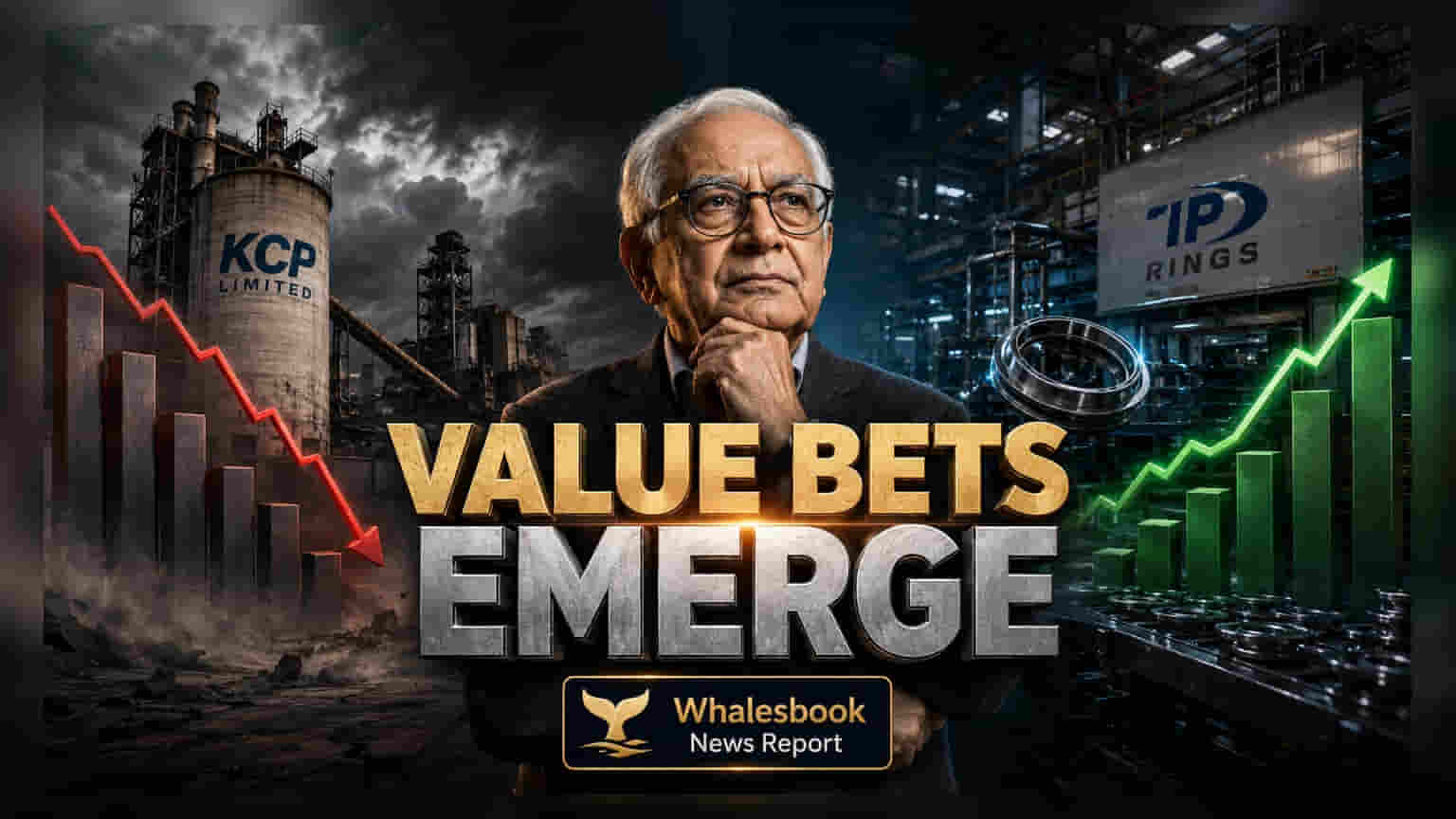


Govindlal Parikh's investment choices highlight a different market view from the current focus on artificial intelligence and technology.
By investing in KCP Limited and IP Rings, Parikh is backing established industrial companies. He believes that solid fundamentals and intrinsic value will eventually prove more important than speculative growth.
KCP Limited: Undervalued Industrial Giant
KCP Limited, based in Chennai, operates in cement and sugar. Despite its large cement capacity and significant sugar operations in Vietnam, its market value is relatively low at ₹2,118 crore. The company has shown consistent growth, with sales and EBITDA growing at 12% annually and net profit at 34% over five years. KCP's P/E ratio of 14x is well below the cement industry average of 28x, and its P/B ratio of 1.08x offers a safety margin for value investors.
IP Rings: Potential Turnaround Play
IP Rings Limited manufactures engine and transmission parts. With a market value of ₹152 crore, it's not widely followed. While margins were squeezed recently, operating margins are stabilizing in FY26. The company ended its collaboration with Japan's Nippon Piston Ring. Although its P/E might seem high, IP Rings trades at about 7.5 times its free cash flow and 1.5 times its book value. Its cash conversion cycle is strong at -25 days, and it consistently generates cash from operations.
Parikh's Value Strategy
Parikh's investment approach prioritizes long-term value over quick gains from market trends. He has held core businesses for over a decade, favoring overlooked companies. Unlike the market's focus on AI, KCP appears much cheaper than peers like India Cements. The auto ancillary sector, where IP Rings operates, has a sector P/E around 40.1x, but IP Rings's P/B of 1.5x is more typical. The sector is expected to see 20% earnings growth annually. Both stocks have seen price drops recently, with KCP down 34% and IP Rings down about 21.7%.
Risks to Consider
IP Rings has a history of margin issues and losses, though recent figures are more hopeful. Ending its partnership with Nippon Piston Ring creates uncertainty. Its high reported P/E can be a concern, even with good free cash flow and book value multiples. The auto ancillary sector is tied to the automotive industry's cycles. KCP operates in sectors vulnerable to economic slowdowns, as shown by its FY25 profit decline. Its negative ROE in FY25 and potential capitalization of interest costs also warrant caution.
What This Means for Investors
Govindlal Parikh's move suggests he believes traditional industries will offer good value again. His investments in KCP Limited and IP Rings encourage other investors to look beyond the AI hype and find opportunities in overlooked cyclical and industrial stocks based on solid valuation and long-term prospects.