

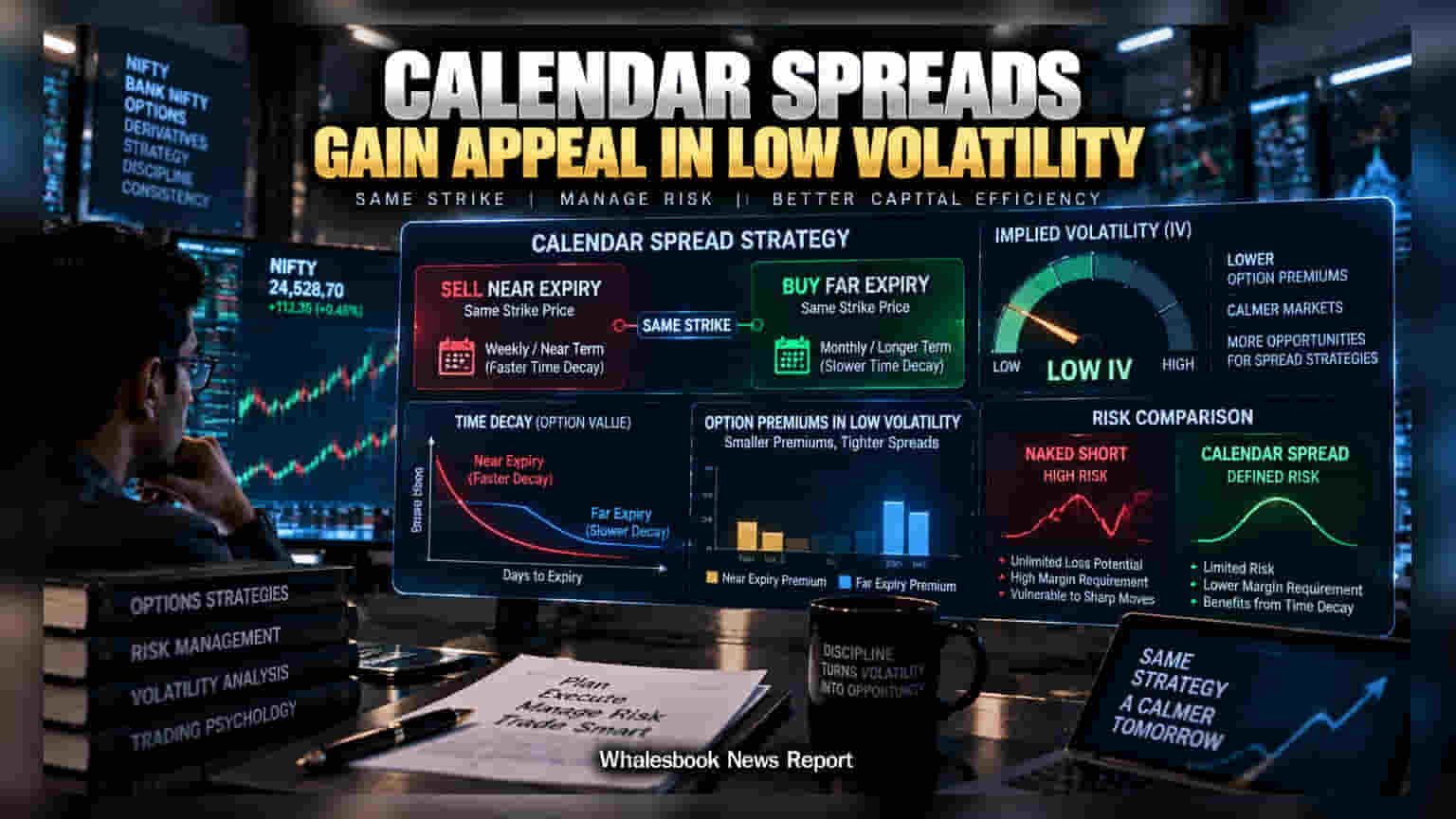
When market volatility is low, option selling becomes risky because premiums are thin and sudden moves can cause large losses. A calendar spread helps traders manage this by balancing short-term and long-term contracts. This strategy can reduce margin requirements and take advantage of time decay, but traders must watch for price spikes and volatility changes.
When the market remains calm, implied volatility—a measure of expected future price movement—often drops. For option sellers, this environment presents a difficult trade-off. The premiums collected for selling options shrink, yet the risk of a sudden, sharp market move remains. This creates a situation where the potential reward for writing a 'naked' or uncovered option is low, while the exposure to a sudden loss is high.
The Calendar Spread Strategy
To manage this risk, traders often look toward calendar spreads. This strategy involves selling an option that expires in the near term while buying an option of the same strike price that expires later. Because the longer-dated option usually costs more, the trade is entered for a net cost. The primary goal is to benefit from the faster loss of value in the near-term option as it approaches expiry. This value loss, known as time decay, works more quickly on the near-term contract than on the longer-dated one.
Why Margin Efficiency Matters
For Indian traders active in the National Stock Exchange (NSE) derivatives segment, capital efficiency is a critical concern. Selling uncovered options requires significant margin capital under regulatory rules. By adding a longer-dated option, the calendar spread creates a defined structure that can significantly reduce these margin requirements compared to naked selling. This allows traders to express a neutral or low-volatility view without locking up excessive capital.
The Reality of Market Risks
Calendar spreads are not risk-free. While they offer a more structured approach, they remain vulnerable to large, unexpected price movements. If the underlying price of an index like Nifty or Bank Nifty moves rapidly away from the chosen strike price, the position can suffer losses. Furthermore, the strategy is sensitive to changes in volatility. If the market suddenly becomes nervous and implied volatility spikes, the impact on the two legs of the spread may differ, potentially affecting the overall value of the trade.
Another practical factor is the cost of execution. Because this strategy involves multiple legs, transaction costs including brokerage, exchange fees, and taxes can impact the final outcome. Traders also need to ensure liquidity in the specific strikes they choose, as wide bid-ask spreads can erode the potential gains from the decay.
What Traders Monitor
In the current Indian derivatives market, weekly expiries have become very popular. Traders focusing on these contracts must closely monitor the proximity of the stock or index price to their selected strike as the expiry date nears. Sharp price moves near the end of the week can turn a spread position into a loss. The key monitorable for anyone using this approach is the relationship between near-term volatility and longer-term volatility, as this differential dictates the effectiveness of the strategy.