 Whalesbook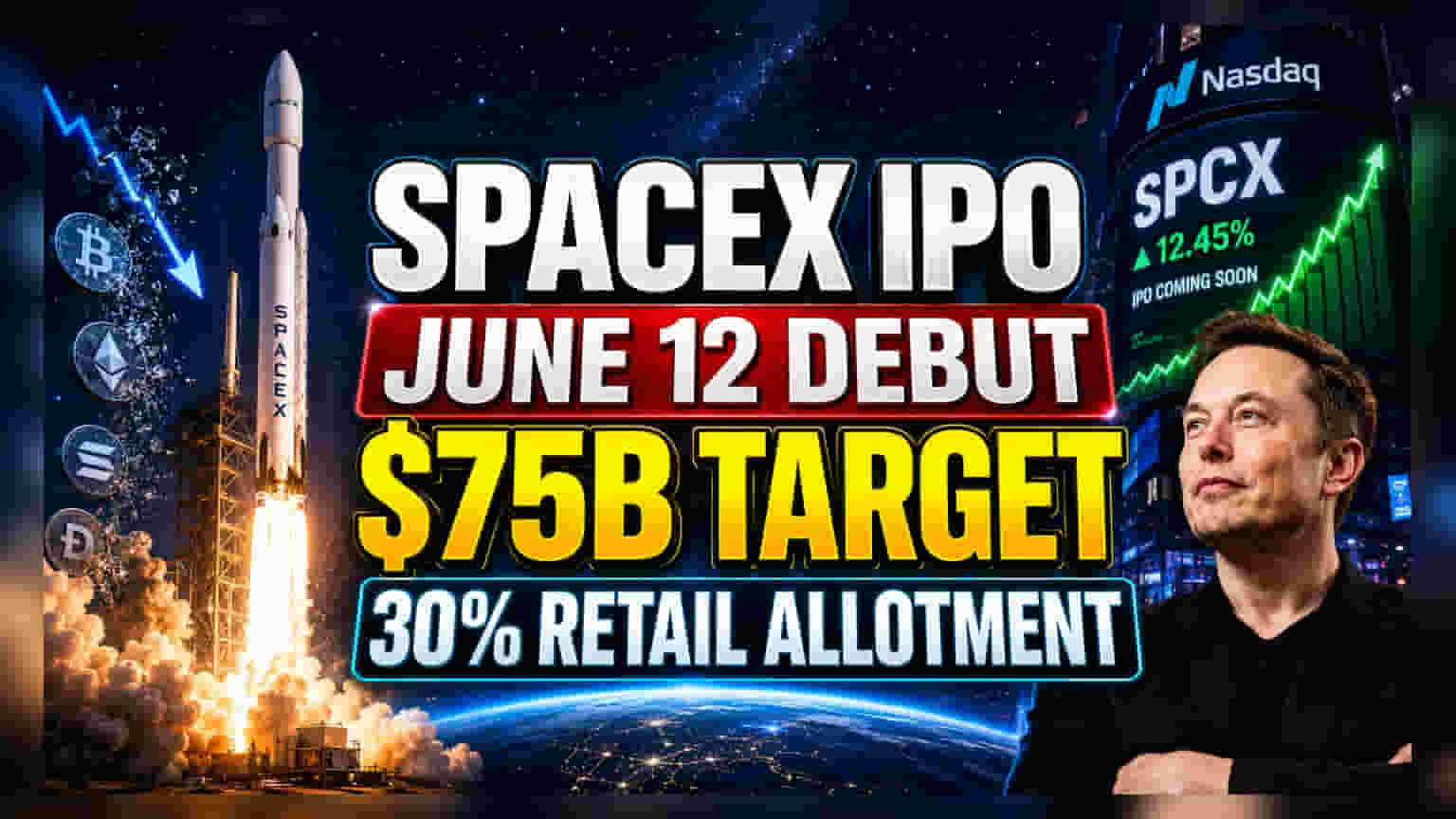


SpaceX is set to debut on Nasdaq under the ticker SPCX in what is being called the largest IPO in history. With a valuation of $1.75 trillion and $75 billion aimed to be raised, the event is causing ripples across global markets. As retail investors prepare for a massive 30% allocation, market analysts are closely watching how the intense capital demand might shift liquidity away from other risk-on assets, including cryptocurrencies, amid broader interest rate concerns.
What Happened
SpaceX is moving to go public on the Nasdaq exchange under the ticker symbol SPCX. Following a highly anticipated buildup, the company has confirmed its pricing date for June 11, 2026, with trading expected to begin on June 12, 2026. This IPO is positioned to be the largest in history, with the company aiming to raise approximately $75 billion at a target valuation of roughly $1.75 trillion. A key detail for retail investors is the allocation of up to 30% of the issued shares specifically for individual investors, a significantly higher portion than is standard for mega-cap listings. The company has bypassed the traditional variable price range process, instead setting a fixed issue price of $135 per share.
Why This Matters For Investors
This IPO represents a major liquidity event for global markets. Because of its massive scale, the listing requires a significant movement of capital. Financial analysts have observed that when such large, high-profile offerings launch, they often pull money out of other speculative assets. This is why market sentiment has recently shown a connection between the upcoming IPO and volatility in the cryptocurrency market. Investors looking to participate in the SpaceX offering may be selling off other positions—including crypto holdings—to free up capital, a trend that can create short-term downward pressure on those assets. Whether this liquidity shift is temporary or suggests a deeper change in investor risk appetite remains a key monitorable.
The Bigger Business Context
Investors should understand that the SpaceX they are buying into today is different from the rocket company of the past. Following its merger with Elon Musk’s AI firm, xAI, in February 2026, the company has repositioned itself as a vertically integrated giant. It now combines launch services (Falcon 9 and Starship), satellite internet (Starlink), and an AI infrastructure division. This combined entity is betting on the future of 'orbital data centers,' where SpaceX aims to use its launch capabilities and satellite network to power large-scale AI compute workloads. The $1.75 trillion valuation reflects this pivot, but it also means the stock's performance will depend on the successful integration of these diverse, capital-intensive business lines.
How Investors May Read This
For those watching the stock, the primary factor is the 'valuation test.' At a $1.75 trillion market cap, SpaceX immediately ranks among the most valuable companies in the world. Investors are paying a premium based on projected future growth rather than current profitability, as the combined AI and rocket entity has reported significant operating losses. Additionally, market participants are keeping a close eye on the Federal Reserve and interest rate policies, as higher rates generally make investors more cautious about loss-making, high-growth tech stocks. If the broader market experiences pressure, the high valuation of SpaceX could lead to volatility in its early days of trading.
What Could Go Wrong
There are distinct risks tied to this IPO. First, there is a significant governance concern regarding the dual-class share structure. Elon Musk will retain approximately 85% of the voting control, meaning public shareholders will have little say in the company’s strategic direction. Second, the company faces material execution risk. Merging a rocket manufacturer with an AI lab and a social media platform is operationally unprecedented and extremely expensive. Finally, there is the risk of high expectations; if the company fails to show progress in its AI or Starlink revenue targets, the valuation may face downward pressure from institutional investors who may be more sensitive to earnings than retail participants.
What Investors Should Track Next
Investors should focus on several key areas following the listing. First, monitor the trading volume and whether institutional investors are supporting the stock price after the initial retail hype settles. Second, keep an eye on management commentary regarding the capital spending required for the xAI and Starship divisions, as this will impact cash flow. Third, watch for any updates on the company’s ability to turn its AI infrastructure into profitable revenue, as this is central to the company’s new valuation thesis. Finally, track the broader sector sentiment for high-growth tech stocks, as any shift in market interest rates could impact the entire category.