 Whalesbook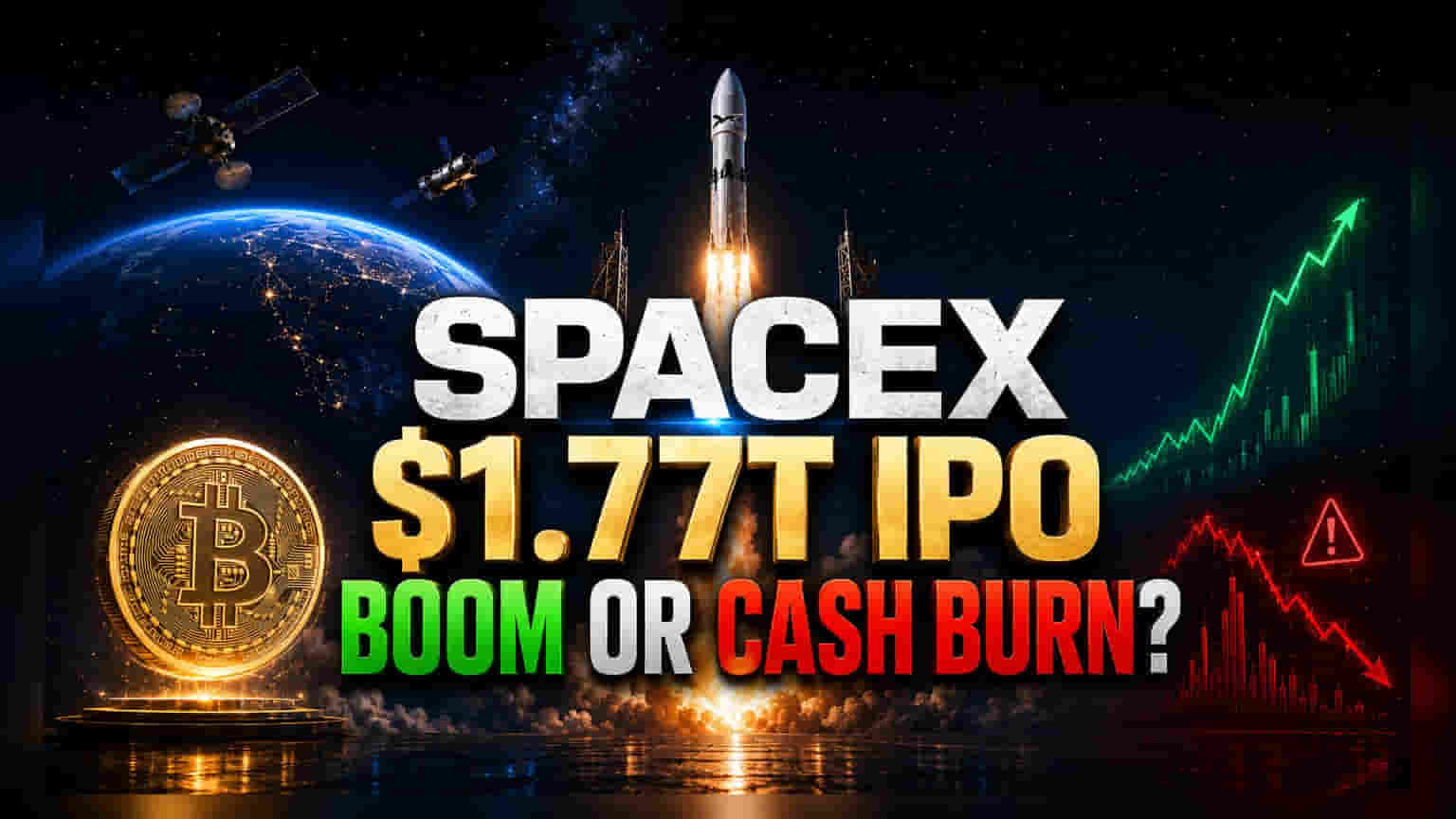


The Valuation Catalyst
The aerospace titan’s move to list on the Nasdaq under the ticker SPCX marks an unprecedented shift in capital markets. By targeting a $1.77 trillion valuation, the firm positions itself immediately among the S&P 500’s most valuable entities, trailing only a handful of tech giants. Unlike standard listings, this is an all-primary offering; every dollar raised through the sale of 555.6 million shares flows directly into company coffers, bypassing existing shareholders to fuel intensive capital projects including orbital infrastructure and multiplanetary colonization goals.
Strategic Treasury and Digital Assets
Behind the headline-grabbing valuation lies a sophisticated, long-term treasury strategy that has largely flown under the radar. The prospectus confirms ownership of 18,712 Bitcoin, significantly eclipsing previous third-party estimates. Accumulated at an average cost basis of roughly $35,320, this hoard serves as more than a speculative bet; it functions as a corporate hedge within a broader investment mandate. By incorporating digital assets alongside its core Starlink and rocketry operations, the organization provides public investors with an indirect, high-profile vehicle for crypto exposure that operates quite differently from pure-play digital asset treasuries.
The Forensic Bear Case
Despite the institutional fervor, significant structural risks remain. The company’s financial profile reveals a shift toward heavy cash burn, with a 2025 net loss of nearly $5 billion—a sharp reversal from prior profitability—largely driven by an aggressive, 75%-plus capital allocation toward artificial intelligence. Skeptics point to this as a potential long-term drag on free cash flow. Furthermore, Elon Musk’s absolute dominance is a material governance factor; he retains 82.4% of voting power, effectively insulating his vision for Martian colonization from the demands of public equity markets. Analysts also monitor the persistent, if speculative, merger talk surrounding Tesla; such a combination would introduce profound complexity and potential dilution, casting uncertainty over the standalone strategic direction of both entities.
Future Outlook and Market Entry
Investors are bracing for a mid-June debut, with institutional lock-ups and a newly implemented fast-entry rule for the Nasdaq 100 likely to drive heavy buying volume from passive index funds. While the long-term potential of the satellite and aerospace segments remains high, the immediate market reaction will be dictated by how effectively the organization can convince investors that its multi-billion dollar AI-burn rate is a necessary investment rather than a margin-compressing liability.