

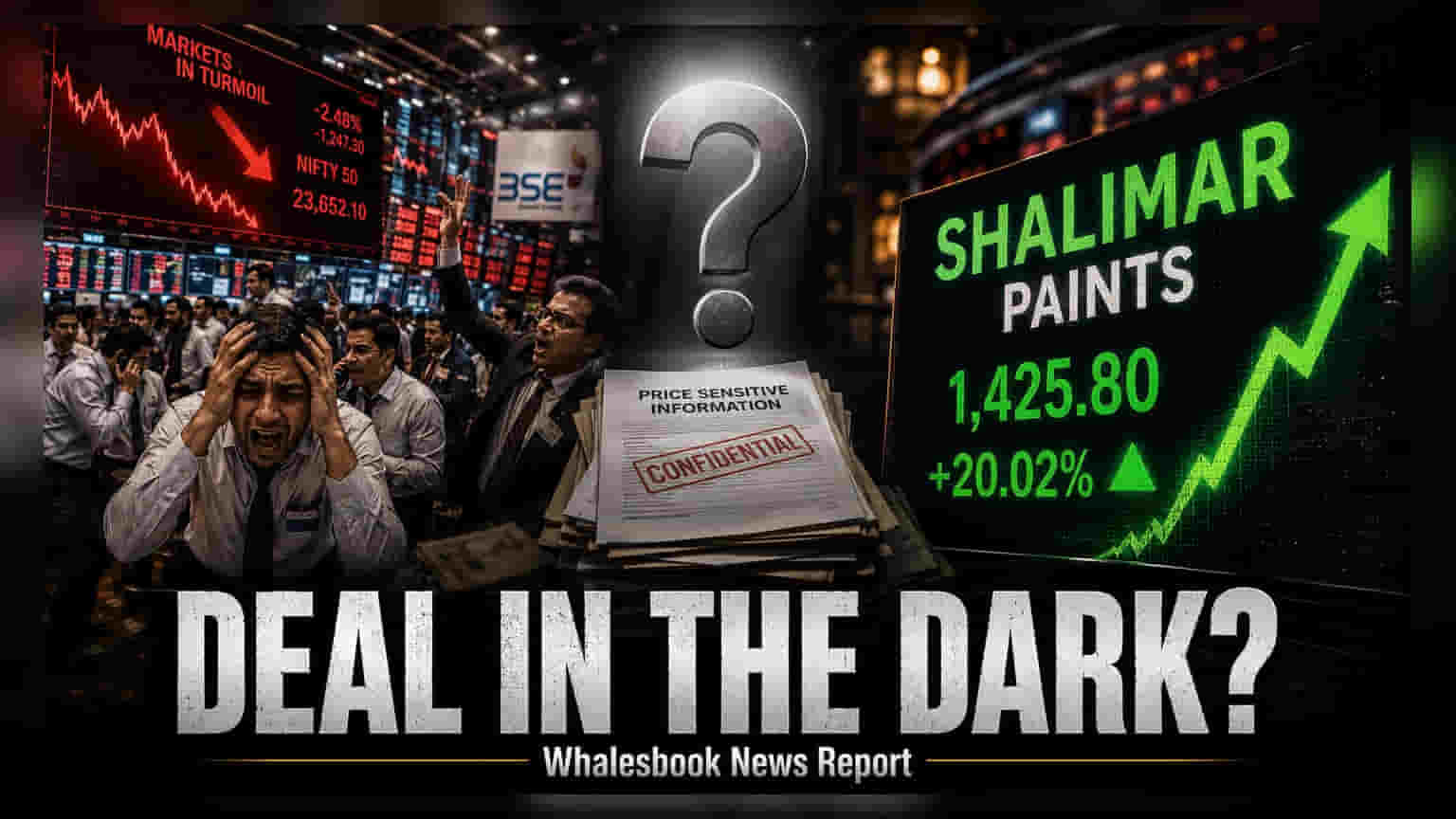
Shalimar Paints shares rose 20% on August 3, days before announcing a ₹10,440 crore share-swap deal with Hella Infra Market. The timing, alongside a large volume spike, has triggered regulatory inquiries from the NSE and BSE. Investors are now watching for SEBI's response and the implications of this backdoor listing on minority shareholder value and the company’s struggling core financials.
On August 3, 2026, Shalimar Paints saw a sharp 20% jump in its share price, accompanied by trading volumes that were more than five times higher than the stock's 15-day average. This unusual activity occurred just nine days before the company officially announced a ₹10,440 crore share-swap deal with Hella Infra Market Ltd. The timing of the stock movement, coming so close to a significant corporate development, has prompted regulatory scrutiny regarding the handling of price-sensitive information.
Regulatory Questions and Disclosures
The National Stock Exchange (NSE) and BSE queried the company immediately following the unusual trading activity. In its initial response, Shalimar Paints stated that it was unaware of any material information that could explain the sudden price spike. However, the company submitted a revised disclosure two days later, confirming that it was evaluating various "strategic options" to improve its operational and financial position. This update has drawn attention from market observers, who are questioning whether the disclosure of the strategic evaluation was timely and if the information provided to the exchanges was complete when first asked.
Deal Structure and Financial Impact
The approved transaction is structured as a reverse merger, effectively providing Hella Infra Market with a public listing through Shalimar Paints. Under the terms of the deal, Hella Infra Market shareholders will receive equity shares and compulsory convertible preference shares, granting them over 77% ownership of the combined entity. This arrangement allows the unlisted business to bypass the traditional initial public offering (IPO) process. While this may bring new business into the fold, it represents significant dilution for existing minority shareholders of Shalimar Paints.
Investors are also looking closely at the core business performance. Shalimar Paints has been struggling, reporting a consolidated net loss of ₹21.26 crore for the first quarter of fiscal year 2027, alongside declining revenue. The merger aims to transform the company's future, but the immediate financial health of the paint business remains a point of concern.
Investor Monitorables
The primary focus for stakeholders now is the potential intervention by the Securities and Exchange Board of India (SEBI). The regulator is expected to review the chronology of the share-swap deal, the timing of the disclosures, and whether the company followed listing obligations and insider trading regulations. Investors may track further updates regarding SEBI's findings, any additional queries from the stock exchanges, the final share swap ratio, and details on how the company plans to integrate its existing operations with the new entity.