

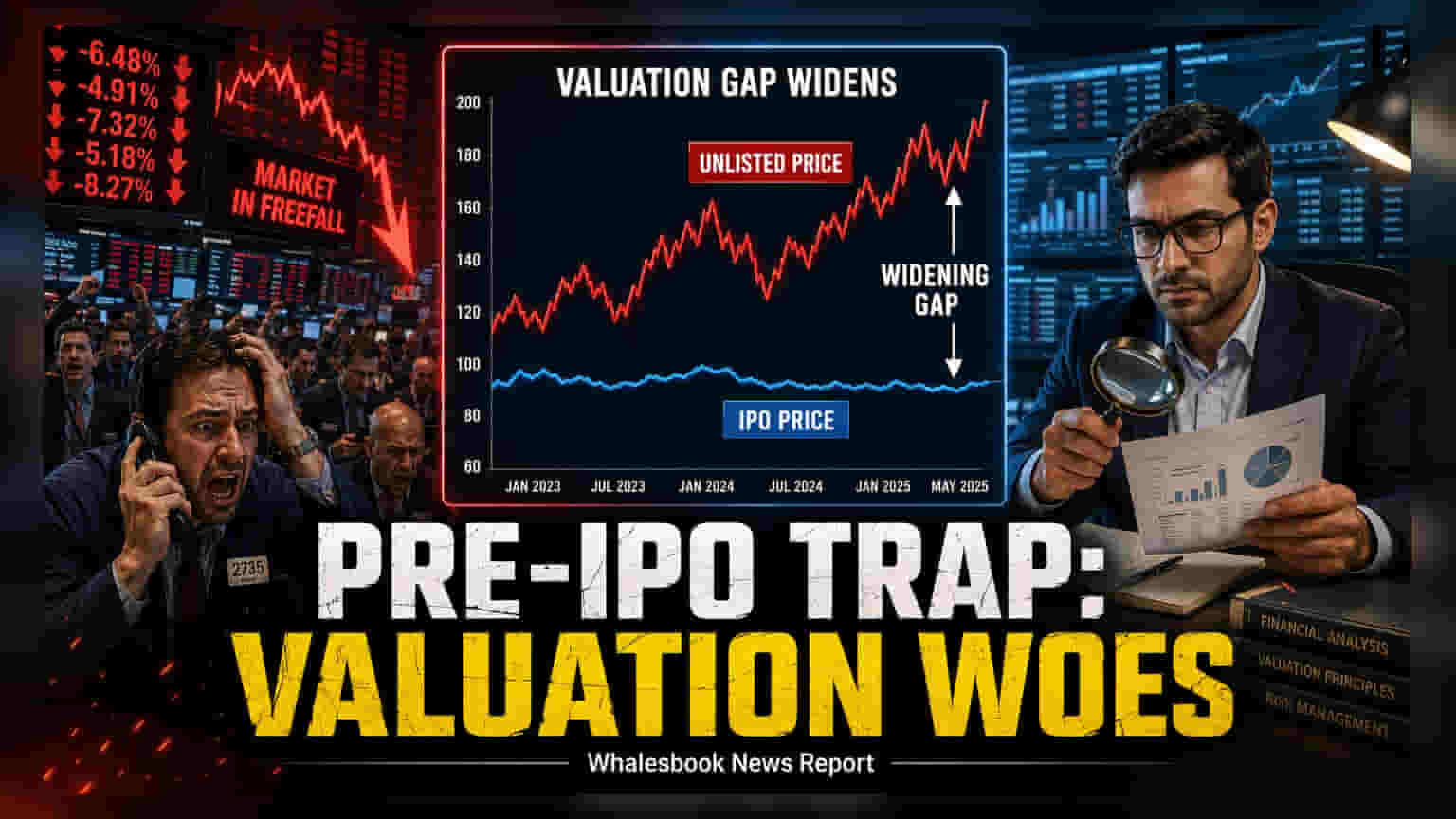
Unlisted shares of companies like HDB Financial Services and Tata Capital have often traded at prices far above their eventual IPO issue levels. Investors buying in the unlisted market frequently face notional losses when the final public offer price is set lower. This trend highlights the risks of ignoring company fundamentals in favor of market hype.
The Indian unlisted share market has seen a surge in activity, with many retail investors purchasing shares long before a company launches its Initial Public Offering (IPO). While the goal is often to secure early access and capture listing gains, recent data suggests this strategy carries significant financial risk. Investors often mistake the high prices seen in private, thin-market transactions for fair value, only to find that the final IPO price set by the company and its bankers is much lower.
Why Unlisted Prices Often Disconnect from IPO Values
The gap between unlisted prices and final IPO issue prices occurs because of how these two markets operate. In the unlisted space, transactions happen between a small number of buyers and sellers. This lack of broad participation means that a few aggressive buyers can drive up the price based on rumors or excitement, leading to inflated valuations that do not reflect the company's actual financial performance. When the company finally files its offer documents, the price discovery process involves institutional investors, analysts, and standard valuation models which often result in a more moderate issue price.
Recent examples illustrate this gap clearly. HDB Financial Services saw its unlisted shares trading at levels significantly higher than the final price range announced for its public offering. Similarly, Tata Capital shares were trading in a range that far exceeded the subsequent IPO pricing. In the case of SBI Funds Management, the issue price was set over 30 percent lower than the rates at which shares were changing hands in the pre-IPO market. These examples demonstrate that high prices in the unlisted market are not always an indicator of the company's true worth.
The Trap of Emotional Investing
Many investors are driven by the fear of missing out, or FOMO, which can lead them to overlook basic financial health indicators like profit growth, return on equity, and debt levels. When a well-known brand prepares to list, the market narrative often focuses on exclusivity rather than the valuation multiples of comparable listed peers. A business can be strong and profitable, but if an investor pays a price that is too high relative to the company's earnings, the potential for long-term wealth creation is reduced.
Professional investors focus on how a company's valuation compares to its sector peers and whether its growth trajectory justifies the price tag. When evaluating pre-IPO opportunities, investors should prioritize understanding the business model and the sustainability of its earnings rather than anchoring their decision to the latest private transaction price. Overpaying for shares—even in high-quality companies—can lead to poor returns, as the stock price in the public market will eventually align with the company's underlying fundamentals. Looking ahead, investors should remain cautious about valuations in the unlisted space and base their decisions on public disclosures and official filing data rather than market sentiment.