

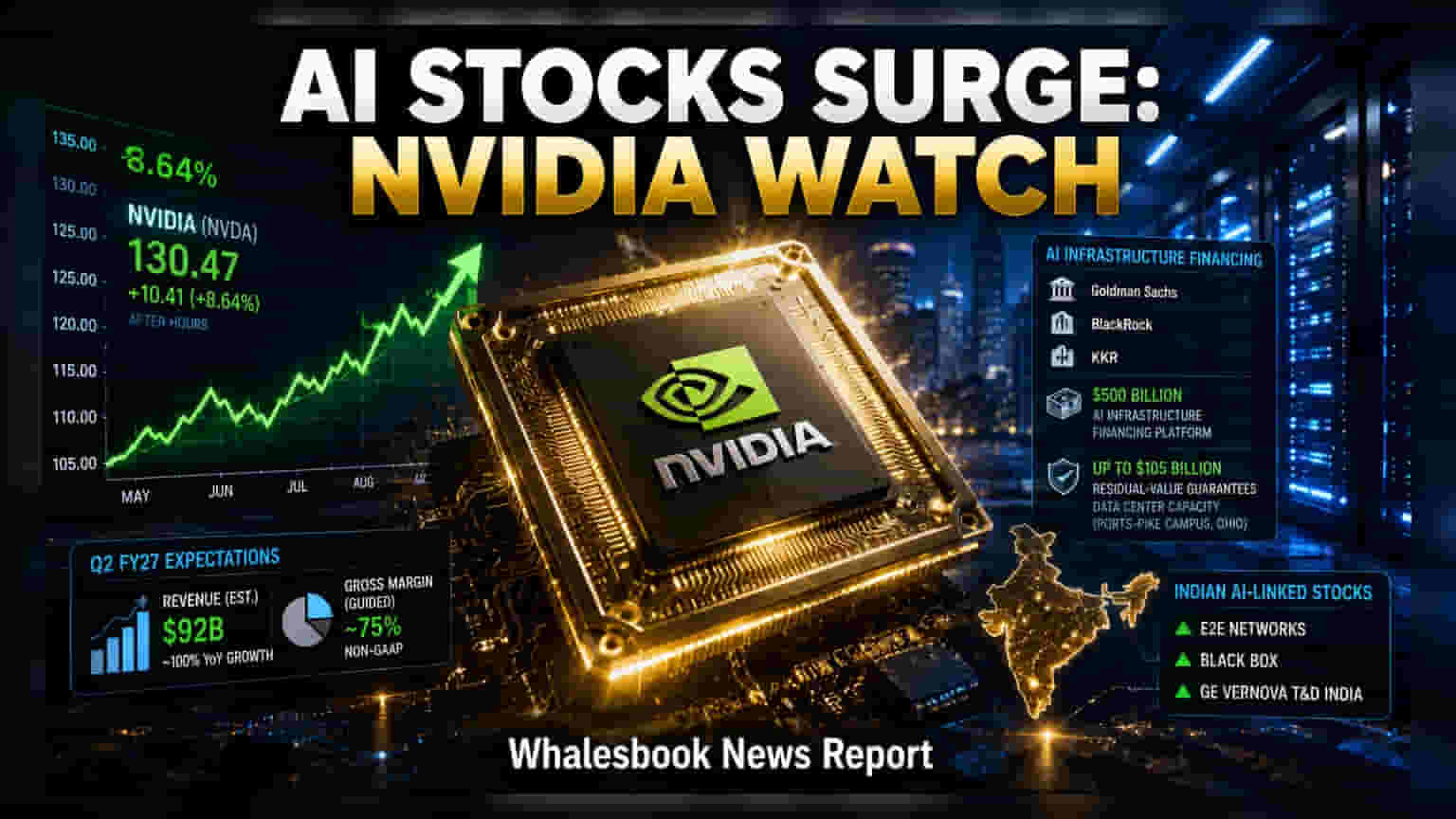
As Nvidia prepares to release its fiscal Q2 2027 earnings, Indian AI-related stocks like E2E Networks and Black Box are witnessing market activity. Investors are monitoring the global chip giant's performance as a key benchmark for AI infrastructure spending. The focus remains on whether massive capital investment in AI can sustain growth, or if concerns regarding financing strategies and high infrastructure costs will trigger volatility.
Indian markets are closely watching the upcoming fiscal second-quarter 2027 earnings release from Nvidia, scheduled for after the US market closes on August 26, 2026. This event is viewed as a critical barometer for the global artificial intelligence sector. Recent price movements in Indian AI-related stocks, including E2E Networks, Black Box, and GE Vernova T&D India, highlight how local investors are sensitive to the global demand for AI infrastructure and cloud computing hardware.
The Nvidia Benchmark For AI Infrastructure
Nvidia’s performance has become the definitive indicator for the health of the broader AI buildout. Analysts expect the company to report revenue of approximately $92 billion for the quarter, which would represent nearly 100% year-over-year growth. However, the market’s reaction is often complex. Despite frequently beating revenue and profit estimates in the past, Nvidia’s share price has often faced pressure in the trading sessions following earnings reports. This volatility stems from exceptionally high market expectations, where even small misses in growth guidance can lead to corrections.
Investors are specifically looking for clarity on the company’s non-GAAP gross margin, which is guided at approximately 75%. Any commentary regarding demand for the company’s new product cycles, such as the Blackwell and Rubin chips, will likely dictate sentiment for hardware suppliers and infrastructure providers globally, including those in India.
Financing Initiatives And Market Risks
Beyond traditional revenue figures, investors are scrutinizing Nvidia’s strategic financing initiatives. The company has partnered with several major financial institutions, including Goldman Sachs, BlackRock, and KKR, to mobilize a $500 billion platform for AI infrastructure financing. Additionally, Nvidia has committed to providing up to $105 billion in residual-value guarantees for data center capacity, such as the project at the PORTS-Pike campus in Ohio.
This aggressive approach has raised questions among some market participants regarding the sustainability of such models. There is ongoing discussion about whether this "circular financing"—where the chipmaker helps fund the customers who buy its hardware—creates artificial demand. If this capital spending by hyperscalers slows down, or if the return on investment for these massive data centers remains uncertain, it could pressure the entire AI supply chain. Furthermore, persistent macroeconomic headwinds, including inflation and geopolitical instability, remain risks that could impact the pace of future capital expenditure.
For investors monitoring Indian AI-linked companies, the key monitorable will be the management commentary from Nvidia regarding future demand trends and any signals of a slowdown in server-related capital spending. If the company indicates that infrastructure demand remains robust, it may support sentiment for the sector. Conversely, signs of cost pressure or hardware saturation could lead to a more cautious approach from investors in this space.