

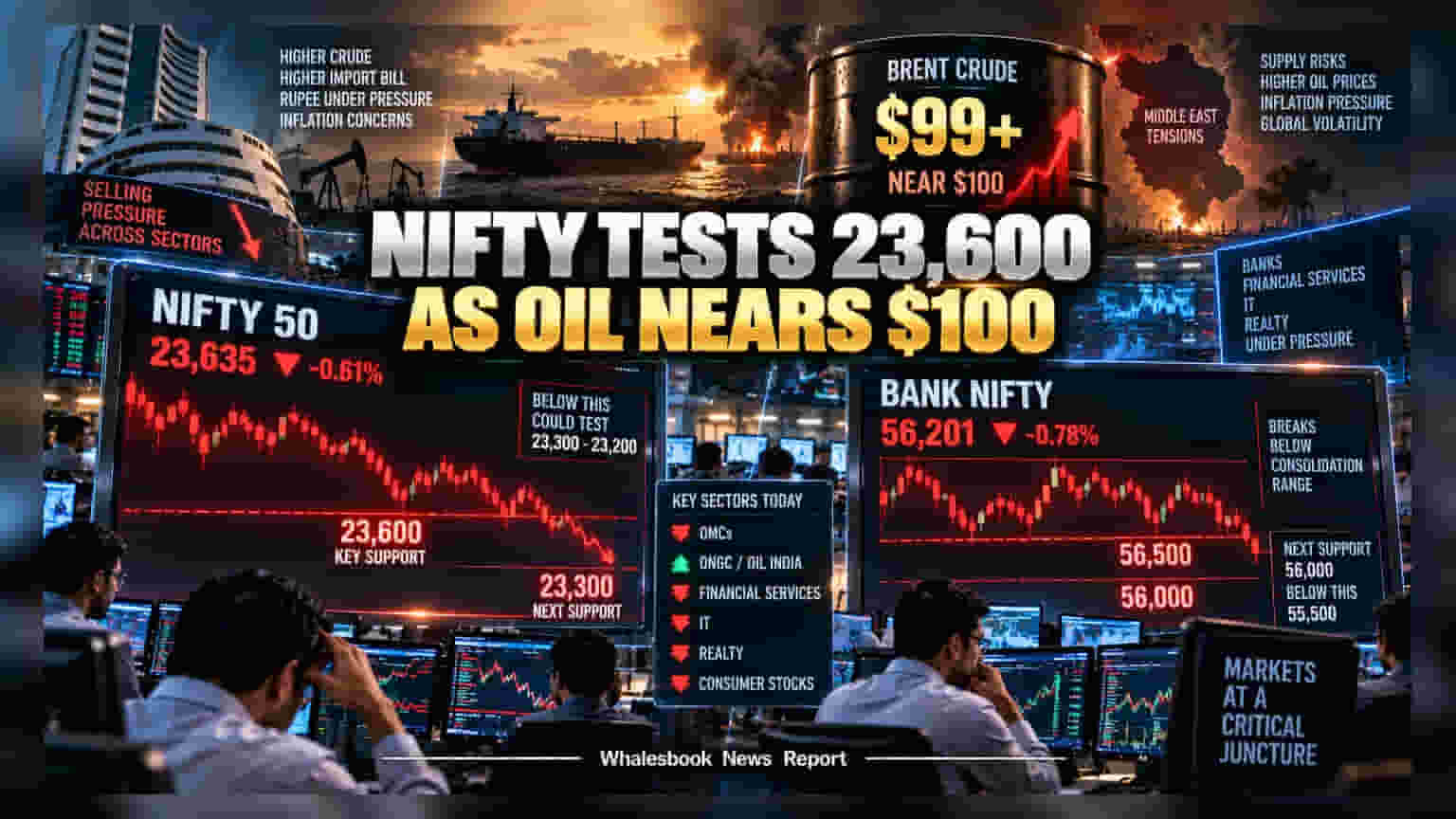
Indian markets are under pressure as the Nifty 50 dropped to 23,635, testing its July lows. Rising Brent crude prices, now near $99 per barrel due to Middle East tensions, have triggered concerns over inflation and import costs, weighing on sectors like IT, finance, and oil marketing.
On September 8, 2026, the Indian stock market faced sustained selling, with the Nifty 50 closing at 23,635, a decline of 0.61%. The index is currently testing a critical support zone near 23,600, a level that has not been breached significantly since July. The primary driver of this market caution is the sharp rise in global Brent crude oil prices, which have climbed toward $99 per barrel amid escalating geopolitical tensions in the Middle East.
Economic Impact of Rising Oil Prices
For the Indian economy, a sustained rise in energy prices creates a ripple effect. Since India imports the majority of its crude oil, higher global prices increase the national import bill, which can place pressure on the Indian rupee. This dynamics often heightens concerns about domestic inflation and the potential for prolonged high interest rates, both of which are generally negative for broad market sentiment. Investors are particularly focused on how these higher energy costs might affect corporate profit margins across consumer-facing industries.
Sectoral Divergence
The impact of high oil prices has been uneven across different sectors. Oil Marketing Companies (OMCs), such as BPCL, HPCL, and Indian Oil Corporation, have faced selling pressure. These companies are sensitive to crude costs because higher prices can squeeze their profit margins, especially if they are unable to fully pass the increased costs on to consumers at the pump. Conversely, upstream oil producers, including ONGC and Oil India, have seen interest, as higher global crude prices typically allow these firms to realize better prices for the oil they extract.
Outside of the energy space, selling has been broad-based. Heavyweight sectors, including Financial Services, Information Technology (IT), and Realty, have acted as primary drags on the index. The Bank Nifty index also experienced a decline, breaking below its month-long consolidation range and moving toward the 56,000–56,500 support band.
What Investors Are Tracking
The immediate focus for market participants is whether the 23,600 support level on the Nifty 50 will hold. Technical analysts suggest that a sustained break below this level could expose the index to further downward movement, with the 23,300–23,200 range serving as the next area of potential support. However, the market direction remains highly sensitive to headline risks concerning global energy prices and geopolitical stability. Investors will likely monitor oil price movements and their subsequent impact on inflation expectations and currency stability in the coming trading sessions.