

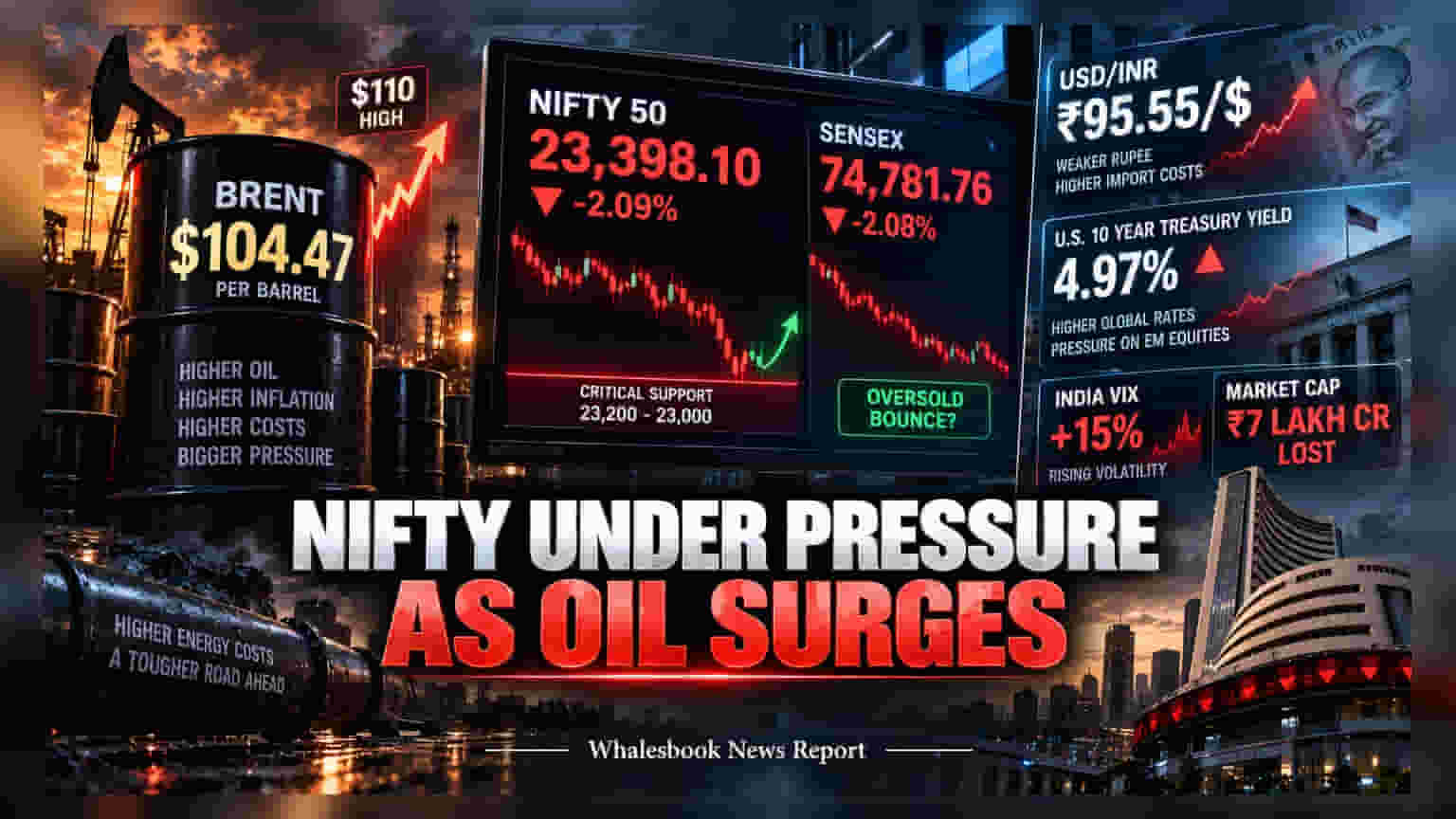
Nifty 50 returns from the Ganesh Chaturthi holiday facing a fifth straight week of losses, ending at 23,398.10. Investors are balancing persistent $100-plus crude oil prices, a weakening rupee near 95.55, and the critical U.S. Federal Reserve policy meeting. Market focus is now on how these global macroeconomic pressures will influence future corporate earnings and foreign institutional investment flows.
The Nifty 50 index faces a pivotal start to the week as trading resumes following the Ganesh Chaturthi holiday on Monday, September 14. The index closed the previous week at 23,398.10, marking five consecutive weeks of declines. Investors are currently navigating a difficult environment where multiple external pressures—specifically high energy costs, a weakening currency, and U.S. monetary policy—are converging at the same time.
Triple Threat: Oil, Currency, and Global Rates
Brent crude oil prices hovering consistently above $100 per barrel present a significant problem for the Indian economy. As a major importer of energy, India faces dual challenges when oil prices remain high: increased inflation and pressure on corporate profit margins due to rising input costs. When companies pay more for fuel and raw materials, their ability to maintain profitability becomes more difficult.
Simultaneously, the Indian rupee has faced depreciation pressure, recently trading near 95.55 against the U.S. dollar. A weaker rupee makes imports more expensive, adding to the cost burden for businesses. This currency stress is occurring alongside a rise in U.S. Treasury yields, which are approaching the 5% level. Higher safe-haven returns in the U.S. often reduce the appeal of emerging market equities, contributing to concerns about foreign investor outflows.
Global and Domestic Impact
The immediate focus for market participants is the U.S. Federal Reserve’s policy meeting scheduled for September 15–16. A hawkish stance—where the Fed signals that interest rates will remain high to combat inflation—could strengthen the dollar further and challenge risk assets like Indian stocks. This creates a difficult valuation environment where expensive stocks become harder to justify against rising global borrowing costs.
Market sentiment has already reflected this caution, with widespread selling seen across sectors like realty, information technology, and PSU banks. India’s VIX, which acts as a gauge for expected market volatility, has risen, indicating that investors are actively seeking protection against potential future swings. While some analysts point to extreme bearish positioning in index futures as a sign that the market could be 'oversold'—potentially setting the stage for a short-term rebound—the structural macro concerns remain a significant hurdle.
What Investors Should Monitor Next
The direction of the market in the coming days will depend heavily on the outcome of the Federal Reserve meeting and any geopolitical updates from West Asia that could impact energy supplies. For shareholders, the most important monitorable is whether oil prices can retreat from their current highs to provide some relief to the rupee and corporate cost structures. Additionally, upcoming domestic inflation data will be a key variable in determining if the Reserve Bank of India maintains its current policy stance or faces pressure to respond to global developments.