

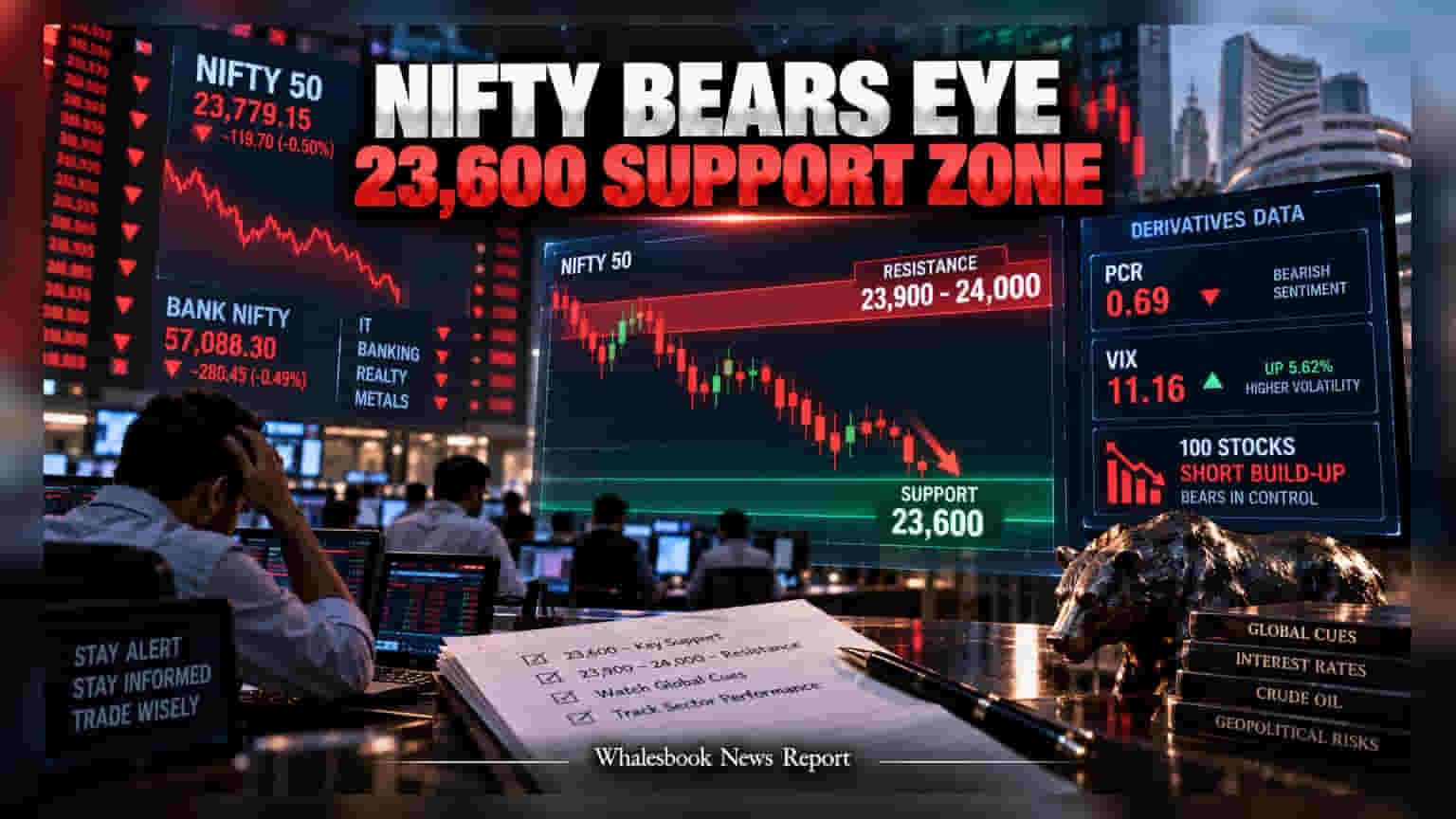
The Nifty 50 slipped 0.5% on September 7, 2026, closing at 23,779.15 amid global concerns over potential US interest rate hikes and rising oil prices. With technical indicators showing weakness and market volatility on the rise, investors are closely watching the 23,600 support level to see if the downward trend continues.
The Nifty 50 ended lower on September 7, 2026, closing at 23,779.15. This 0.5% decline reflects a cautious and bearish mood among investors as the index continues to face selling pressure. The market is now tracking the 23,600 mark, which serves as a critical support floor. If the index sustains below this level, it may face further downside risk, while the 23,900 to 24,000 range continues to act as a hurdle for any potential recovery.
The current market weakness is largely driven by global cues. Recent data showing stronger-than-anticipated job growth in the United States has led to concerns that the Federal Reserve may maintain high interest rates for longer than expected. Such a scenario often creates pressure on emerging markets like India as capital flows might get impacted. Additionally, rising crude oil prices and ongoing geopolitical tensions in the Middle East have added to the uncertainty, causing investors to adopt a defensive stance.
Derivatives data confirms that market participants are increasingly cautious. The Put-Call ratio, which helps gauge investor sentiment, dropped to 0.69. A ratio below 0.7 usually indicates a more defensive setup, with traders betting on further weakness. Furthermore, India VIX, the index that tracks market volatility, rose by 5.62% during the session. While volatility remains low in absolute terms, the upward trend reflects growing unease.
The selling pressure was broad, impacting major sectors including IT, banking, realty, and metals. The Bank Nifty also faced headwinds, closing at 57,088.30, down 0.49%. Market data shows that short build-up—where traders bet on further price declines—was significantly higher than long build-up, suggesting that the current momentum favors the bears.
For the coming sessions, the primary focus will remain on whether the 23,600 support level holds. Market participants will likely track global developments, including commodity price movements and any new economic data, which could influence the index's direction. With 100 stocks recording short build-up, investors may also monitor sector-specific performance to identify areas of resilience or continued weakness.