 Whalesbook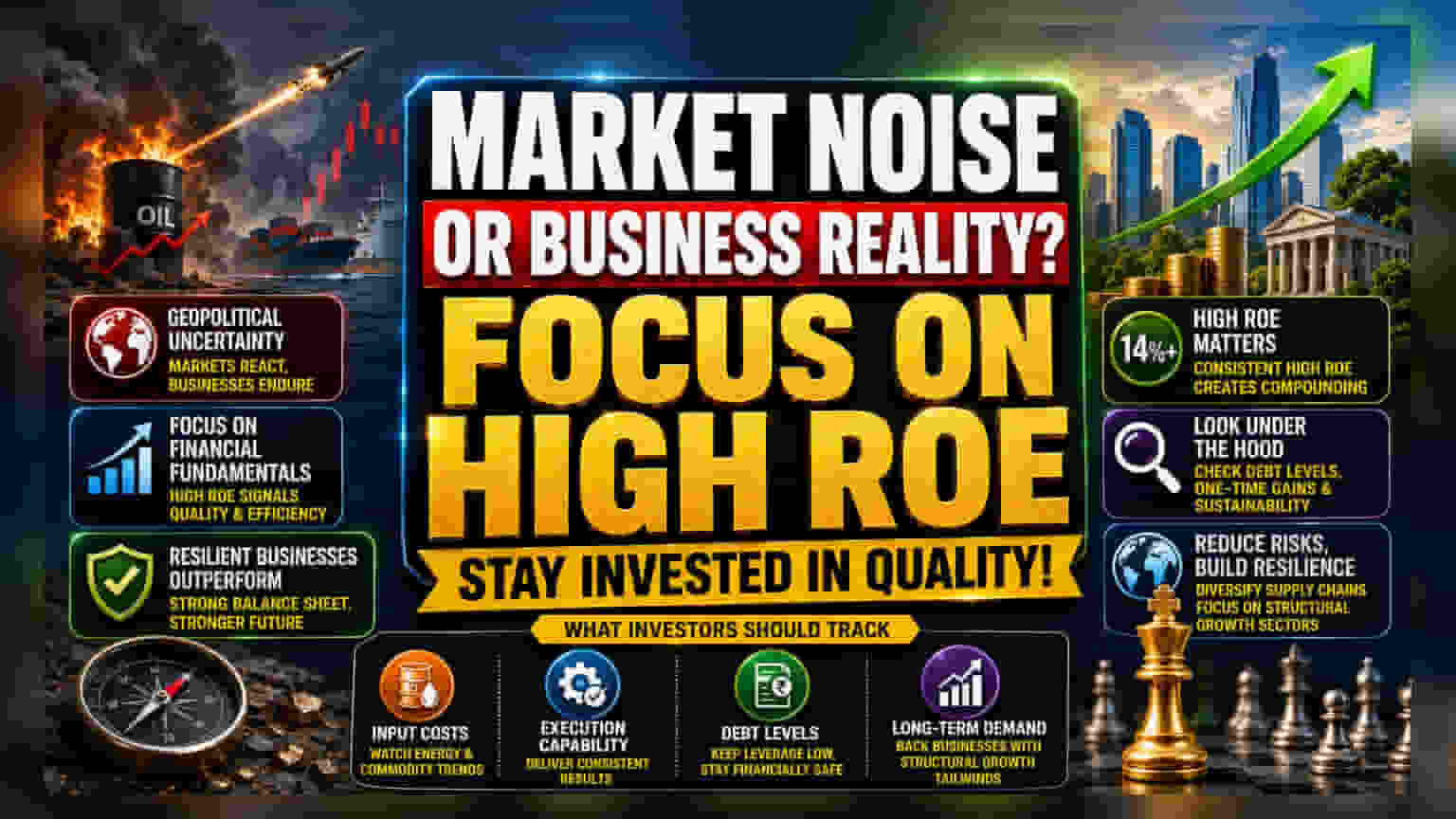


While market sentiment often shifts on geopolitical news, focusing on long-term business fundamentals—like consistent return on equity—is a more reliable strategy than timing the market. Investors are increasingly evaluating companies based on their ability to weather global supply chain disruptions and maintain efficient capital use, rather than reacting to short-term news cycles.
Understanding Market Sentiment vs. Business Reality
Recent financial reports have highlighted a shift in market sentiment, with some participants noting a potential reprieve in geopolitical tensions in the Gulf region. In the stock market, such news often triggers a change in short-term trading patterns, as investors try to gauge how potential stability might affect oil prices, supply chains, and global trade. However, experienced investors often look past these day-to-day fluctuations to focus on how individual businesses are actually performing.
While a potential reduction in geopolitical friction can create a more favourable environment for equities, it does not guarantee long-term stability. Geopolitical landscapes are inherently unpredictable, and relying solely on news-driven calm to deploy capital can be risky. Instead, the current market environment reinforces the importance of a disciplined investment approach that prioritizes structural growth and financial resilience.
The Role of Financial Fundamentals
Rather than attempting to predict the next geopolitical event, many long-term investors focus on metrics that signal a company’s ability to survive and thrive regardless of external noise. One such metric is Return on Equity (RoE). RoE measures how efficiently a company uses the capital invested by shareholders to generate profit.
Companies that consistently maintain an RoE above 14%—a threshold often used by analysts—may demonstrate an ability to compound wealth effectively without excessive reliance on outside debt. This efficiency is critical during times of uncertainty, as businesses with strong internal cash generation are generally less vulnerable to external funding shocks or sudden changes in borrowing costs.
Why 'High RoE' Requires Caution
While a high RoE is a strong signal of business quality, investors often need to look "under the hood" to ensure the number is sustainable. A high RoE can sometimes be misleading if it is driven by factors other than core operational success.
For instance, companies with very high debt levels may show an artificially inflated RoE because their equity base is small. Similarly, one-time profits from asset sales or accounting adjustments can temporarily boost this ratio without reflecting a permanent improvement in the business. Investors typically look for consistency in RoE over several years across different market cycles, rather than a single impressive year, to separate truly high-quality companies from those that may be using financial engineering to improve their appearance.
Navigating Supply Chain and Sector Risks
Beyond internal metrics like RoE, the broader sector context plays a vital role in portfolio resilience. Businesses that are heavily reliant on single-source supply chains or specific maritime corridors often face disproportionate risks when geopolitical tensions flare up.
Conversely, companies that have diversified their sourcing, expanded into regional markets, or are part of sectors undergoing long-term structural transformations (such as energy transition, digital infrastructure, or domestic manufacturing) may offer better protection against external shocks. Investors often monitor whether a company has the pricing power to pass on inflationary costs—such as rising freight or raw material prices—without significantly hurting demand for their products.
What Investors Should Track Next
Predicting geopolitical developments is notoriously difficult, making it more effective to monitor variables that directly impact corporate earnings. Key factors to watch include:
- Input Costs: Monitoring how global energy and commodity price shifts affect the profit margins of individual companies.
- Execution Capability: Watching for consistent project delivery and operational efficiency, especially for companies in capital-intensive sectors.
- Debt Levels: Ensuring that companies are not over-leveraged, which is a major risk factor when interest rates or market conditions become volatile.
- Long-term Demand: Assessing whether the company’s core business is growing due to fundamental sector trends rather than short-term market noise.
Ultimately, market volatility often reveals which companies have strong foundations and which are vulnerable. Investors who focus on rigorous analysis of balance sheets and execution track records may be better positioned to navigate periods of uncertainty than those who base their decisions on the fluctuating headlines of the day.