 Whalesbook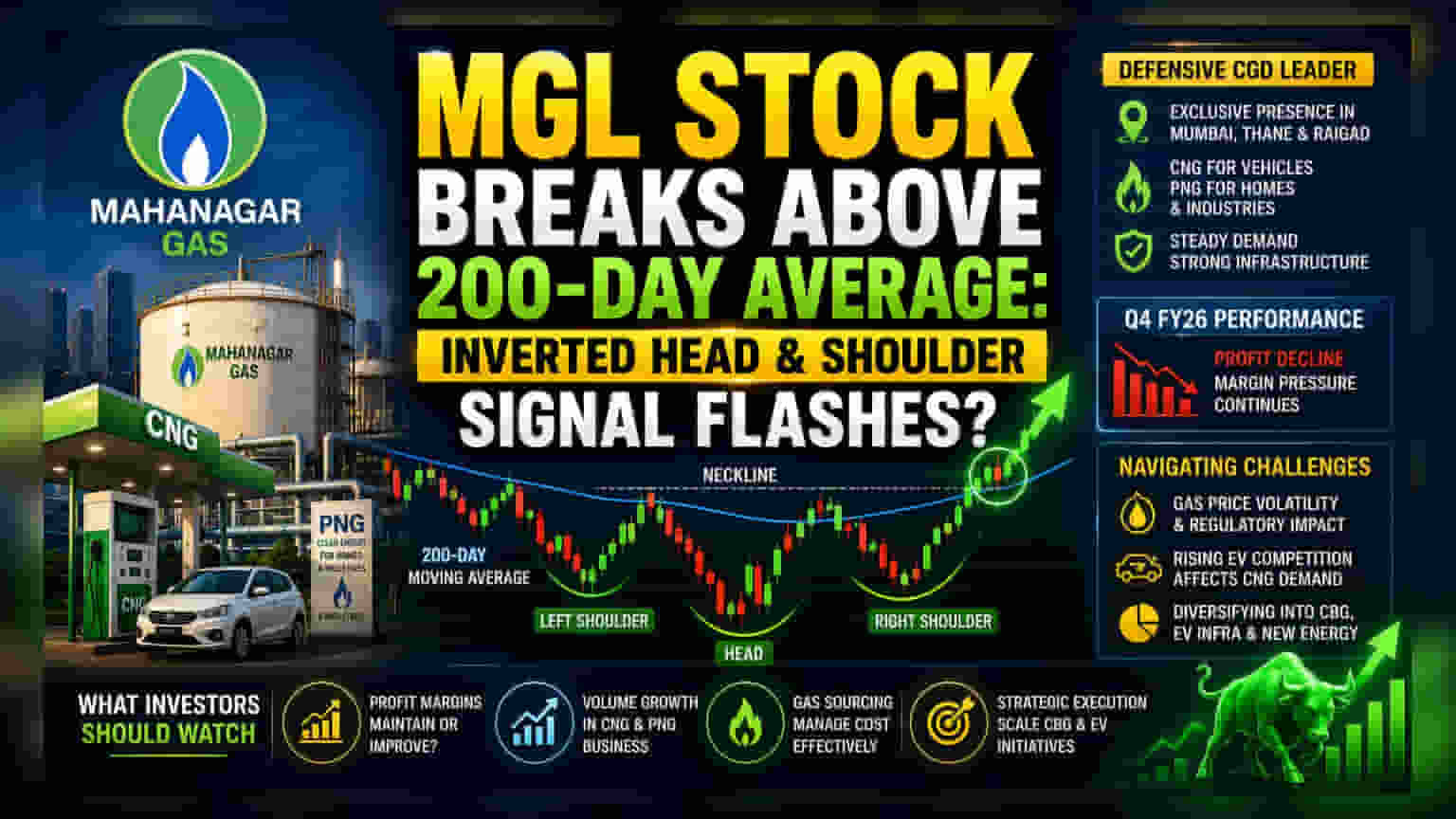


Mahanagar Gas (MGL) recently saw its stock price cross the 200-day moving average, a technical level some investors watch for trend changes. While this technical move caught market attention, it is important to balance chart patterns with the company's underlying fundamentals. MGL, a major City Gas Distribution (CGD) player in Mumbai, is currently navigating challenges like margin pressure, volatile gas costs, and sector-wide regulatory changes. Investors should look beyond the price trend to monitor profitability and volume growth.
What Happened
Shares of Mahanagar Gas Ltd. (MGL) recently moved above their 200-day moving average (DMA). This level is often watched by investors and analysts as a gauge for long-term price trends. Some market observers have linked this move to a technical chart pattern known as an 'inverted head and shoulder.' In technical analysis, traders sometimes view this pattern as a signal that the stock's downward momentum might be shifting. This movement generated interest in the market, drawing attention to the company’s recent performance.
Business Context and Fundamentals
Mahanagar Gas is a key player in the City Gas Distribution (CGD) sector, providing Compressed Natural Gas (CNG) for vehicles and Piped Natural Gas (PNG) for homes and industries, primarily in Mumbai and its surrounding regions. The company has historically been viewed as a defensive stock due to its steady demand profile and infrastructure exclusivity in key areas like Mumbai, Thane, and Raigad.
However, the company’s recent financial performance has faced hurdles. In the fourth quarter of FY26, the company reported a decline in profitability, reflecting a broader trend of margin pressure across the sector. While the company continues to expand its pipeline network and add new CNG stations, investors have been closely watching how it manages its costs amidst a complex regulatory environment.
Sector Challenges and Competitive Landscape
The city gas sector is currently dealing with several headwinds. Companies like MGL operate under a regulatory framework where government policies on domestic gas allocation play a major role in profitability. Fluctuations in the price of imported natural gas can quickly impact margins, as companies must balance these costs with what they charge consumers.
Competition is also changing. Beyond other gas distributors like Indraprastha Gas and Gujarat Gas, the sector faces growing pressure from alternative fuels. The rise of electric vehicles (EVs) in public and private transport is a long-term factor that could affect CNG demand. MGL has responded to these challenges by diversifying its portfolio, including plans for compressed biogas (CBG) and investments in battery and EV infrastructure, though these projects are in the early stages of development.
How Investors May Read This
It is important for investors to distinguish between short-term technical chart movements and the company's long-term business health. A technical 'breakout' indicates recent buying interest, but it does not change the core business environment.
Investors considering the stock may look for consistency in a few key areas:
- Profit Margins: Can the company maintain or improve its operating margins despite gas price volatility?
- Volume Growth: Is the company successfully growing its sales volume in CNG and PNG despite competition?
- Gas Sourcing: The company uses a mix of cheaper domestic gas and market-priced imported gas. Managing this mix is crucial for keeping costs under control.
- Strategic Execution: How quickly and effectively can the company scale its new energy initiatives, such as CBG and EV infrastructure, to offset any slowdown in the core CGD business?
While the stock's recent price action suggests a shift in momentum, the sustainability of this trend will likely depend on the company’s ability to stabilize its earnings and navigate the competitive and regulatory landscape of the gas industry.