 Whalesbook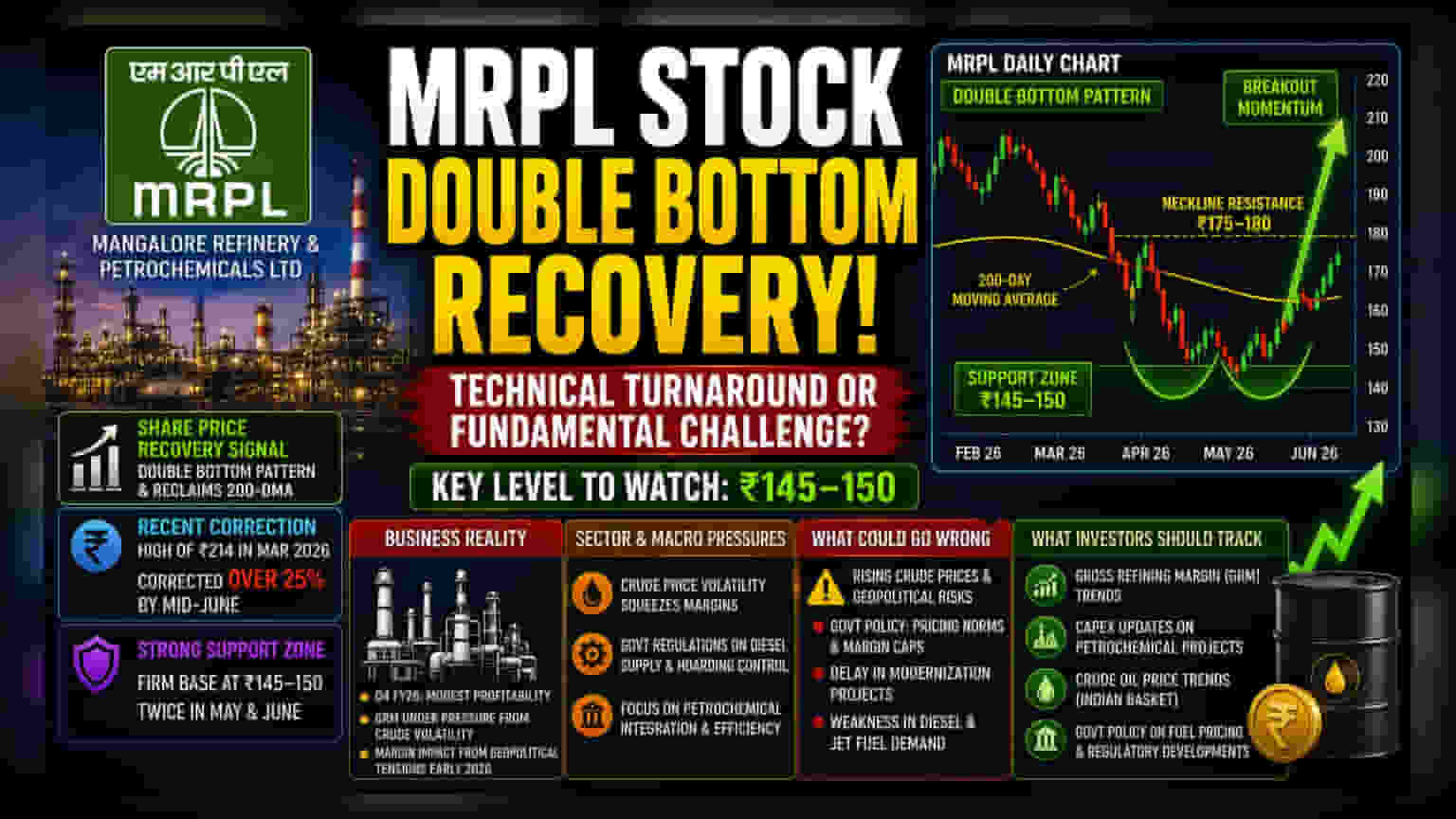


Shares of Mangalore Refinery & Petrochemicals Ltd (MRPL) have seen a technical recovery, forming a 'double bottom' pattern on daily charts. While technical indicators suggest a potential support zone, investors should balance this with the company's recent operational challenges, including margin pressure from volatile crude oil prices and regulatory headwinds in the refining sector.
What Happened
Mangalore Refinery & Petrochemicals Ltd (MRPL) shares have recently demonstrated a technical recovery, with the stock forming a 'double bottom' pattern on its daily price charts. This pattern often signals to technical analysts that the stock may have found a floor after a period of decline. The stock, which had reached a high of Rs 214 in March 2026, saw a significant correction of over 25% by mid-June. Following a period of weakness, the stock found support in the Rs 145–150 range on two separate occasions in May and June, subsequently reclaiming its 200-day moving average—a key level watched by many market participants to gauge long-term momentum.
Understanding the Business Context
While chart patterns can be useful for timing, they do not change the fundamental business realities. MRPL’s recent performance reflects the broader challenges faced by Indian oil refiners. In its results for the quarter ended March 2026, the company reported modest profitability. The refining business is highly sensitive to Gross Refining Margins (GRM), which is the difference between what a refinery earns from selling petroleum products and what it pays for crude oil. During the first few months of 2026, geopolitical tensions in West Asia and fluctuations in global crude oil prices created significant pressure on these margins, impacting bottom-line growth for the company.
Sector and Macro Pressures
The Indian oil refining sector is currently navigating a complex environment. State-run refiners, including MRPL, have been managing the impact of crude oil price volatility and shifting demand patterns. Recently, the government introduced temporary regulations for diesel supply through retail outlets to prevent hoarding and manage uneven demand. While these are regulatory measures rather than systemic failures, they highlight the tight supply-demand balance that energy companies must manage. Furthermore, the company is focusing on enhancing its petrochemical integration and improving operational efficiency, which are critical strategies to diversify revenue and protect against the cyclical nature of traditional refining.
What Could Go Wrong
Investors should be aware of the inherent risks in the oil and gas sector. The primary concern remains the volatility of crude oil prices, which directly impacts the cost of feedstock for the refinery. If geopolitical tensions in key oil-producing regions persist or escalate, they can disrupt supply chains and inflate costs, squeezing profit margins. Additionally, government policies regarding auto fuel pricing norms and potential refinery margin caps are significant variables that can affect earnings. Any delay in refinery modernization projects or unexpected weakness in the demand for diesel and jet fuel could also weigh on the company's future performance.
What Investors Should Track
Moving forward, the key monitorables for MRPL investors go beyond stock price charts. First, watch for updates on Gross Refining Margins (GRM), as this is the most direct indicator of operational efficiency. Second, keep track of management commentary regarding capital spending on petrochemical integration projects, which the company views as a long-term growth driver. Third, monitor crude oil price trends in the Indian basket, as these influence raw material costs. Finally, stay updated on government policy announcements regarding fuel pricing, which can significantly alter the profit outlook for all public sector refiners.