

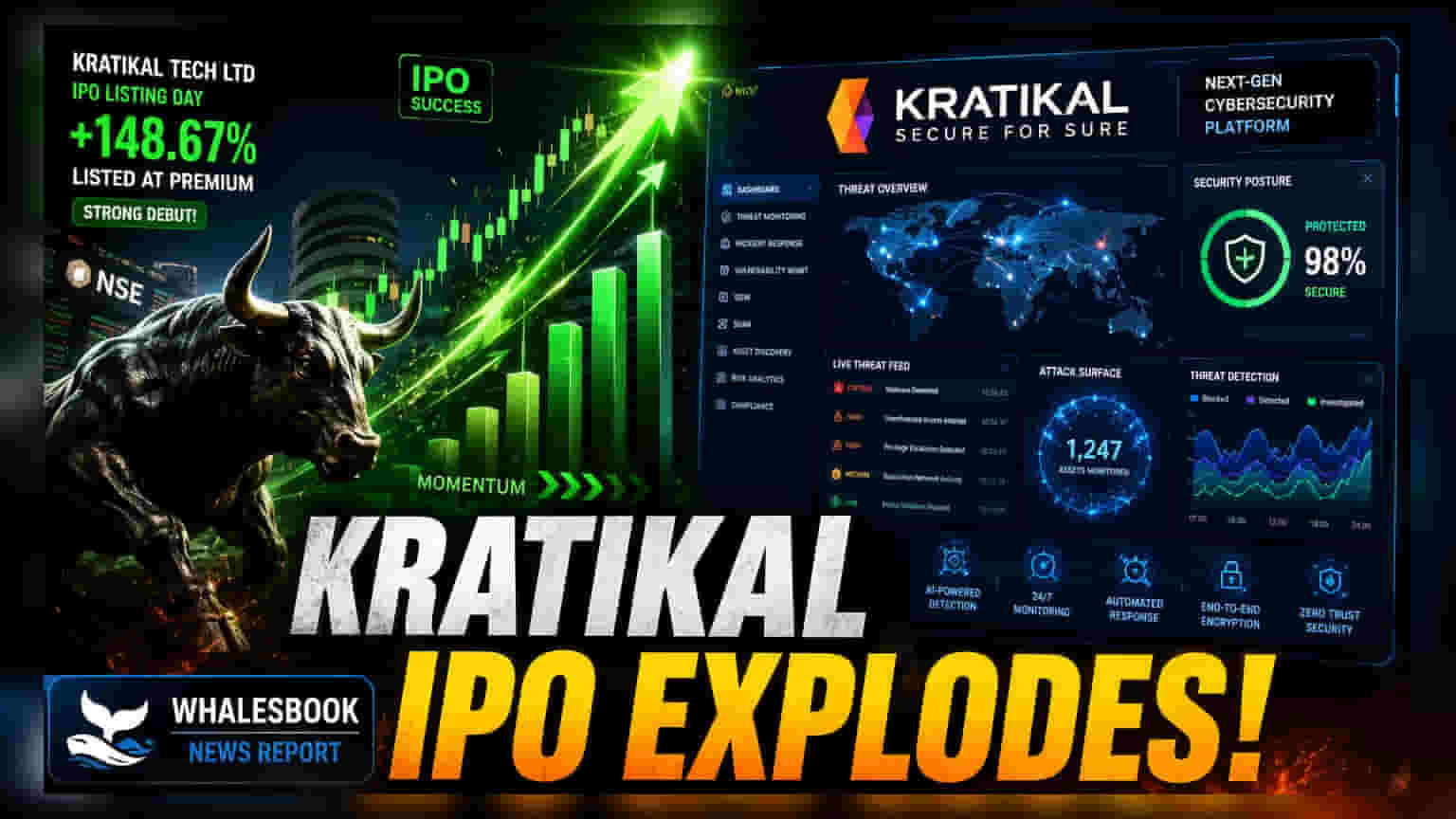
Kratikal Tech’s SME IPO closed with 36x subscription, driven by strong interest across retail and non-institutional categories. Shares are trading at a 180% premium in the unofficial grey market. Investors should note that SME stocks carry higher liquidity risks and grey market figures are speculative and unofficial.
What Happened
The initial public offering (IPO) for the cybersecurity firm Kratikal Tech closed its subscription phase on July 2, 2026. The offering, listed on the BSE SME platform, saw significant demand from investors. Data indicates that the issue was oversubscribed 36.21 times, with bids placed for 76.3 million shares against the 2.1 million shares on offer.
Retail investors were the most active, subscribing to the issue 51.26 times. Non-Institutional Investors also showed high participation with a subscription rate of 40.45 times, while Qualified Institutional Buyers subscribed 5.48 times. The company aimed to raise Rs 39.69 crore through this fresh issue of shares, with a price band set between Rs 128 and Rs 135 per share.
The Grey Market Premium Explained
Market reports indicate that Kratikal Tech shares are trading at an unofficial premium of Rs 175 in the grey market, which is over 180% above the issue price. For new investors, it is important to understand that the grey market premium (GMP) is not an official or regulated metric. It is an unofficial, speculative market where traders bet on the potential listing price. A high GMP does not guarantee similar gains on the listing day and can change rapidly based on market sentiment or liquidity factors.
Understanding SME IPO Risks
While high oversubscription numbers often reflect strong investor interest, it is important to distinguish between SME (Small and Medium Enterprise) IPOs and mainboard IPOs. SME listings on the BSE SME platform operate with different rules, including fixed lot sizes for trading and often lower liquidity compared to larger companies on the main exchanges.
Because SME stocks typically have lower trading volumes, they can experience higher price volatility after listing. Investors interested in such stocks generally consider the risks associated with smaller company size, lower liquidity, and the potential for wider bid-ask spreads, which can make it harder to buy or sell shares at desired prices compared to large-cap stocks.
Use Of Proceeds And Growth Plans
The company has stated that funds raised from this IPO are intended for use by its subsidiaries and to support product development initiatives. As a cybersecurity firm, the company’s ability to grow will likely depend on its success in scaling these products and maintaining competitiveness in the tech sector. Investors may want to watch for future company filings to see how these funds are deployed and whether they translate into tangible revenue growth or profit margin improvements over the coming quarters.
What Investors Should Track Next
The share allotment process is expected to be finalized on July 3, 2026. Successful bidders should see the shares credited to their demat accounts by July 6, while refunds for unsuccessful applicants are scheduled to be processed on the same day. The stock is officially set to list on the BSE SME platform on July 7, 2026. After listing, the key monitorables will be the trading volume on the first day, the stability of the share price, and any updates from management regarding the utilization of the IPO funds.