

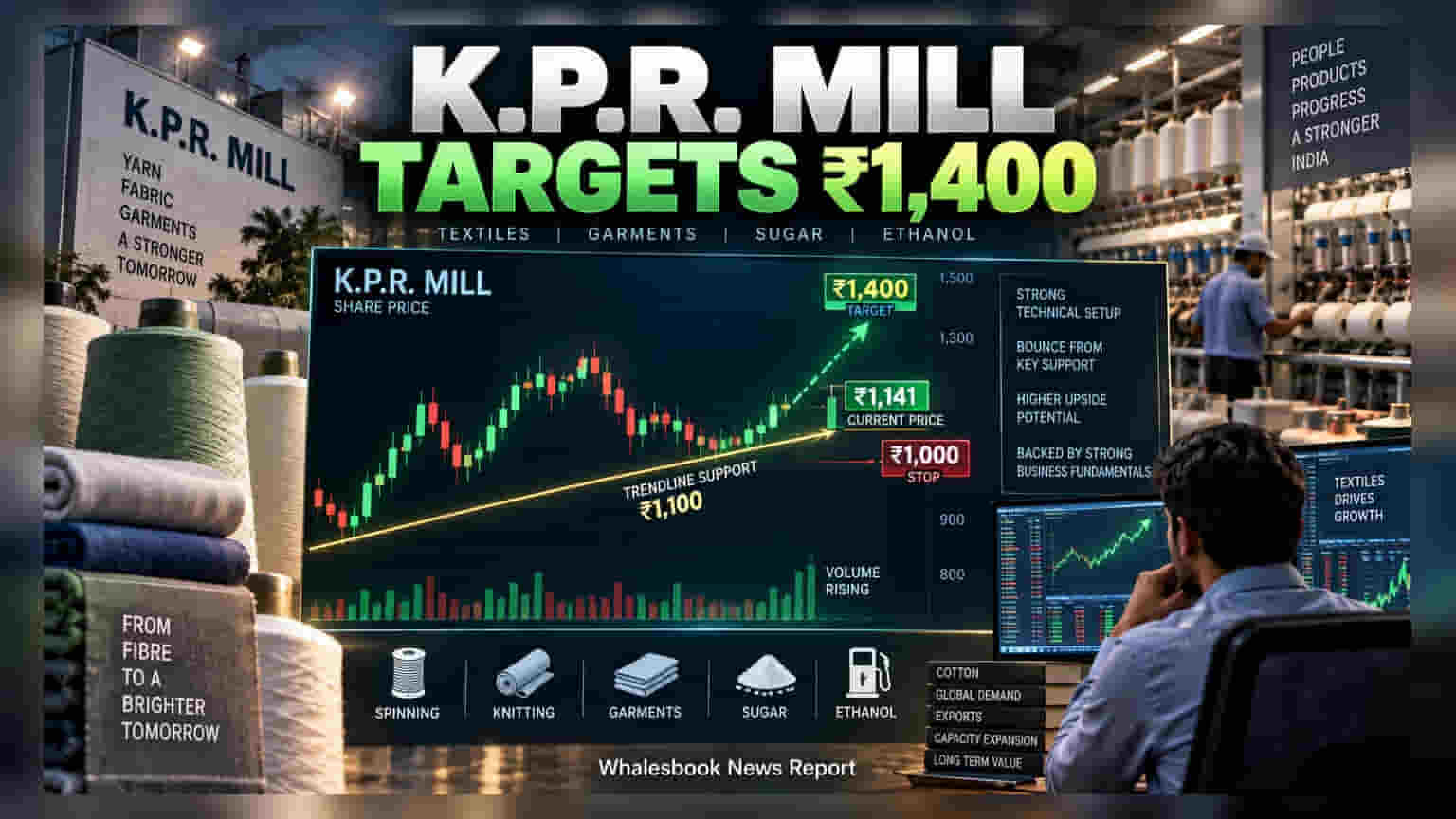
K.P.R. Mill’s recent share price movement aligns with investor interest in its vertically integrated textile operations. The company’s financial performance remains sensitive to cotton price trends and global garment demand, while its sugar and ethanol segments provide revenue diversification. Investors monitor quarterly results to understand how these business units impact overall profitability.
K.P.R. Mill, a prominent player in the Indian textile manufacturing sector, has seen its share price recently move near the ₹1,140 level. While technical observers often monitor support zones and price trends, long-term investors primarily focus on the company’s underlying business fundamentals and its ability to manage operational challenges in a cyclical industry.
The company is best known for its vertically integrated operations, which cover the entire value chain from spinning and knitting to the production of readymade garments. This business model is designed to provide cost advantages and better control over product quality. By managing multiple stages of manufacturing, K.P.R. Mill aims to reduce its reliance on third-party suppliers and maintain margins, although this model also requires continuous investment in machinery and capacity expansion.
A key factor that investors frequently monitor is the company's sensitivity to raw material cycles. Since cotton is a primary input for its textile operations, fluctuations in local and international cotton prices can directly influence operating profit margins. When cotton prices remain volatile, the company must effectively manage inventory and pricing to protect its bottom line. Investors also watch the demand for garment exports, particularly in major markets like the US and Europe, as any slowdown in global consumption can affect the utilization of manufacturing capacity.
Beyond its core textile business, K.P.R. Mill maintains a presence in the sugar and ethanol segments. This diversification is strategically important as it helps balance revenue streams, especially when the textile sector faces pressure from global demand fluctuations or raw material price spikes. Revenue from the sugar segment often behaves differently than textile exports, providing a hedge against sector-specific downturns.
The company’s financial health is also influenced by its approach to capital allocation. As a manufacturer, the business requires periodic capital spending to modernize equipment and expand production facilities. Investors typically review the company’s debt levels and return ratios in its quarterly filings to assess how efficiently it is deploying capital and whether these expansions are translating into improved profitability.
Looking ahead, the primary focus for stakeholders will be on garment export volumes and the company’s ability to manage operating costs amidst changing raw material trends. The next major trigger for investors will be the company’s upcoming quarterly financial results, which will provide insight into current demand conditions, margin trends, and the status of its various business units.