 Whalesbook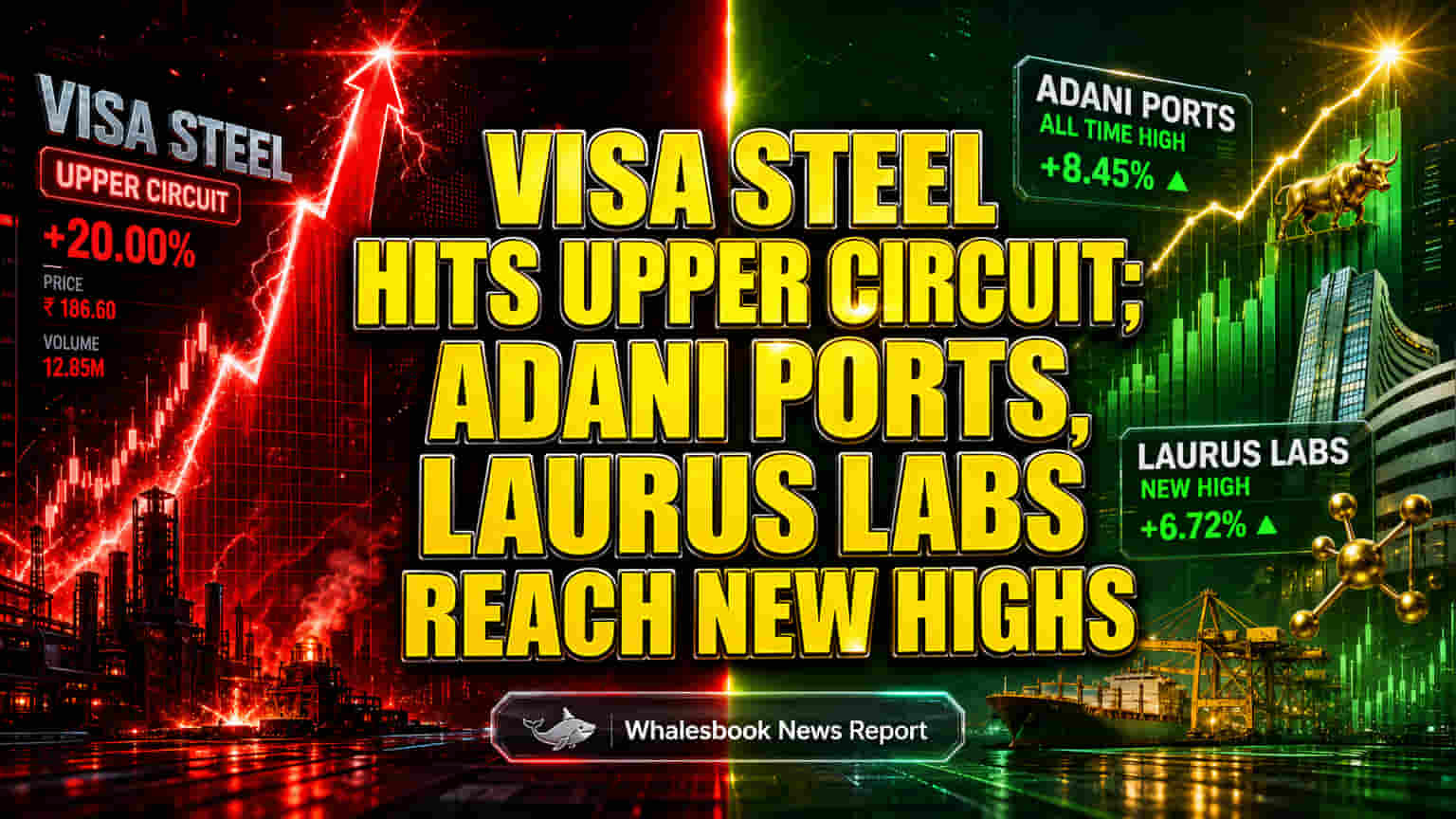


Stocks Surge on Technical Strength
India's stock market on May 5, 2026, showed a clear split, with price action and technical signals driving performance more than any new fundamental news. Several companies, including Visa Steel and Omax Autos, reached their upper circuit limits, indicating strong buying interest. This surge suggested short-term bullish sentiment from technical breakouts or speculation. This was mirrored by many stocks hitting new 52-week highs, such as Schneider Infra, HFCL, Adani Power, Emcure Pharmaceuticals, Adani Green Energy, Syrma SGS, Lloyds Metals, Adani Ports, Laurus Labs, and Ather Energy. The widespread gains across sectors pointed to investors focusing on stocks with strong chart patterns, regardless of underlying fundamentals. However, rallies based purely on price action can reverse quickly if demand fades.
Identifying Momentum Plays
Several stocks showed clear short-to-medium term upward momentum. Kontor Space, trading at ₹75.80 (up 6.58%), was well above its key short-term moving averages, indicating bullishness. KN Agri Resources also displayed sustained momentum, gaining 3.04% to ₹198.50. It stayed above its 30-day and 50-day averages but remained below the 200-day average, suggesting ongoing long-term pressure. Transwarranty Finance rose 3.14% to ₹12.80, moving above its 30-day average for short-term strength, though it trades below its 150-day and 200-day averages, pointing to a weaker overall trend. While KN Agri Resources shows sector promise, its market cap of ₹452 crore is above the median peer cap of ₹326 crore. Omax Autos, in the auto ancillary sector expected to grow 7-9% in FY26, has a P/E of 13.97x. This is below the industry average of 29.3x and its peer average of 16.8x, likely contributing to its strong demand.
Facing Persistent Selling Pressure
In contrast, several companies faced ongoing selling pressure. Rajdarshan Industries fell 3.65% to ₹37.50, staying below key short- and long-term moving averages, signaling broad weakness and a bearish trend. Team India also dropped 3.14% to ₹250.95, trading below most significant averages, indicating weak sentiment with little immediate support. LCC Infotech saw short-term pressure, trading below its 30-day and 50-day averages, but held above longer-term indicators. Rajdarshan Industries has a market cap of ₹110.5 million and a PE ratio of 0, pointing to serious fundamental challenges. LCC Infotech's market cap is ₹62.9 crore with a negative P/E of -39, suggesting significant losses and a tough financial situation. This consistent underperformance indicates operational or financial problems that technical charts alone cannot fix.
Market Risks and Specific Weaknesses
The market's current state, marked by few new fundamental drivers and heavy reliance on price action, carries substantial risks. Although Visa Steel and Omax Autos are hitting upper circuits, the wider steel and auto ancillary sectors face pressure. The steel industry, for example, deals with volatile raw material costs and possible regulatory changes. The auto ancillary sector, despite growth outlooks, is navigating a key EV transition, leading to potential declines for suppliers focused on internal combustion engines. For companies like Rajdarshan Industries and LCC Infotech, persistent bearish trends suggest deeper underlying weaknesses. Rajdarshan Industries' PE of 0 and negative earnings show an inability to profit, making it vulnerable to market drops or shifts away from speculative stocks. LCC Infotech's negative P/E and very high Price-to-Book ratio (101.200) point to a precarious financial position. Past market behavior shows rallies based solely on technicals without fundamental support are often brief and prone to sharp reversals, especially during high volatility or foreign investor outflows. The current economic climate, with rising oil prices and a weaker rupee, worsens these risks, creating conditions where speculative momentum can rapidly vanish. A potential El Niño event could also affect the agricultural sector, impacting companies like KN Agri Resources despite its recent short-term strength.
Outlook for Indian Equities
India's market is in a phase of consolidation, showing a wide gap between technically strong stocks and those with fundamental challenges. Political stability after elections and domestic demand offer some support, but ongoing global tensions, especially around oil prices and currency shifts, are likely to keep markets volatile. For stocks showing momentum, their gains will depend on attracting steady demand and showing fundamental progress. Companies with weak finances and bearish technicals, however, are likely to stay under pressure and face further declines if the broader market drops. Analysts predict range-bound trading for major indices, with key support levels needing to hold to prevent drops, while clear upward breaks are needed for sustained gains.