 Whalesbook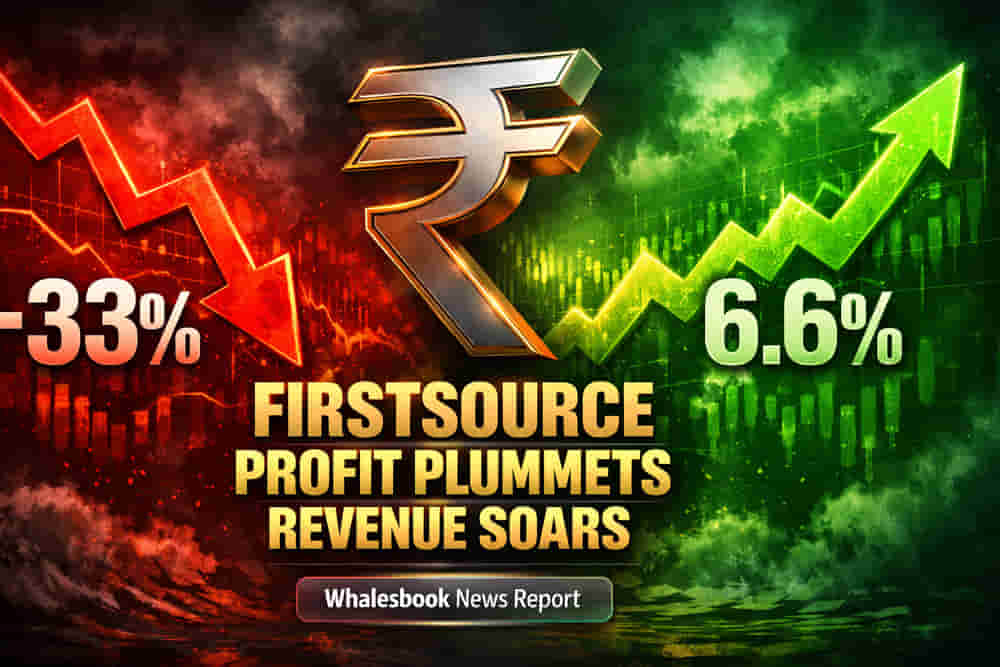
Operational Strength Masks One-Time Hit
Firstsource Solutions Limited's third-quarter results presented a divergence between headline profit and underlying operational performance. Net profit dropped 33% sequentially to ₹120 crore, a figure significantly impacted by a one-time provision of ₹91.35 crore related to the implementation of India's new labor codes. This charge, alongside potential future costs associated with these regulations, weighed heavily on the bottom line. However, the company demonstrated resilience through robust top-line growth and improved efficiency metrics. Revenue saw a healthy 6.6% increase quarter-over-quarter, reaching ₹2,467 crore. Concurrently, Earnings Before Interest and Taxes (EBIT) rose by a notable 17.3% to ₹315.6 crore, driving the EBIT margin to 12.8% from 11.6% in the preceding period. This operational expansion indicates that core business activities are performing well despite the headwinds from regulatory changes.
Valuation and Sector Context
Firstsource Solutions currently trades at a TTM Price-to-Earnings (P/E) ratio of approximately 33-34x. This valuation places it comparably with peers like eClerx Services, which has a similar P/E and market capitalization, while trading at a premium to players like Alldigi Tech Ltd. (18.9x P/E) but below Quess Corp Ltd. (49.37x P/E). The company's market capitalization hovers around ₹22,000 crore. This valuation must be considered against the backdrop of the broader Indian IT sector, which has faced headwinds. The Nifty IT index saw a 12.6% decline in 2025 due to foreign outflows and macroeconomic uncertainties. While Q3 performance for many IT firms was muted, with modest revenue growth and cautious client spending, the Business Process Management (BPM)/ITES segment, where Firstsource operates, has shown sustained hiring momentum. The implementation of India's new labor codes is a significant factor across the IT sector, with large firms like TCS, Infosys, and HCLTech having already booked substantial one-time provisions impacting their margins. Firstsource's ₹91.35-crore charge aligns with this trend, and while such expenses can compress near-term profitability, analysts suggest long-term benefits in flexibility and global compliance may accrue.
Analyst Outlook and Shareholder Returns
Despite the quarterly profit dip, the analyst consensus for Firstsource Solutions remains 'Outperform', with an average price target of ₹406.15, implying a potential upside of over 27% from the current trading price. This optimistic outlook is supported by specific upgrades from firms like Emkay Global and a 'Buy' initiation from IIFL. The company's commitment to shareholder returns is further evidenced by the declaration of an interim dividend of ₹5.50 per share for FY2025-26, with a record date of February 20, 2026. Additionally, the approval of 9,43,000 stock options under its Employee Stock Option Plan 2019 signals continued investment in employee incentives. Historically, Firstsource has delivered strong returns, with a 3-year return of 173.45% outperforming the Nifty 50 significantly. However, recent price action has been volatile, with the stock experiencing a downtrend over the past ten days leading up to February 3rd's marginal gain.