

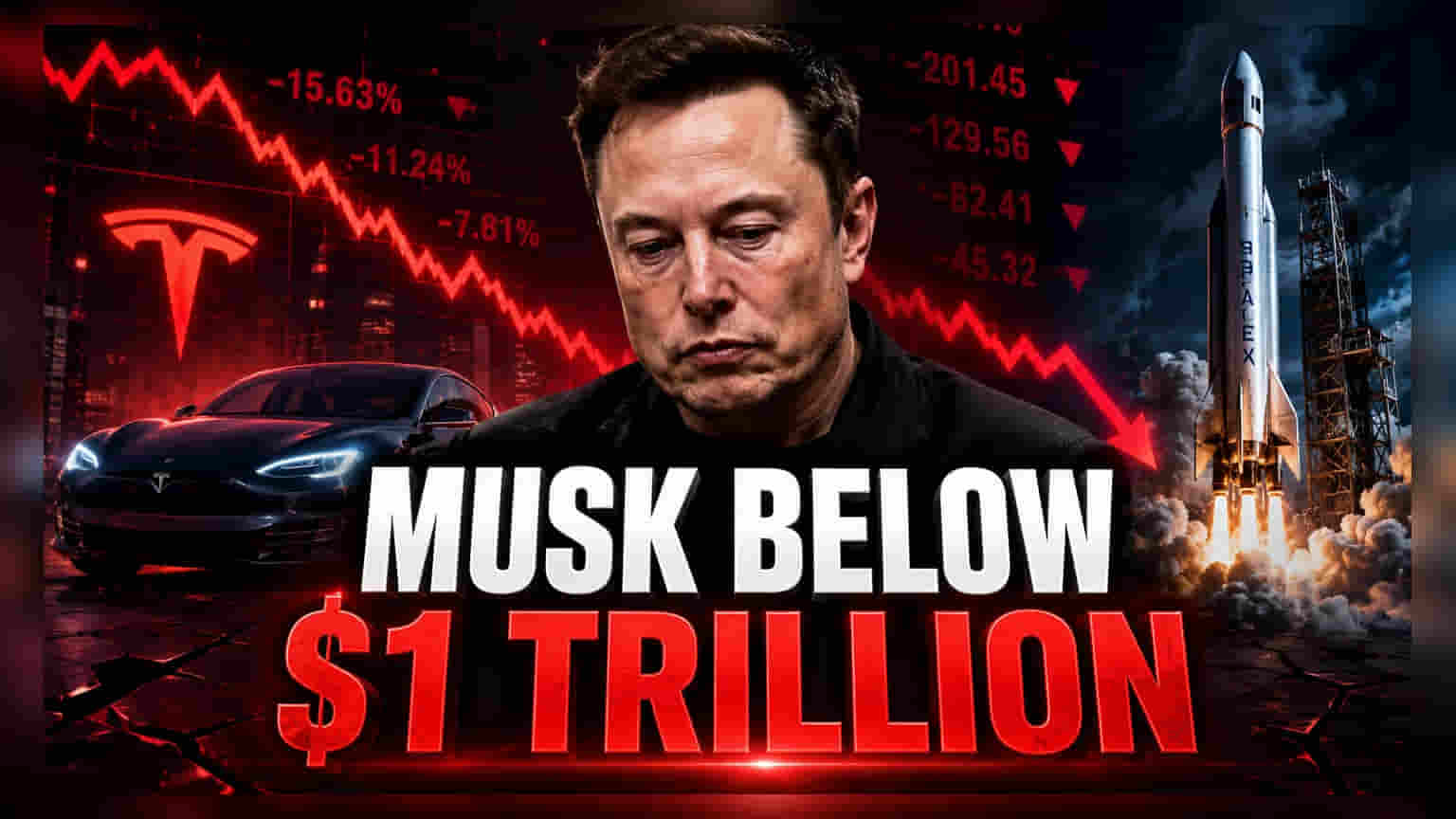
Elon Musk’s net worth has fallen to $957 billion after a sharp decline in Tesla and SpaceX share prices. The drop reflects growing investor caution regarding high-valuation tech stocks and potential selling pressure from the upcoming expiry of SpaceX's share lock-up period.
What Happened
Elon Musk is no longer a trillionaire. His net worth has dropped to $957 billion following a significant decline in the stock prices of his major holdings, Tesla and SpaceX. On June 24, 2026, the combined slide in these companies erased an estimated $118 billion from his personal fortune in a single day. This shift follows a broader sell-off in the technology sector, as investors re-evaluate companies with high valuations amid concerns about rising interest rates and the sustainability of artificial intelligence-driven growth.
The SpaceX Valuation Check
SpaceX, which recently went public, is facing intense scrutiny. Its shares are trading around $156, a decline of more than 30% from the $225 peak reached shortly after its initial public offering earlier this month. While early excitement fueled a rapid rally, investor sentiment is shifting as financial details become clearer. The company reported a loss of $4.9 billion for the year 2025. Additionally, the company has incurred heavy capital spending, totaling $12.7 billion for its artificial intelligence business expansion. Investors are now questioning whether the company's long-term goals, such as space-based data centers and Mars missions, justify such high valuations in the current market environment.
The Lock-Up Risk
Beyond current valuation concerns, there is a looming technical risk for SpaceX shareholders: the expiry of the lock-up period. This period prevents early investors and insiders from selling their shares for a set time after an IPO. When this expires, these holders are free to sell, which often creates an increase in the supply of shares in the market. If many insiders decide to sell at once, it can put downward pressure on the stock price. This event serves as a significant test for investor confidence in the company's early post-IPO phase.
Broader Tech Sector Pressure
Musk’s wealth is highly sensitive to market fluctuations because of his large holdings in growth-oriented technology companies. The current market environment is proving difficult for such stocks. Concerns regarding a potential bubble in the artificial intelligence sector, combined with the prospect of higher interest rates, have led many investors to move away from speculative, high-growth assets. This creates a difficult environment for companies like Tesla and SpaceX, which rely heavily on high growth expectations to support their share prices.
What Investors Should Track
Investors looking at global tech trends may monitor several factors. The most immediate is the official date for the lock-up expiry, as this will determine when insider selling can begin. Additionally, the company's ability to manage its high capital spending while narrowing its losses will be a key monitorable. As the market digests the recent financial disclosures, the company’s ability to prove its long-term business model will likely influence whether the stock stabilizes or faces further volatility.