 Whalesbook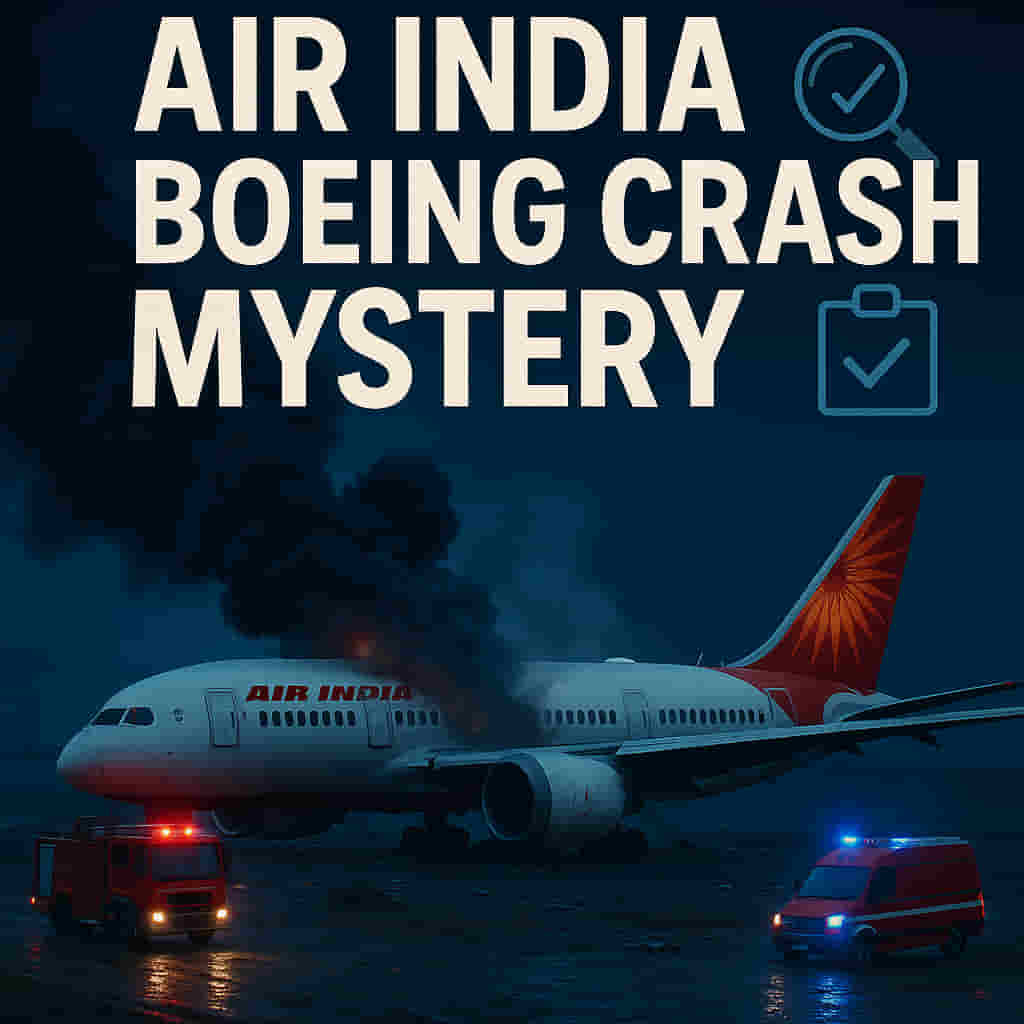
Air India Boeing 787 Crash: Lingering Questions After 260 Deaths
Six months after a catastrophic Air India Boeing 787-8 Dreamliner crash claimed 260 lives, investigators have yet to provide definitive answers, leading to escalating disputes among pilots, the airline, and the aircraft manufacturer. The tragedy occurred on June 12, shortly after the flight departed Ahmedabad, India.
The Core Issue
Air India flight 171 was en route to London Gatwick Airport with 230 passengers and 12 crew members when it crashed into buildings near Ahmedabad airport less than a minute after takeoff. Video footage confirmed the aircraft failed to gain altitude before exploding into flames. The disaster resulted in 241 fatalities on board and 19 on the ground, with only one passenger surviving with severe injuries.
Initial Findings and Controversy
A preliminary report by India's Aircraft Accident Investigation Bureau (AAIB), released a month after the crash, indicated that the fuel supply switches for both engines were simultaneously placed in the 'off' position shortly after takeoff. Cockpit voice recordings captured dialogue where one pilot questioned the other about turning off the fuel supply, with the latter denying it. The report also noted the automatic deployment of an auxiliary power unit. Less than ten seconds later, the switches were returned to 'on', followed by a 'Mayday, Mayday, Mayday' transmission before the crash. Crucially, the report did not specify if this action was due to pilot maneuver or a malfunction.
Pilot associations strongly criticized the preliminary findings, arguing that the report's paraphrasing of pilot dialogue suggested human error without sufficient evidence. They also pointed out the lack of recommendations for immediate safety measures on the aircraft or its engines, which they felt sidelined the possibility of technical defects.
Disputes Intensify
A bitter exchange of words emerged between victim families, lawyers, and pilots on one side, and Air India and Boeing on the other. Pushkaraj Sabharwal, father of one of the deceased pilots, filed a petition in the Supreme Court, calling the preliminary investigation 'profoundly flawed.' He argued it unfairly focused on the pilots while failing to adequately investigate or eliminate other plausible technical and procedural causes.
Hypotheses and Expert Views
British lawyer Sarah Stewart, representing numerous victim families, also leans towards a scenario involving system failure. She stated that the factual information suggests a 'troubling spectre' of uncommanded fuel cut-off, pointing to potential failures within Boeing's systems. Air India CEO Campbell Wilson asserted in a September speech that the preliminary report indicated 'nothing wrong with the aircraft, nothing wrong with the engines, nothing wrong with the airline's operation.'
However, some aviation experts disagree. Former pilot Amit Singh noted reports of electrical faults on the aircraft prior to the crash and questioned the sourcing of data in the report, suggesting it was designed to imply pilot responsibility. Aviation expert Mark Martin went further, describing the situation as a 'cleverly designed cover-up,' drawing parallels to the Boeing 737 MAX crashes where pilots were initially blamed before a design flaw was identified. Boeing declined to comment when contacted.
Impact
This accident has a profound impact on aviation safety perception, corporate accountability, and the reputations of both Air India and Boeing. It raises serious concerns for passengers regarding flight safety and may lead to stricter regulatory oversight and potential financial repercussions for the involved parties if systemic failures are confirmed. Investor confidence in the aviation sector and the reliability of aircraft manufacturing could be affected.
Impact Rating: 8/10
Difficult Terms Explained
Preliminary Report: An initial, unconfirmed report detailing early findings from an accident investigation, not representing the final conclusion.
Aircraft Accident Investigation Bureau (AAIB): The governmental body in India responsible for investigating aviation accidents and incidents.
Cockpit Voice Recording (CVR): A device that records sounds in the flight deck, including pilot conversations, to aid in accident investigations.
Fuel Supply Switches: Controls located in the aircraft cockpit that regulate the flow of fuel to the engines.
Auxiliary Power Unit (APU): A small, self-contained turbine engine on an aircraft used to provide electrical power and bleed air for systems operation, typically during ground operations or as a backup.
Mayday: An internationally recognized distress signal indicating grave and imminent danger.
Uncommanded Fuel Cut Off: A situation where the fuel supply to the engines is stopped automatically or by a system malfunction, without a deliberate action by the pilots.
Design Flaw: An inherent defect or error in the design of an aircraft or its components that can lead to unsafe operation.