 Whalesbook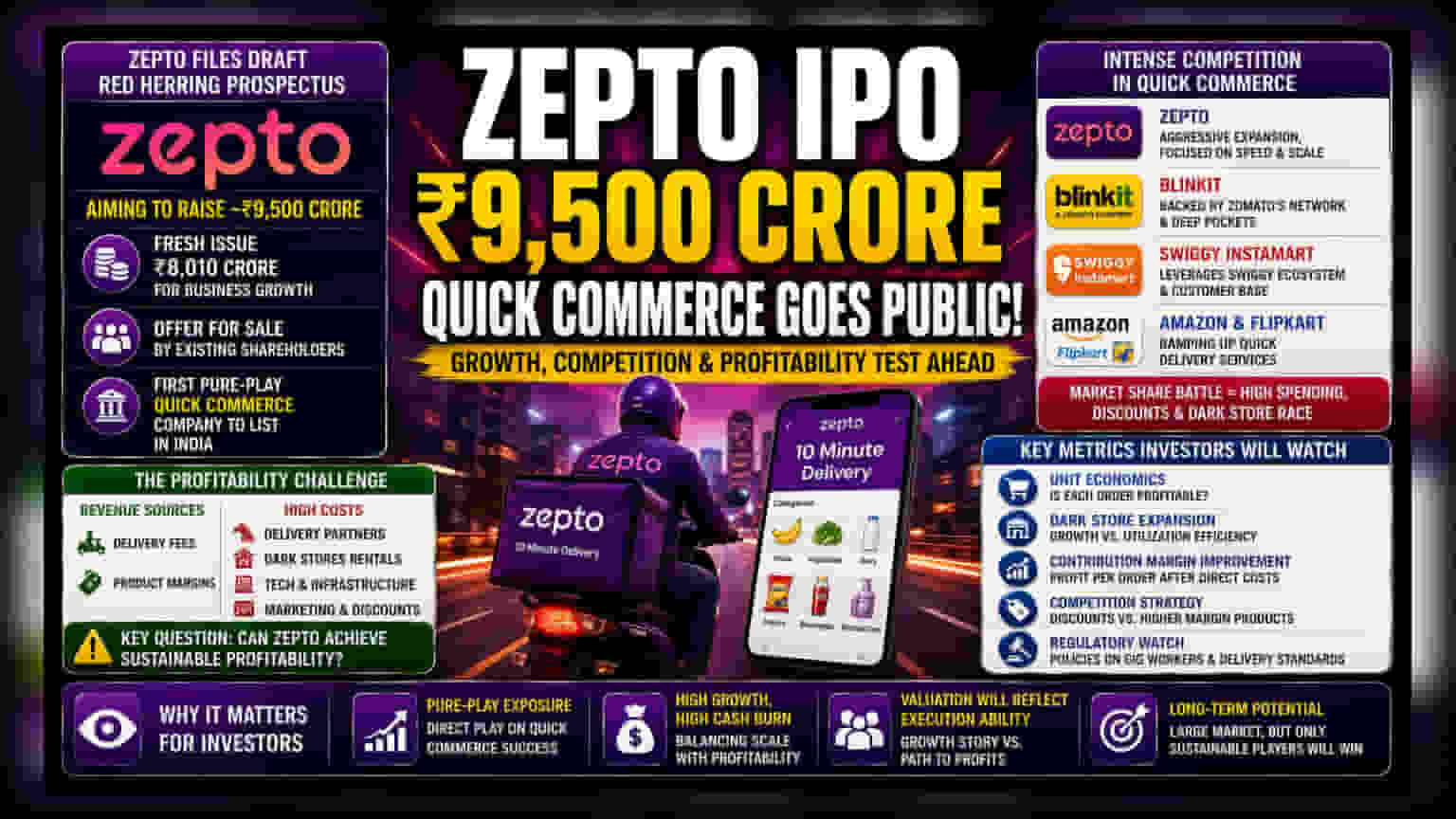


What Happened
Zepto has taken a major step toward becoming a public company by filing its draft red herring prospectus with the Securities and Exchange Board of India. The company is aiming to raise approximately ₹9,500 crore. This includes a fresh issue of shares worth ₹8,010 crore, meaning the company will use this money directly for business operations, while the rest involves existing shareholders selling their stakes. If the listing proceeds as planned, it will mark the first time a company focused solely on the 'quick commerce' model—delivering goods in minutes—will list on Indian stock exchanges.
Why This Matters For Investors
This filing brings the intense competition of the quick commerce sector into the public eye. Until now, quick commerce has mostly been a part of larger businesses like Zomato (which owns Blinkit) or Swiggy (which runs Instamart). Zepto is a standalone player, meaning its stock price will directly reflect the success or failure of the quick commerce model without the buffer of other business lines like food delivery. For investors, the key question is how the company plans to balance its aggressive growth strategy with the need to eventually make a profit.
The Competition and Market Context
The quick commerce market in India is currently a high-stakes battleground. Zepto is fighting for market share against well-funded giants. Blinkit has the backing of Zomato’s large delivery network and capital, while Swiggy Instamart leverages Swiggy's existing ecosystem. Additionally, massive e-commerce players like Amazon and Flipkart are also expanding their quick delivery services. This competition is expensive. These companies spend significantly on marketing, discounts, and maintaining their network of 'dark stores'—small local warehouses used to fulfill orders quickly. For investors, understanding this landscape is vital because it determines how much money companies must keep spending just to maintain their position.
The Profitability Challenge
The most important aspect for shareholders will be the company’s path to profitability. In this business model, companies earn money by charging delivery fees and taking a margin on goods sold. However, the costs—such as paying delivery partners, renting dark stores, and tech infrastructure—are very high. Zepto has been investing heavily in expanding its reach. While this builds a larger user base, it also puts pressure on cash reserves. Investors will need to watch if the company can increase its 'contribution margin,' which is essentially the profit made on each order after paying for the direct costs of fulfilling that order. If this margin does not improve, the company may need to keep raising more money, which could lead to issuing more shares and diluting existing shareholder value.
What Investors Should Track
Investors looking at this IPO will likely focus on several key areas. First is the company’s unit economics: Is it making money on every order delivered? Second is the growth in its network of dark stores. While adding stores helps reach more customers, maintaining too many stores without enough orders can become a drain on cash. Third is management’s strategy regarding competition. Will they continue to offer deep discounts to win customers, or will they focus on higher-margin products like electronics and beauty items to boost revenue? Finally, any regulatory changes regarding gig workers or delivery standards could impact costs, so keeping an eye on government policy is essential for anyone interested in this sector.