 Whalesbook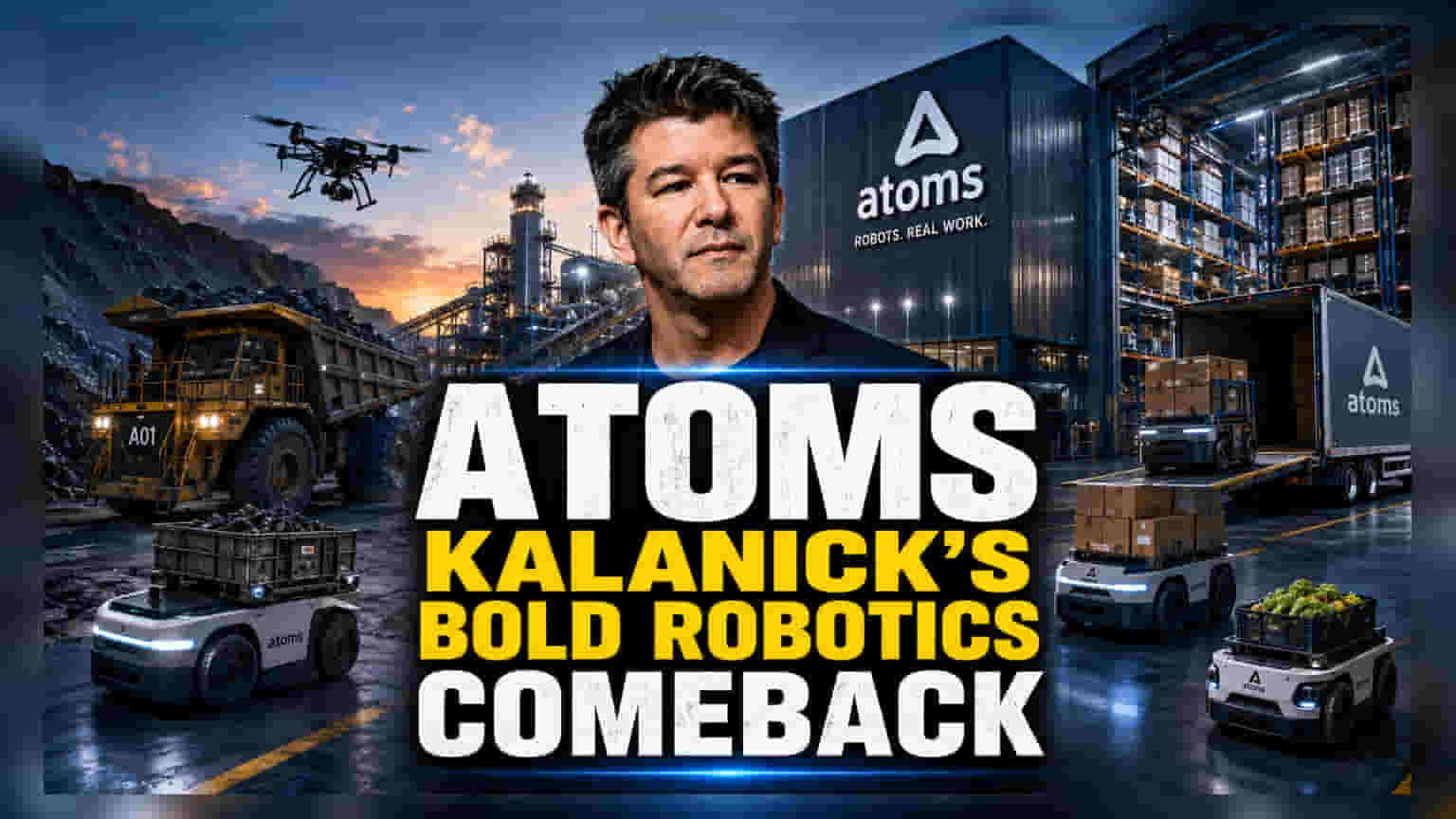


The Atoms Industrial Thesis
Travis Kalanick has re-emerged from an extended operational silence with the public launch of Atoms, a venture initially incubated under the name City Storage Systems. Unlike the high-profile, consumer-facing nature of his tenure at Uber, Atoms operates with a focus on 'gainfully employed robots'—specialized, wheeled machines designed for industrial-scale utility in mining, transportation, and food infrastructure. By folding CloudKitchens into this new parent entity, Kalanick is attempting to bridge the gap between real estate-backed logistics and advanced physical AI, effectively positioning the venture as an operating system for the physical world.
Contrarian Robotics in an AI Era
The market narrative surrounding robotics is currently dominated by the race toward humanoids, led by companies like Boston Dynamics and various well-funded startups. Kalanick’s approach represents a distinct, contrarian strategic choice. Atoms explicitly favors task-specific hardware over general-purpose bipedal designs, arguing that efficiency in controlled environments—such as warehouses and industrial sites—is best served by specialized chassis. This platform-based philosophy, which Kalanick refers to as a 'wheelbase for robots,' echoes his earlier strategy of creating standardized systems that can be adapted for multiple variants, effectively commoditizing the mechanical labor that currently serves as a critical economic bottleneck.
Structural Risks and the Burden of Reputation
While the scale of Atoms—which reportedly employed thousands during its eight-year stealth phase—demonstrates significant capital backing, the venture faces substantial hurdles. Kalanick’s track record is complex; his departure from Uber in 2017 was catalyzed by severe governance controversies and a culture that many institutional investors ultimately found unsustainable. Atoms must prove it can execute on complex industrial deployments without replicating the friction that defined his previous executive style. Furthermore, the industrial robotics sector is becoming increasingly crowded. Unlike pure-play AI software startups, Atoms must manage the capital-intensive reality of building, deploying, and maintaining hardware at a global scale. The company’s success will depend on its ability to transition from these secretive development phases to commercially viable, high-volume production in sectors where incumbents often have deep, entrenched relationships.
Forward-Looking Market Dynamics
The broader industrial automation market is projected to reach over $340 billion by 2031, driven by labor costs and the push for reshoring. While rumors of potential partnerships with Uber persist, Kalanick’s current focus remains on building an independent industrial architecture. Whether this 'second act' achieves the ubiquity of his first depends on the firm's ability to maintain high operational precision while navigating the regulatory and logistical complexities of automating the physical world, a significantly more friction-heavy process than digitizing transportation services.