

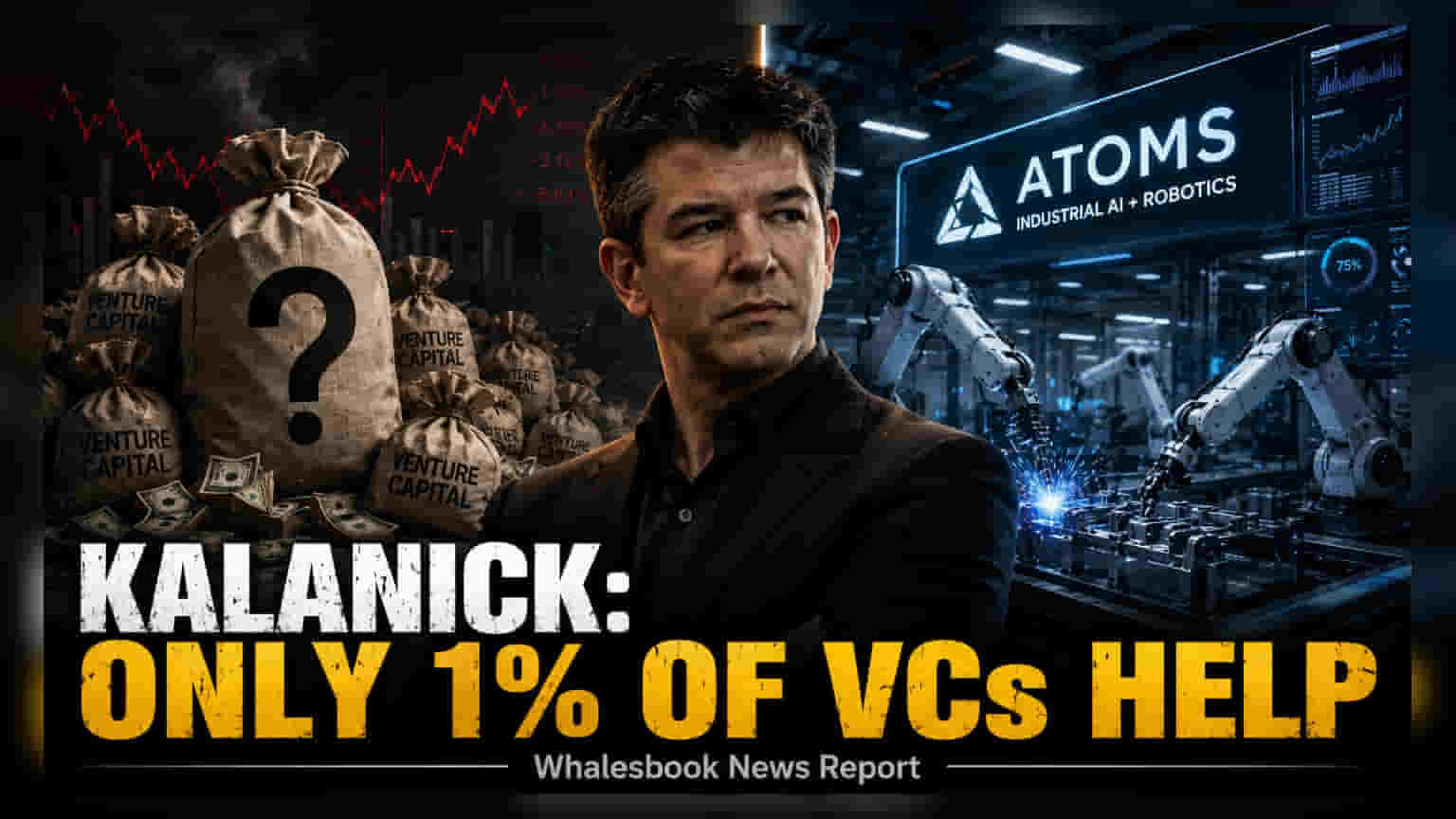
Former Uber CEO Travis Kalanick has stated that only 1% of venture capitalists provide genuine help to founders. He also advised entrepreneurs to avoid specific firms like Benchmark, citing his past boardroom conflict. While Kalanick is currently scaling his private robotics startup, Atoms, his comments highlight the growing importance of founder-investor alignment in high-stakes, capital-intensive businesses.
Travis Kalanick, best known as the co-founder and former CEO of Uber, has publicly criticized the venture capital industry, claiming that a vast majority of investors fail to provide meaningful support to startups. Speaking on a recent podcast, Kalanick estimated that only 1% of venture capitalists are truly helpful, while arguing that many others struggle to meet even a basic "do no harm" standard. He compared the ideal founder-investor relationship to a mentorship, suggesting that many investors provide little more than periodic check-ins rather than deep, actionable guidance.
The History Behind the Warning
Kalanick’s skepticism is rooted in his contentious exit from Uber in 2017. During his tenure, a major boardroom conflict with Benchmark Capital—one of his early investors—played a significant role in his eventual resignation. Because of this experience, Kalanick has publicly advised current founders to be cautious when choosing their investors, specifically suggesting they avoid Benchmark Capital. His advice underscores the power dynamics that often exist in the boardroom, where investors can exert significant influence over the company's strategic direction and leadership.
Atoms and the Reality of Capital-Intensive Ventures
For investors following Kalanick's current work, it is important to note that his new venture, Atoms, is a private company and is not listed on any stock exchange. Atoms, which focuses on industrial AI and robotics, recently secured $1.7 billion in funding led by Andreessen Horowitz. Unlike the software-as-a-service (SaaS) startups that often dominate venture headlines, industrial AI and robotics are capital-intensive sectors. These businesses require sustained, large-scale financial backing and longer development cycles, which naturally increases the risk of misalignment between founders and their investors.
Understanding Founder-Investor Dynamics
Kalanick’s comments resonate with a broader debate in the startup ecosystem regarding governance. In many high-growth, cash-burning startups, the relationship between the founder's vision and the investor's expectation of returns can become strained. Kalanick acknowledged that his own aggressive management style at Uber—which he likened to running a firm while facing constant financial ruin—contributed to the optics problems that led to his ousting. This acknowledgment suggests that founders must balance their operational intensity with the need for stable boardroom governance.
What Investors Should Track
While Kalanick's company is private, his public stance offers a useful lesson for those analyzing startup investments or venture capital funds. The key monitorable for any capital-intensive startup, such as those in robotics or AI, is not just the amount of funding raised, but the long-term stability of the governance structure. Investors should pay attention to how a company manages its board, the terms of its funding, and the alignment between leadership and institutional backers. As the industry moves toward more complex, 'hard tech' sectors, the quality and supportiveness of the investor base will likely become as important as the product or technology itself.