

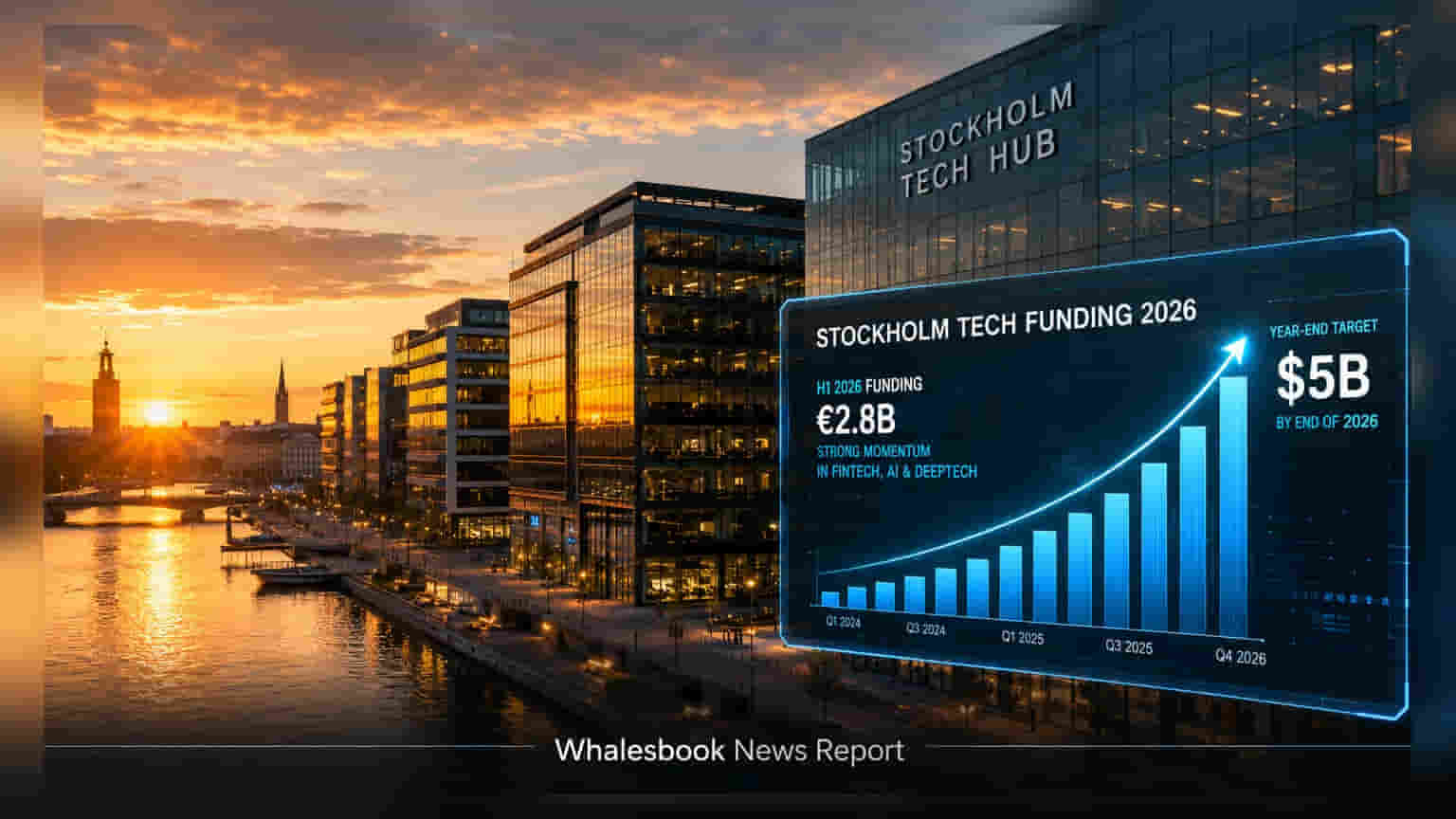
Sweden’s tech startup sector is seeing a renewed wave of investment with €2.8 billion raised in the first half of 2026. As the market eyes a $5 billion annual target, investors are shifting their focus from rapid, high-cost growth to sustainable business models.
Stockholm's tech ecosystem is undergoing a significant transformation in 2026, moving away from the aggressive, high-burn growth strategies seen in previous years. Data shows that the sector secured approximately €2.8 billion in funding during the first half of the year alone, with projections suggesting total capital inflows could reach $5 billion by year-end. This resurgence marks a stabilization period after the cooling market conditions that followed the 2021 investment peak.
The current momentum is characterized by a shift toward sustainable profitability, particularly in the fintech, AI, and industrial deeptech sectors. Notable companies like Lovable, which recently closed a $400 million Series C round at a valuation near $13.3 billion, and the legal AI firm Legora, which has seen its valuation climb toward the $10 billion range, highlight this trend. These companies are gaining attention not just for their scale, but for their ability to demonstrate clearer paths to financial stability.
The Role of Experienced Capital
This growth cycle is supported by an established class of mentors. Founders from Sweden's first generation of unicorns, including those from Spotify, are reinvesting capital and institutional knowledge into the new wave of ventures. This environment, often described as a flywheel effect, helps newer startups refine their operational strategies, reducing the likelihood of early-stage failures that typically plague less mature markets. Furthermore, the resilience of these firms has drawn consistent interest from American venture capitalists, who are increasingly active in evaluating Swedish talent and scalability.
Investor Risks and Market Pressure
While the sector is showing renewed strength, investors are exercising greater caution regarding risk factors. A primary concern is concentration risk; the overall funding figures are heavily weighted toward a small number of massive, late-stage transactions rather than broad-based growth across all early-stage firms. This means the sector's health is currently dependent on a few large players, such as those in the cleantech space, to maintain market momentum.
Additionally, the broader economic environment remains a hurdle. Higher interest rates and persistent inflation continue to exert pressure on margins for both households and non-financial corporations. For startups, this means the pressure to prove profitability is higher than it was in previous years. Furthermore, Swedish companies with significant exposure to the United States face potential operational complexity due to ongoing tariff discussions, which could create friction for businesses relying on international supply chains or exports.
Moving forward, the primary monitorable for investors will be whether this capital inflow can sustain itself through the second half of the year and if the focus on profitability translates into stable, long-term returns. Market participants will also watch whether smaller, early-stage firms can successfully secure funding in an environment that is increasingly selective about the business models it supports.