

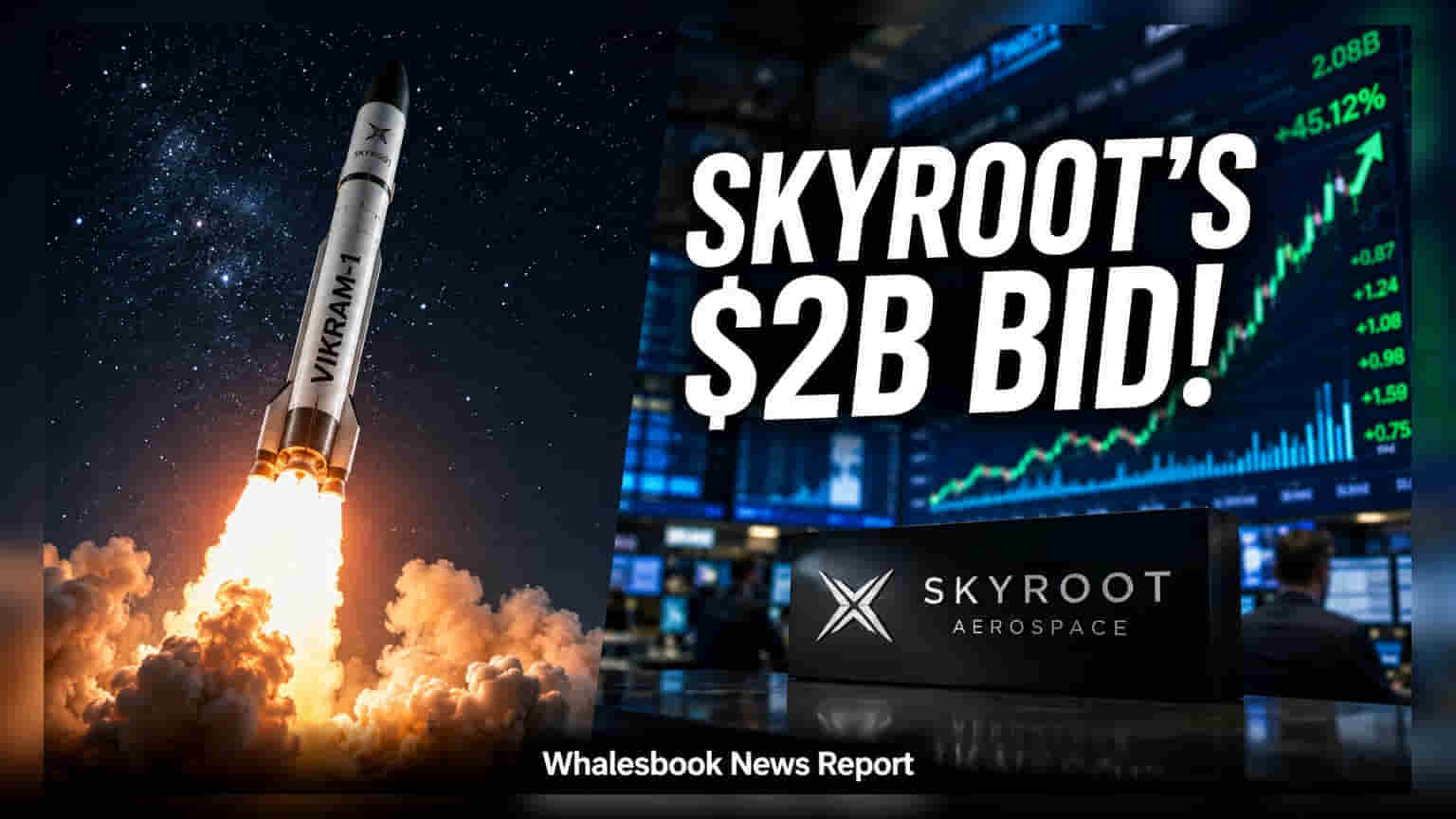
Hyderabad-based space-tech firm Skyroot Aerospace is planning to raise $200 million at a $2 billion valuation, nearly double its value from May 2026. This move follows the company’s successful orbital rocket launch in July. As a private entity, the company is transitioning from technology demonstration to commercial scaling, though it remains in a cash-intensive growth phase.
Hyderabad-based space-tech startup Skyroot Aerospace is reportedly inviting bids for a new fundraising round that values the company at $2 billion. This development marks an 80% jump in valuation compared to the $1.1 billion achieved during its funding round in May 2026. The company, which is currently a private entity and not listed on the NSE or BSE, is looking to raise approximately $200 million to fuel its next phase of growth.
The aggressive valuation comes shortly after the company achieved a major technical milestone on July 18, 2026, with the successful maiden orbital launch of its Vikram-1 rocket. This mission was significant as it demonstrated the company's ability to develop private orbital launch technology, a capability previously held by only a few nations. The successful flight has effectively served as a proof-of-concept, reducing the perceived risk for investors who are now showing increased interest in the venture.
While the valuation jump reflects investor optimism regarding the company's technology, prospective investors typically examine the underlying financial health of such deep-tech companies. As of its fiscal 2025 filings, Skyroot reported revenue of ₹32 crore and a net loss of ₹99.7 crore. These figures highlight the reality of the space-tech sector, which is highly capital-intensive and requires significant spending on research, development, and infrastructure before a company can achieve consistent profitability. The company has already secured debt support, including a facility from BlackRock earlier in 2026, to manage its liquidity needs.
For investors monitoring the space-tech sector, the transition from a technology-focused startup to a commercial operator is the most critical stage. While the Vikram-1 launch was a success, the company is now tasked with establishing a reliable launch cadence to serve commercial satellite customers. This operational shift is complex, involving strict regulatory compliance and the need for high-frequency mission success. Any delay or technical issue in future missions could impact the company's ability to generate revenue as planned.
Because Skyroot is not a publicly traded company, opportunities to invest in it are generally limited to private equity funds, venture capital firms, and high-net-worth investors rather than retail investors on the stock market. As the company works with advisors like Kotak to close this funding round, the key areas for observers to track include the actual capital raised, the involvement of new domestic and global institutional investors, and, most importantly, the progress toward commercial missions scheduled for 2027. Success in these missions will determine whether the business can scale revenue sufficiently to justify its current multi-billion dollar valuation.