

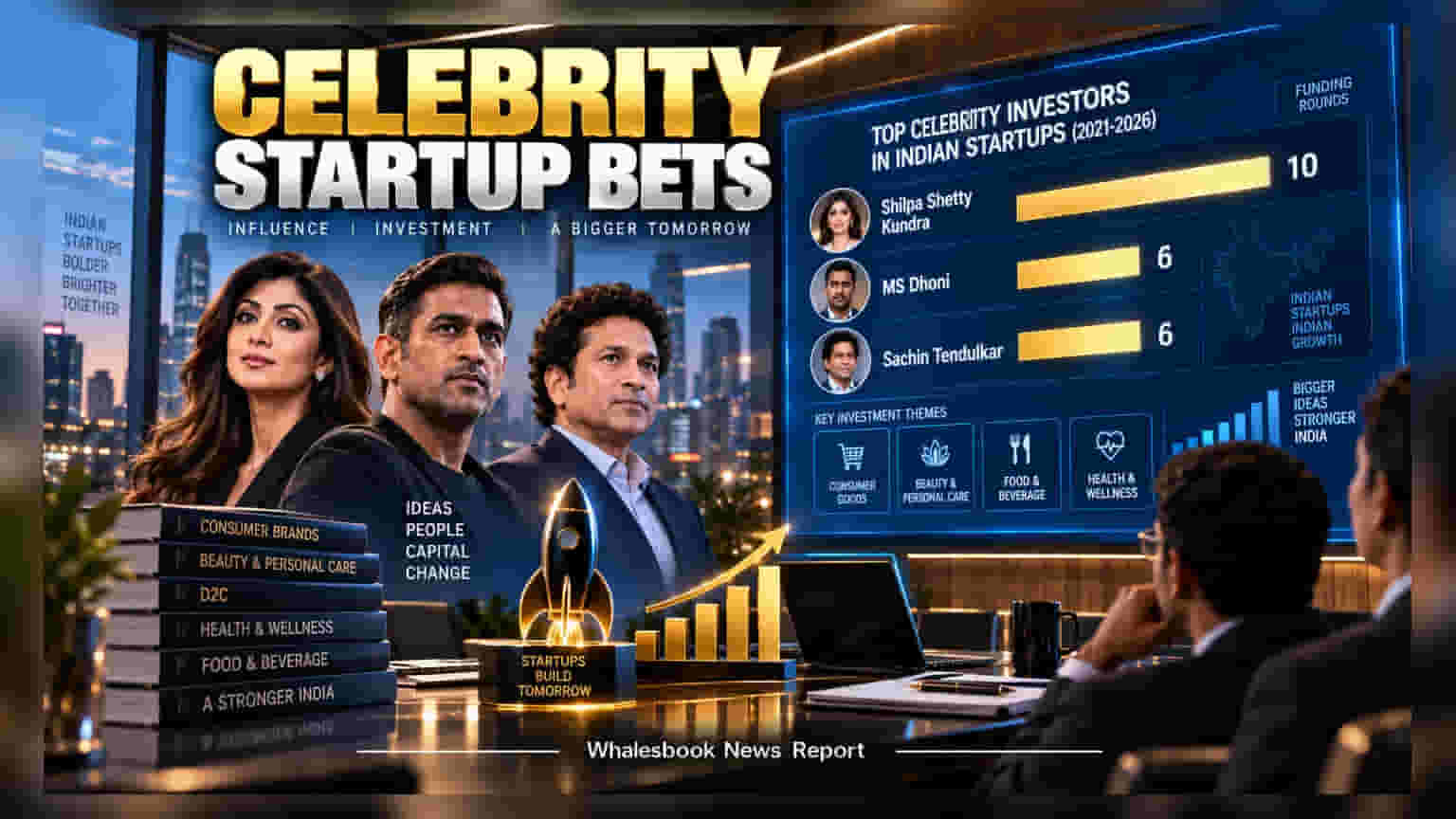
Shilpa Shetty Kundra has recorded the highest number of startup funding participations among Indian celebrities between 2021 and 2026, with 10 disclosed rounds. While this trend reflects a shift toward equity ownership in consumer brands, investors should note that these figures represent total funding round sizes, not necessarily the specific capital amount contributed by the celebrity.
Between 2021 and 2026, Indian celebrities have shifted their focus from simple brand endorsements to taking active equity positions in early-stage companies. Data from market intelligence firm Tracxn shows that Shilpa Shetty Kundra has been the most active in this space, participating in 10 disclosed funding rounds. Other prominent figures like MS Dhoni and Sachin Tendulkar have also maintained a consistent presence, recording six rounds each during the same period.
This shift in strategy is significant because it aligns the celebrity's public profile with the long-term financial success of the business. By moving from being a paid brand ambassador to an investor, these public figures often aim to leverage their influence to drive consumer trust, increase visibility, and support the startup’s growth. Many of these investments have been concentrated in the consumer goods, beauty, and personal care sectors, where brand identity is a primary driver of sales.
For investors observing this trend, it is crucial to distinguish between participation and financial impact. The reported figures track the total deal value of the funding rounds, not the individual check sizes written by the celebrities. A celebrity participating in a funding round does not always imply a controlling stake or massive capital injection; rather, it often reflects a strategic partnership where the individual provides credibility alongside the capital.
However, this model introduces specific risks that shareholders and market observers should track. The most notable is reputational risk. When a celebrity is tied to a company as an equity investor, the company’s brand image becomes deeply linked to that individual. If the celebrity faces personal controversy or legal issues, the business brand can suffer indirectly. Similarly, if the startup faces operational failure or regulatory scrutiny, the celebrity's public image may also face negative publicity.
Furthermore, there is a risk of concentration. Many celebrity investors show a strong preference for the same types of consumer-facing businesses. While these sectors can offer growth, they are also highly competitive and vulnerable to changes in consumer spending habits. Startups in the early stages often face volatile valuations, and a celebrity’s backing does not guarantee the company will achieve profitability, reduce its debt, or survive the intense competition in the Indian D2C and tech markets.
Investors looking at startups backed by high-profile figures should prioritize fundamental business health—such as revenue growth, profit margins, and cash flow—over the celebrity name attached to the cap table. The key monitorable for such companies will be their ability to scale operations independently of the celebrity's influence and whether they can navigate the high-risk environment of the Indian startup ecosystem.