

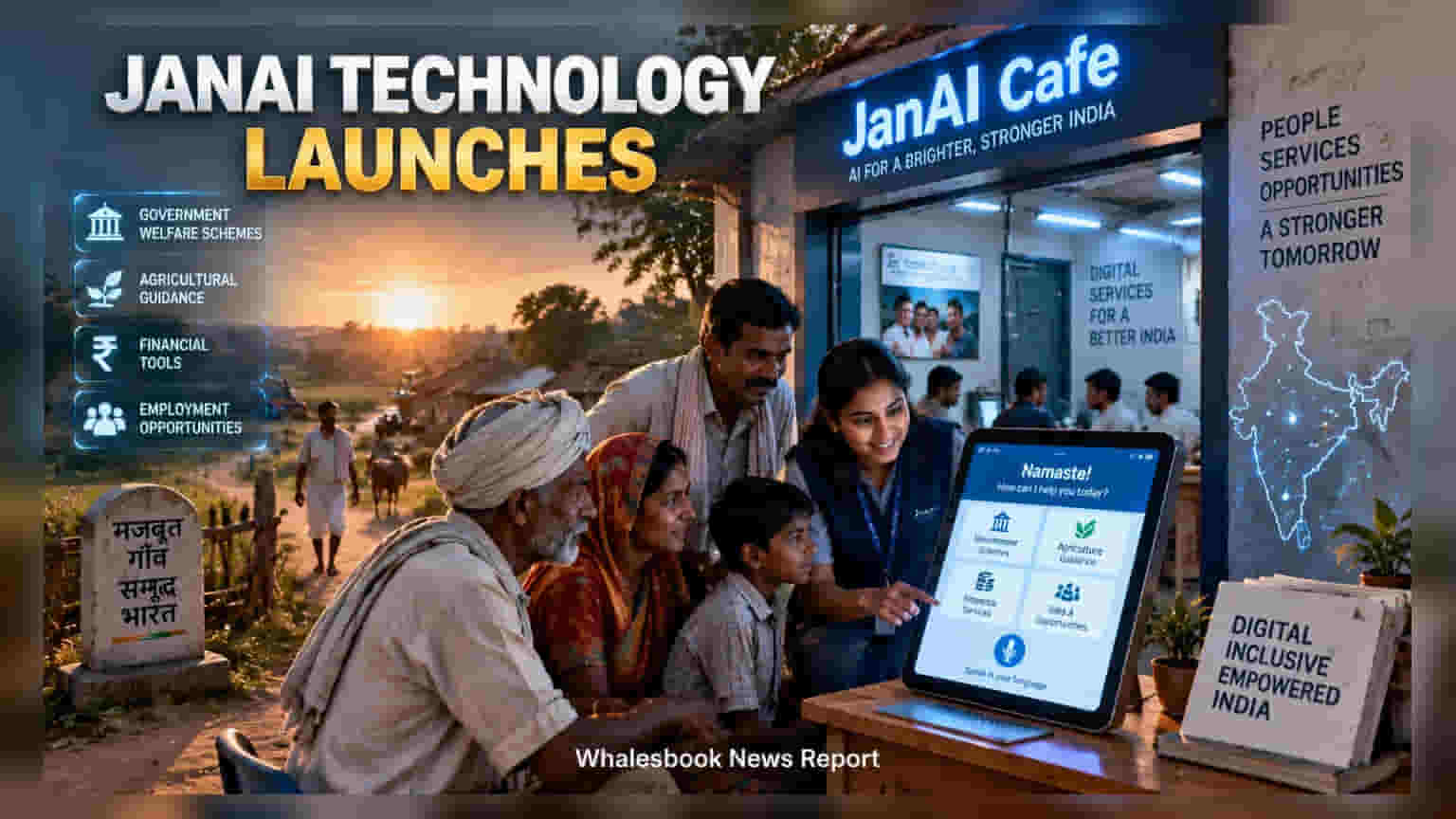
JanAI Technology is establishing a chain of AI-enabled service hubs in rural and peri-urban India to help people access government schemes, finance, and jobs. The startup, founded by Madan Padaki and Vishwesh Pai, aims to support digital inclusion using voice-based Indic language tools. The business model relies on local entrepreneurs to bridge the service gap.
JanAI Technology has officially entered the Indian market with a network of physical service hubs designed to simplify access to digital services. Known as JanAI Cafes, these locations aim to assist individuals who may have limited digital literacy or infrastructure by using AI-driven voice interfaces. The goal is to connect citizens with essential services such as government welfare schemes, agricultural guidance, financial tools, and employment opportunities.
The company’s operational approach relies on local entrepreneurs who are trained to manage these cafes and facilitate services for their communities. By using existing open-source and Indic speech models, the startup avoids the high research and development costs typically associated with creating foundation models from scratch. The service is categorized into four main components, focusing on voice interaction, eligibility for schemes, marketplace access, and physical center support.
Strategic Partnerships and Service Scope
The company is working with organizations such as the EkStep Foundation and platforms like Whatsloan to provide a broad range of services. The operational model incentivizes local entrepreneurs by allowing them to earn income through service facilitation, effectively turning the cafes into micro-enterprises. Currently, the company has started operations in nine locations, with a focus on Mysuru and Prayagraj. The startup aims to reach 100,000 users by March 2027 and plans to expand its network across various taluks over the next three years.
Market Challenges and Implementation Risks
While the model of using physical centers to provide digital services is intended to bridge the digital divide, investors and observers note that the sector is already served by government-run Common Service Centres (CSCs). These established centers have a wide reach across rural India, creating a competitive environment for new market entrants. For JanAI Technology to succeed, it will need to ensure its voice models can accurately handle the diverse range of Indic languages and dialects, which is often a significant technical hurdle in rural service delivery.
Another critical factor for the company will be its ability to maintain user trust and ensure the security of financial or personal data processed through its cafes. The success of the business model depends heavily on the consistent performance of the local entrepreneurs, the reliability of the internet and power infrastructure in rural areas, and the accuracy of the information provided regarding complex government schemes. Investors will likely track the company's ability to scale its cafe footprint efficiently while managing the operational costs involved in training local partners and maintaining the technology stack.